YOUR SIMPLE GROWING PLAN
One pot. Here’s the plan.
A sunny outdoor patio with a long, warm growing season. Start with a sweet potato slip.
Choose roughly 20 inches wide and at least 15 inches deep, with drainage.
Choose an edible compact variety such as Vardaman Bush.
- 01
Buy a slip, not seed pieces
A slip is a small shoot grown from a sweet potato. Buy one healthy plant with a few leaves and young roots. Choose a food-crop variety; a decorative sweet potato vine is selected for foliage.
- 02
Wait for warm conditions
After frost danger, wait until the mix is at least 65°F. Fill the container, leaving room below the rim. Put it in its final sunny location before watering makes it heavy.
- 03
Plant the lower stem
Set the slip in the center with roots and about 3–4 inches of lower stem under the mix, keeping its upper leaves above the surface. Firm gently and water. Keep the rooting area moist as it settles in.
- 04
Let it spread, then lift
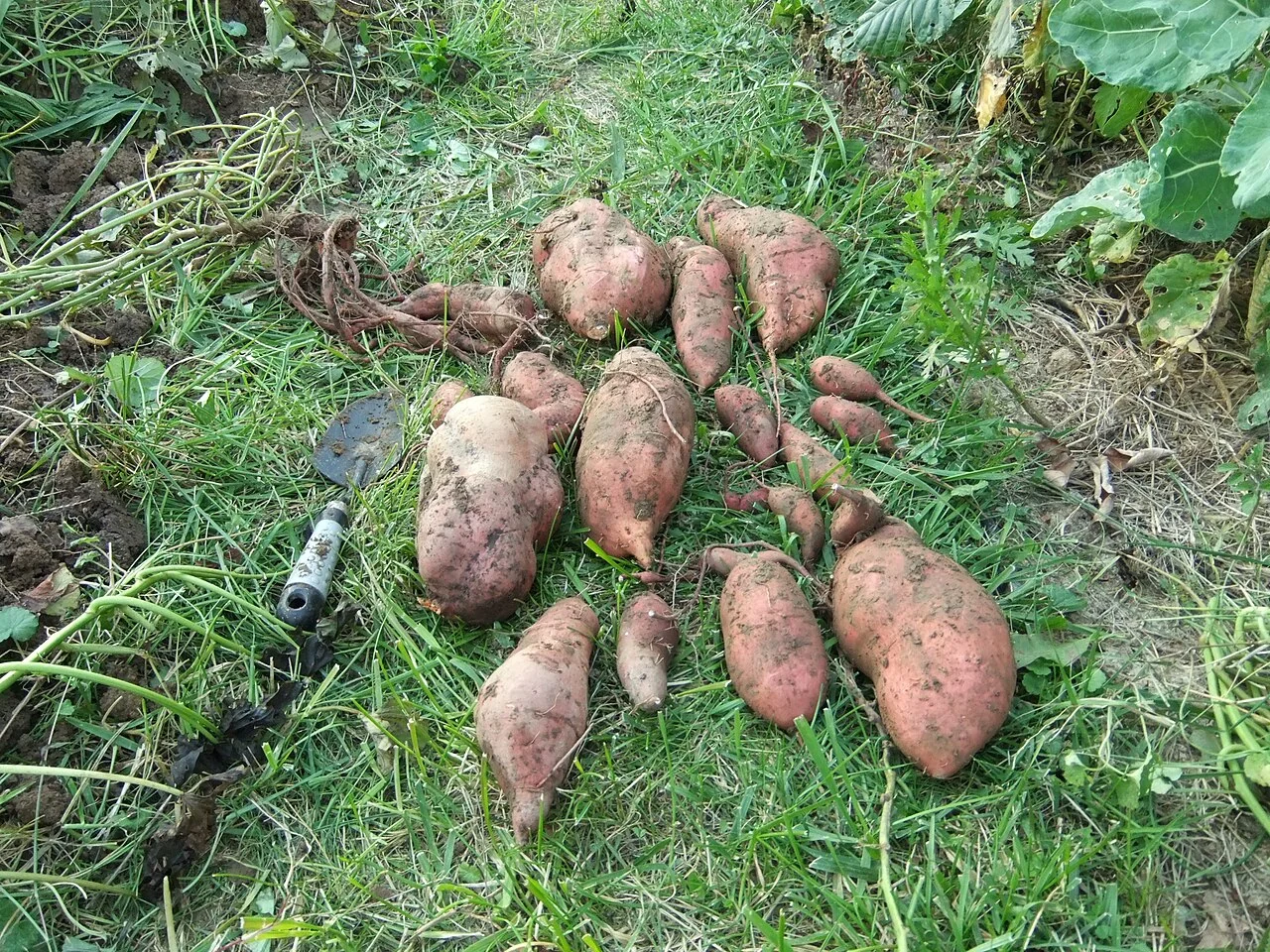
Allow the vines to trail clear of walkways. Start checking a root near the expected maturity date. Harvest before frost, easing roots out of the mix instead of pulling on the vines.
Another way to start
Make a slip from a seed root+
Buy a healthy sweet potato sold for propagation. Lay it in a shallow tray of damp mix, cover with about 2 inches of mix, and keep it warm. After shoots develop, grow them in bright light. At about 6–8 inches tall, separate one and root it before moving to the big pot. Allow about 6 weeks for this extra step.
Root a vine cutting+
A cutting from a healthy edible sweet potato vine can make another plant. Root the lower nodes in moist mix, keeping leaves above it. A nursery slip is simpler for the first crop, and the new plant still needs a full warm growing season.
When to water.
Check daily. A newly planted slip needs its small rooting area kept moist. Once established, water when the top inch starts drying, soaking the mix slowly and letting excess escape. Do not leave the container standing in water. As harvest approaches, avoid repeated heavy soaking, which can encourage roots to split.
Exactly what to feed it.
Add no extra fertilizer when using the enriched mix in this plan. Its starter nutrients last up to 2 months. After that, use a modest measured top-up if the crop is still growing; a mass of vines is not a reason to add more nitrogen.
A MEASURED TOP-UP AFTER THE STARTER FEED
Espoma Organic Garden-tone (US 3-4-4 granules)
For a 20-inch-wide container, apply 2½ tablespoons of Garden-tone 3-4-4 around the outer edge and water in. After the starter feed, repeat no more often than monthly while still growing. Skip another application when harvest is near. Do not combine it with a second fertilizer.
Check the manufacturer’s product page ↗These are dry granules, measured for the whole pot, not for each plant. Keep them off stems and leaves, then water in. Use the named US product and the directions on your bag.
A little patience pays off.
Utah State lists Vardaman Bush at about 110 days from planting; cooler conditions can delay it. This one-slip pot is a small harvest experiment. Root number and size vary, and the container needs much more room than an herb pot.
When should I start where I live?+
Plant only after frost risk has passed and the mix is warm. This crop needs several warm months; in a short summer, ask for a locally suitable early variety instead of assuming every sweet potato will finish. Plan to harvest before the first fall frost.
For regional planting windows, find your local Cooperative Extension office ↗.
Something looking off?
Can I bury a whole sweet potato or chunks like a potato?+
Use slips for this plan. Sweet potatoes form storage roots and are grown differently from ordinary potatoes, which commonly start from seed-potato pieces. You can use a healthy sweet potato to produce slips first.
Is a 5-gallon bucket enough?+
It is too small for this roomy beginner recipe. Use the 20-gallon container for one plant, or choose a different small-space crop. More slips in the same pot do not guarantee more food.
Why do I have vines but small roots?+
The crop may still be young, or the season may be too cool or short. Check the variety’s maturity date, sun, and pot size. Extra nitrogen can encourage more leaves and will not solve those problems.
Should I eat the roots as soon as I dig them?+
You can cook them fresh, but curing improves sweetness and helps small wounds heal. Handle gently and do not scrub roots intended for storage. A warm, protected, airy place helps; never seal damp roots in a bag.
How do I cure and store them?+
Commercial curing uses 85°F and 80–90% humidity for 5–10 days, which is hard to reproduce at home. Spread roots in one layer in a warm, covered, airy location for about a week, then move to a cool area around 55–60°F. Avoid refrigeration and discard rotting roots.
A little more growing know-how.
Choose an edible compact variety+
Vardaman Bush is the named starting option here. “Bush” still means a leafy plant needing room around the container. A named edible slip also makes the expected harvest time easier to check.
How big is this project?+
The container choice follows Extension reports of successful growing in 15–20-gallon bags. Using one slip is our deliberately uncrowded starting layout. It is not a claim that the pot has been trialed or will produce a fixed weight.
BEHIND THIS GUIDE
Where the advice comes from.
Plant care is based on the sources below. Planting layouts and beginner routines combine that guidance into one practical plan; they are editorial choices, not results from a Plant Care Steps growing trial.
- University of Maryland: sweet potato moisture, harvest, and curing ↗
- Utah State: Vardaman Bush, slips, and growing season ↗
- Utah State Pocket Gardener: sweet potato planting depth ↗
- Ask Extension: 15–20-gallon sweet potato containers ↗
- Ask Extension: possible causes of small sweet potato roots ↗
- Mississippi State: sweet potato curing and storage temperatures ↗
- Espoma: Garden-tone formula and container amounts ↗
- Manufacturer: starter feed in the named potting mix ↗
- Manufacturer: US fertilizer formula and application directions ↗
Compiled with AI assistance. These first-edition guides have not yet had an independent horticultural review. Read our editorial approach.