YOUR SIMPLE GROWING PLAN
One pot. Here’s the plan.
A sunny patio in your local onion planting season. Start with young onion transplants.
At least 12 inches deep, with clear drainage holes.
Two rows of three plants, 4 inches apart in every direction.
- 01
Match the onion to your city
At a nursery, ask for bulb-onion transplants for your city: long-day for the North, short-day for the far South, or intermediate-day for the middle band. Check the variety label rather than buying by color alone.
- 02
Set out six starts
Fill the pot with damp mix. Make two centered rows of three holes, 4 inches apart. Set each transplant about 1 inch deep with its roots covered and green leaves above the mix. Water gently.
- 03
Let the bulbs show
Keep weeds out and moisture steady. As bulbs swell above the surface, leave them exposed. Do not heap mix around their necks.
- 04
Wait for tops to fall
When most tops naturally flop and start drying, stop feeding and let the crop finish. Lift gently. Use an onion immediately or cure the rest before storage.
Another way to start
Plant small onion sets+
Use six firm sets smaller than a penny, from a variety suited to your area. Plant pointed end up with about 1 inch of mix covering each set, at the same 4-inch spacing. Larger sets are more likely to flower; transplants give you clearer variety choices.
Raise your own transplants+
Start fresh onion seed indoors about 8–10 weeks before your outdoor planting date. Sow ¼ inch deep in seed-starting mix, keep it moist, and provide bright light. Raise extras, then select six healthy seedlings and gradually acclimate them outdoors.
When to water.
Check each morning. If the top inch is starting to dry, water slowly until the root zone is wet and excess drains. Skip a damp pot. Be especially consistent when bulbs enlarge; hot, windy weather can make a pot need water more often than an in-ground bed.
Exactly what to feed it.
The fresh mix includes starter fertilizer for up to 2 months, so do not add another dose at planting. Once that feed is spent, top up while leaves and bulbs are actively growing. Stop when tops begin to fall for harvest.
AFTER THE STARTER FEED
Espoma Organic Garden-tone (US 3-4-4 granules)
Use 2 tablespoons of Garden-tone 3-4-4 for the entire 16-inch pot. Scatter around the outer edge, keep it off the plants, and water thoroughly. Feed monthly during active growth after the mix’s starter feed ends. The dose is for all six onions together.
Check the manufacturer’s product page ↗These are dry granules, measured for the whole pot, not for each plant. Keep them off stems and leaves, then water in. Use the named US product and the directions on your bag.
A little patience pays off.
Many bulb-onion varieties need roughly 85–120 days, with substantial differences between spring and fall plantings. At 4-inch spacing, aim for useful kitchen-size onions rather than giant show bulbs.
When should I start where I live?+
Northern long-day onions usually start outdoors in early spring. In the far South, short-day varieties commonly start in fall or winter. Ask your local nursery for the planting window for the named variety. “Long-day” describes seasonal daylight, not a reason to put the pot in shade.
For regional planting windows, find your local Cooperative Extension office ↗.
Something looking off?
Which onion type should I buy?+
Use long-day varieties in the northern US and short-day varieties in the southern US, with roughly 35°N as a broad dividing line. Intermediate-day varieties suit many central locations. There is overlap: use the supplier’s city or latitude map for that variety, especially near the boundary.
Why are there leaves but no proper bulbs?+
A variety with the wrong day-length requirement may bulb too early or fail to bulb well. Crowding, too little light, and irregular water also reduce size. Check those before adding more fertilizer.
Should I cut the green tops to make bigger onions?+
Leave healthy leaves on the six plants you want to grow into bulbs. To harvest green onions instead, pull a whole plant when useful in the kitchen; that removes it from the bulb crop.
What if an onion grows a flower stalk?+
Harvest and use that onion promptly. It will not store as well. Cutting the stalk does not restore the normal storage life.
How do I store the harvest?+
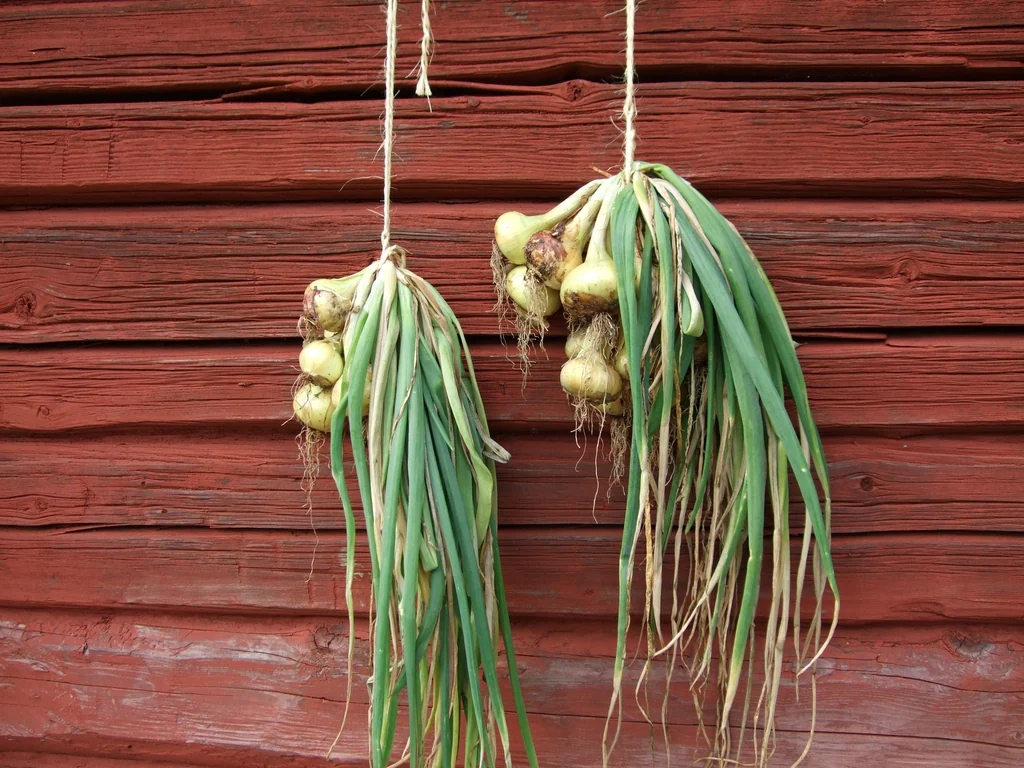
Cure undamaged bulbs with tops attached in a dry, sheltered place with airflow until necks and skins are dry, usually 1–3 weeks. Trim the dry tops, then use a ventilated basket or mesh bag. Sweet varieties keep for less time than storage varieties.
A little more growing know-how.
Day length is the one shopping check+
You do not need to calculate sunlight hours every day. Choose a variety marked for your growing region once, and put the pot in full sun. A winter hardiness zone alone does not tell you which onion day-length type to buy.
Bulb onions and scallions are different projects+
This guide grows six Allium cepa plants for bulbs. Bunching onions, Egyptian walking onions, and shallots have different harvest habits; do not apply this six-bulb promise to every plant sold as an onion.
BEHIND THIS GUIDE
Where the advice comes from.
Plant care is based on the sources below. Planting layouts and beginner routines combine that guidance into one practical plan; they are editorial choices, not results from a Plant Care Steps growing trial.
- University of Maryland: onion spacing, day length, and harvest ↗
- Iowa State: transplants, sets, seeds, and onion care ↗
- Illinois Extension: northern and southern onion types ↗
- Espoma: Garden-tone formula and container amounts ↗
- Manufacturer: starter feed in the named potting mix ↗
- Manufacturer: US fertilizer formula and application directions ↗
Compiled with AI assistance. These first-edition guides have not yet had an independent horticultural review. Read our editorial approach.