YOUR SIMPLE GROWING PLAN
One pot. Here’s the plan.
Outdoors, on a sunny patio during a mild growing season. Start with certified seed potatoes.
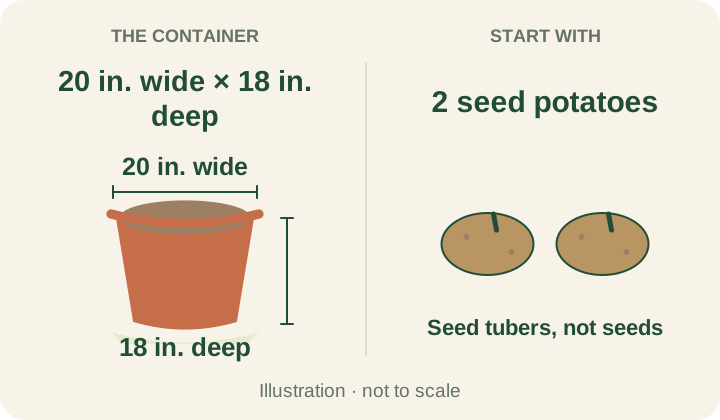
Choose an opaque container with drainage holes. The inside must still be at least 14 inches wide at the lower planting level, so the two tubers fit; a straight-sided pot is simplest. Set it in place before filling.
Use 2 small whole certified Yukon Gold seed potatoes, each about 1–2 inches across, with healthy eyes. Space their centers 12 inches apart. Seed potatoes are planting tubers, not a packet of botanical seed.
The leaves get sun. The potatoes stay covered.
- 01
Start with a shallow layer
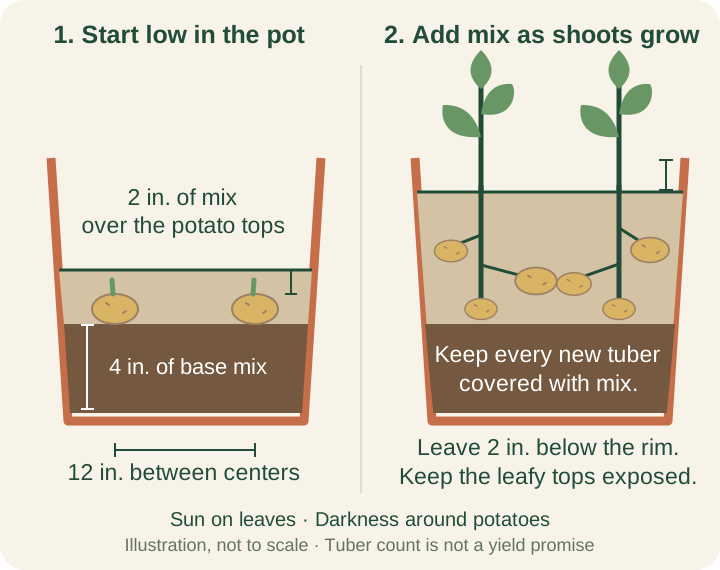
Put the empty pot in a sunny outdoor spot. Add 4 inches of moistened potting mix. Choose a planting window when the mix is about 50°F or warmer, with cool to mild weather ahead.
- 02
Plant two whole seed potatoes
Place the potatoes on that layer, centers 12 inches apart, with eyes or short sprouts facing up. Cover the top of each potato with 2 inches of mix, then water gently and let excess drain.
- 03
Add mix as the stems grow
When shoots stand 6–8 inches above the mix, add 2–4 inches around the lower stems while leaving about 4 inches of leafy growth exposed. Repeat as needed as stems grow. Stop filling 2 inches below the rim; never bury all the leaves.
- 04
Keep new tubers covered
Check the surface after watering and top up any exposed potatoes with mix. Maintain steady moisture while plants grow. For a mature harvest, wait until the vines die back, then follow the harvest steps below.
Help with the setup: drainage holes and saucers · potting mix vs. garden soil.
Other ways to start
Cut a large certified seed potato+
If small whole seed potatoes are unavailable, cut a larger certified tuber into blocky pieces about 1½–2 ounces each, with at least one sound eye per piece. Keep only two pieces for this pot. Let cut surfaces dry and heal at room temperature for 1–3 days before planting. Plant cut side down and eyes up.
Use a garden bed+
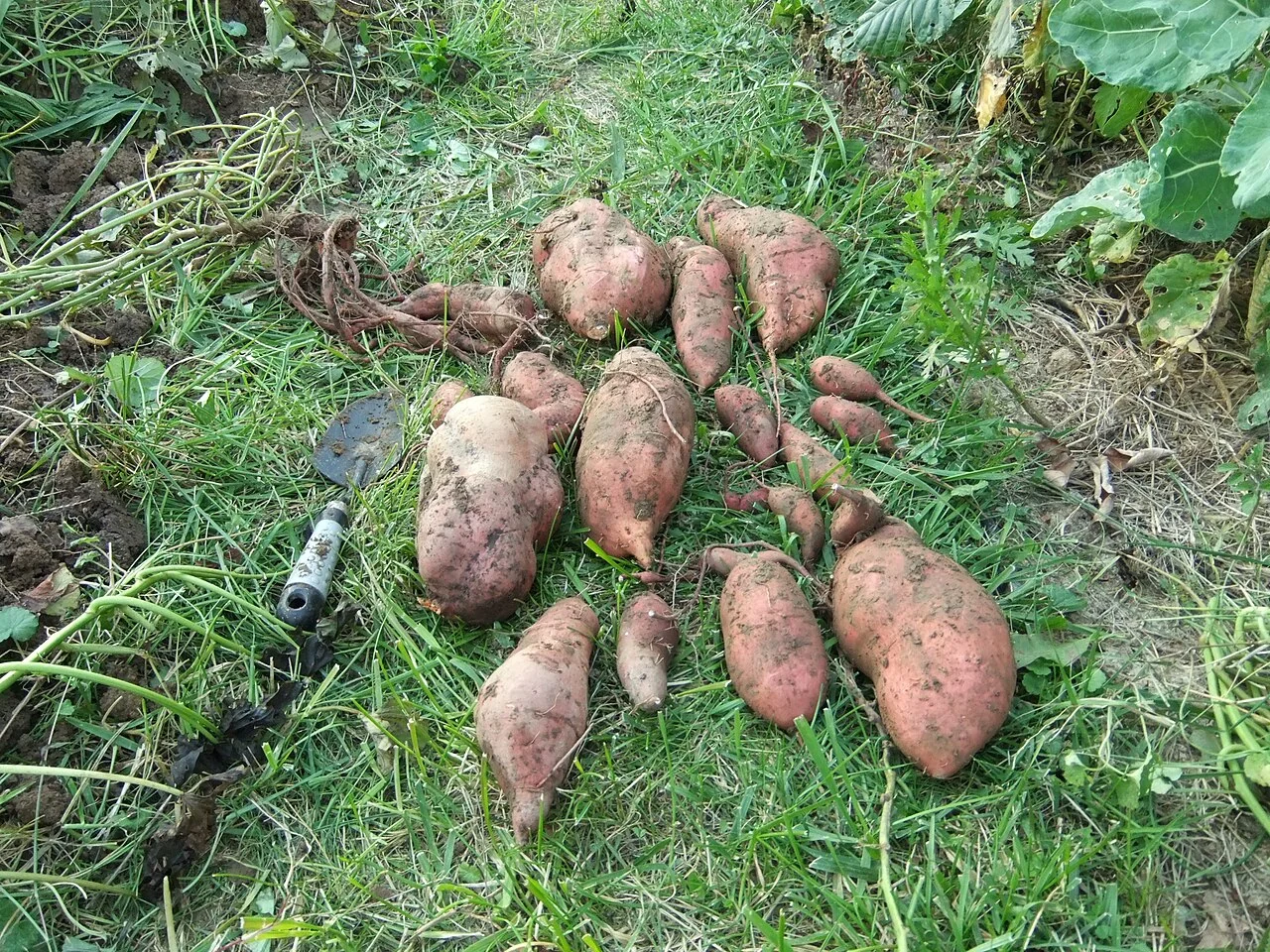
The same certified cultivar can grow in a well-drained bed. Follow local row spacing, soil-test feeding, and hilling guidance. This pot’s fertilizer amount is not a garden-bed rate. Sweet potatoes use a different plant and usually start from slips.
YOUR EVERYDAY ROUTINE
Water & fertilizer at a glance.
- Water when
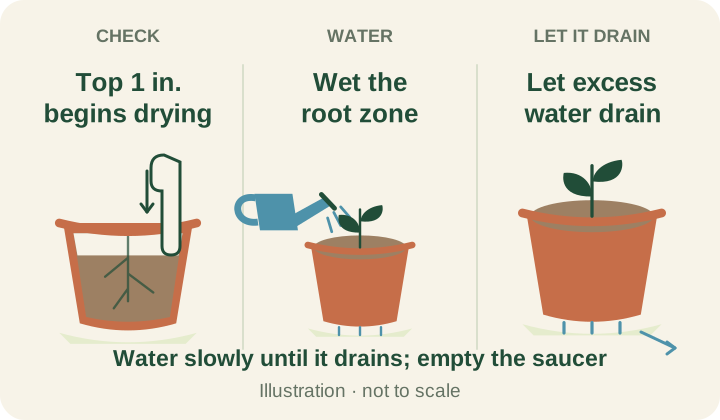
- Check each morning. Water as the top inch starts drying, wet the root zone, and drain. Keep moisture even while tubers grow; reduce watering as mature vines die back.
- Fertilizer
- Espoma Organic Garden-tone (US 3-4-4 granules)
- Amount
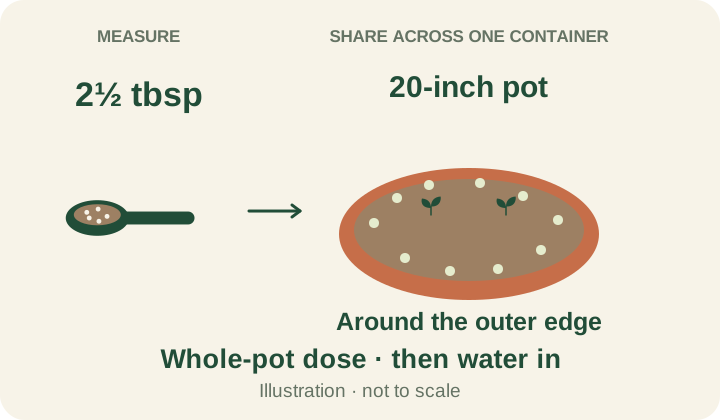
- 2½ tablespoons for the entire 20-inch pot
- What that amount covers
- Dry granules, based on container diameter. Scatter around the outer edge, at least 3 inches from stems, then water in. This amount is shared by both plants; it is not per plant or mixed into water.
- How often to feed
- Monthly during active growth, only after existing feed has finished.
- When to start or pause
- Check nutrients in all fresh mix, including mix added during hilling. Skip overlapping feeds and stop as the mature vines naturally die back.
When to water.
Check every morning. Water as the top inch starts drying, applying slowly until the mix is moistened and excess runs from the holes. Keep moisture even, especially once new tubers are forming. A hot or windy patio may need another check later. Do not leave the container standing in water. As the vines naturally yellow and die near maturity, reduce watering; do not keep a finished crop continually wet.
Exactly what to feed it.
Begin with the nutrients in the fresh mix. Wait until the plants are established and that starter feed has finished before adding Garden-tone. Extra mix added during hilling may contain more fertilizer, so check its label too. Feed only while the crop is actively growing; stop once the vines are naturally dying back.

US PRODUCT REFERENCE
Espoma Organic
Garden-tone
3-4-4Granular: measure onto growing mix
Check the official US product ↗Illustrated reference; check the manufacturer’s current packaging and US label.
2½ TABLESPOONS FOR THE WHOLE 20-INCH POT · MONTHLY IF NEEDED
Espoma Organic Garden-tone (US 3-4-4 granules)
Measure 2½ tablespoons of Espoma Organic Garden-tone 3-4-4 for this entire 20-inch-wide pot. Scatter it around the outer edge, keeping it at least 3 inches from the stems, and water it in. Repeat no sooner than one month later while the plants are actively growing and after existing feed has finished. Espoma’s established-container rate is 1½ teaspoons per 4 inches of pot diameter: 20 ÷ 4 × 1½ = 7½ teaspoons, or 2½ tablespoons. Do not also use the product’s new-mix or garden-row rate.
Check the manufacturer’s product page ↗Use the dry US Garden-tone 3-4-4 product. The amount below is for the entire 20-inch pot, shared by both plants. It is not per plant or per gallon of water.
Shoots, tubers, and harvest signs
Shoots often emerge in about 2–3 weeks. Yukon Gold is an early-to-midseason potato; plan for roughly 3 months of suitable weather, then judge harvest by the plant and tubers rather than a guaranteed date. A container gives a modest crop, with yield depending on light, temperature, water, and plant health.
Choose a mild growing window
Plant in the cool part of your local growing season, once the mix is around 50°F. In many northern areas that means spring; mild-winter regions may plant earlier in the year. Protect new shoots from a hard freeze. Sustained hot potting mix reduces tuber production, so avoid baking containers beside hot reflective walls.
For regional planting windows, find your local Cooperative Extension office ↗.
Something looking off?
Can I plant a grocery-store potato?+
Choose certified seed potatoes for this plan. Grocery potatoes may carry disease or have a sprout-inhibiting treatment. A sprouted kitchen potato is not the same as inspected planting stock.
Why are some potatoes green?+
Light has reached the tubers. Green color is a warning to check coverage, not a sign that a potato is ready. Cover exposed growing tubers and keep harvested potatoes dark. For this beginner plan, discard green ones; do not use taste as a safety test.
Do flowers or little green berries mean harvest time?+
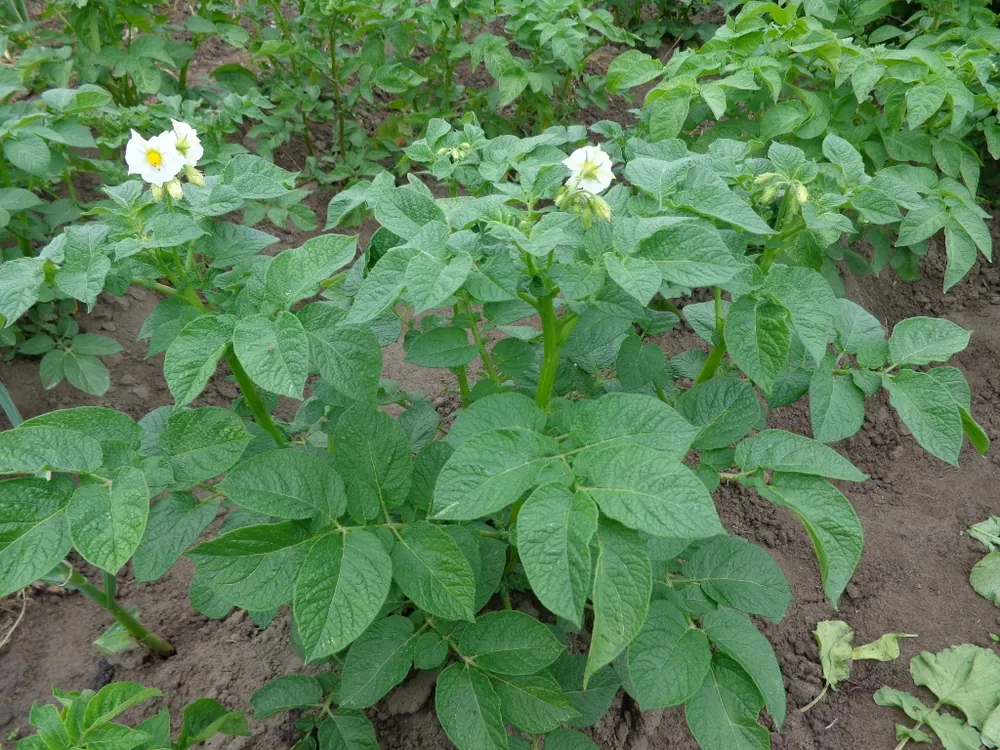
Flowers can appear while tubers are developing, but not every plant flowers, and flowers do not prove that all potatoes are full size. The small berries are not potatoes and must not be eaten. Use the harvest guidance below.
Keeping tubers covered and harvesting
Add mix while keeping leaves exposed
New potatoes develop on underground stems, mainly above the original seed potato. Adding mix around the lower stems protects them from light. Leave foliage exposed so the plant can keep growing. Once the pot is filled to 2 inches below the rim, stop raising the level; cover any later exposed tuber with a little extra mix without burying the leaves.
Harvest gently and keep potatoes dark
For a few small new potatoes, gently check near the pot edge once the plant is established and tubers have formed; cover the remaining crop again. For mature potatoes, let the vines die back and wait about 2 weeks for skins to firm. Tip the pot onto a tarp and collect the tubers gently. Brush off loose mix and keep them out of light. Use sound tubers with minor harvest nicks promptly; discard rotten ones. Store only sound, ungreened potatoes in a cool, dark, ventilated place.
BEHIND THIS GUIDE
Where the advice comes from.
Plant care is based on the sources below. Planting layouts and beginner routines combine that guidance into one practical plan; they are editorial choices, not results from a Plant Care Steps growing trial.
- Colorado State: Yukon Gold as a container variety ↗
- Illinois Extension: starting a potato container in layers and adding mix ↗
- UC IPM: certified seed pieces, healing cuts, spacing, and exposed foliage during hilling ↗
- Maine Extension: small whole seed tubers, 50°F planting conditions, and avoiding overfeeding ↗
- Minnesota Extension: tuber growth, moisture, and harvest care ↗
- Johnny’s Selected Seeds: Yukon Gold maturity and waiting after vine dieback ↗
- RHS: container harvesting and discarding green tubers ↗
- RHS: potato berries are not edible ↗
- Espoma: Garden-tone 3-4-4 fact sheet and established-pot rate ↗
- Manufacturer: US fertilizer formula and application directions ↗
- Manufacturer: starter feed in the named potting mix ↗
Something needs updating? Suggest a correction
Published · Updated
Compiled with AI assistance. These first-edition guides have not yet had an independent horticultural review. Read our editorial approach.