YOUR SIMPLE GROWING PLAN
One pot. Here’s the plan.
A sunny patio during a cool spell. Start with seeds.
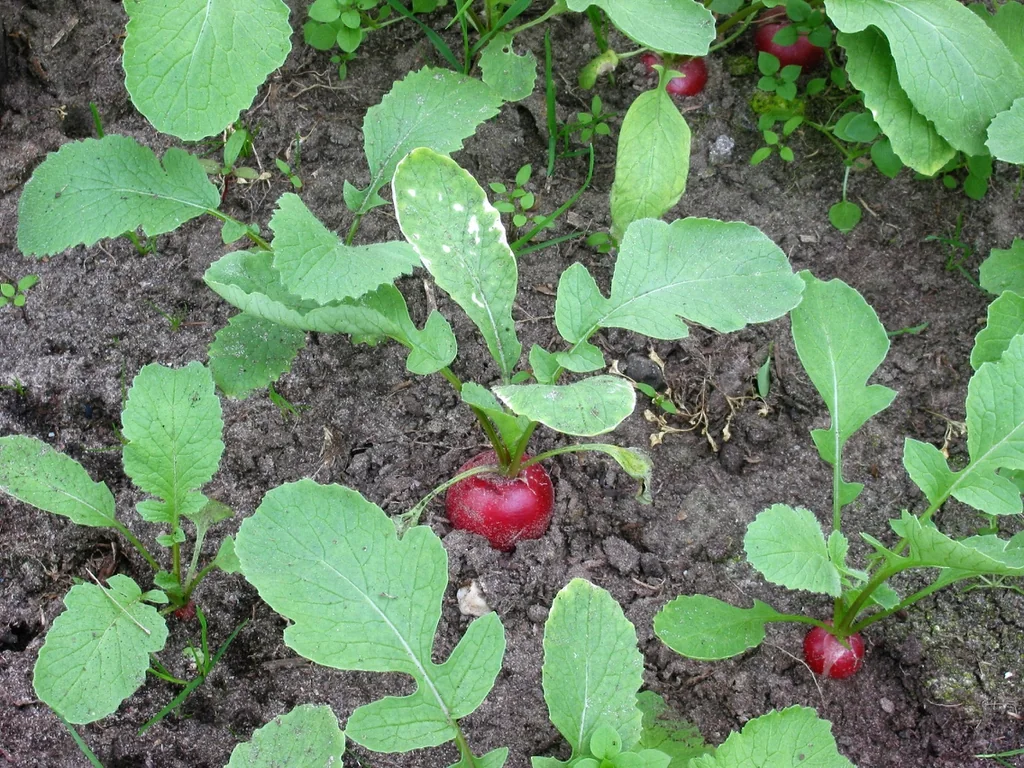
One draining square planter; this plan uses small round radishes.
Two seeds at each of 9 spots, 3 inches apart.
- 01
Make a small grid
Fill and dampen the mix. Mark 3 rows of 3 spots, each 3 inches apart, centered in the planter.
- 02
Sow two at each spot
Cover each pair with ½ inch of mix. Water gently so seeds stay in place.
- 03
Keep just nine
When the seedlings have true leaves, snip extras at soil level. Leave one strong plant at each spot.
- 04
Check the roots on time
Near the packet’s harvest date, gently uncover a root shoulder and pull one to check. Harvest at the listed size; leaving them longer does not guarantee a better radish.
Another way to start
Start directly from seed+
For this root crop, direct sowing in the final pot is the straightforward option. This guide does not offer a stem-cutting or root-piece recipe; buy a labeled packet and avoid moving seedlings between pots.
When to water.
Check every morning. Water when the surface starts to dry, wetting the mix evenly and letting extra water escape. Keep the crop steadily moist; do not let the planter become bone-dry and then flood it.
Exactly what to feed it.
For one short crop in fresh enriched mix, plan on no additional fertilizer. Buy the seeds and mix first; you do not need a separate fertilizer purchase for this recipe.
FOR LATER CROPS IN MIX WITH NO FEED LEFT
Miracle-Gro Water Soluble All Purpose Plant Food (US 24-8-16)
If you reuse the planter for a later crop after its starter feed has run out, the US 24-8-16 product mixes at 1 tablespoon per gallon of water. Apply only enough at the roots to wet the pot and drain; do not feed more often than every 14 days in this plan. Extra fertilizer is not a fix for crowded or overmature roots.
Check the manufacturer’s product page ↗Use the named US formulation. A different product or concentration needs different directions. The amount mixed is a batch, not a dose to pour into one pot.
A little patience pays off.
Sprouts often appear in 5–10 days in suitable conditions. Small salad radishes can be quick; check the specific packet rather than applying a fast salad-radish harvest date to every type.
When should I start where I live?+
Choose cool spring or fall conditions. Hot weather can make roots harsher and encourage flowering. This is not a summer heat-tolerant or winter daikon recipe.
For regional planting windows, find your local Cooperative Extension office ↗.
Something looking off?
Why are there leaves but barely any radish?+
First check crowding and light, and whether the crop is growing in hot weather. Keep one plant per spot; do not add fertilizer automatically.
Why is the inside spongy or the flavor very hot?+
Waiting too long and growing through heat or moisture stress can reduce quality. Pull a test root at the packet’s suggested stage.
Can I use this pot for daikon?+
This plan is for short, round salad radishes. Long-rooted daikon needs a different depth and harvest plan.
A little more growing know-how.
Where the seed count comes from+
Nine positions at 3-inch spacing leave room around the roots. Two seeds per position allow for a missed sprout; thinning is part of the recipe, not an optional extra.
One root, one harvest+
Pull the whole plant when the root is ready. For another crop, sow new seeds; keep the variety label with the planter so the intended root size is easy to check.
BEHIND THIS GUIDE
Where the advice comes from.
Plant care is based on the sources below. Planting layouts and beginner routines combine that guidance into one practical plan; they are editorial choices, not results from a Plant Care Steps growing trial.
- Utah State University: sowing, thinning, and root quality ↗
- Utah State University: differences among salad and larger radishes ↗
- University of Maryland: containers and starter nutrition ↗
- Manufacturer: US fertilizer formula and application directions ↗
- Manufacturer: starter feed in the named potting mix ↗
Compiled with AI assistance. These first-edition guides have not yet had an independent horticultural review. Read our editorial approach.