YOUR SIMPLE GROWING PLAN
One pot. Here’s the plan.
A bright patio pot close to the kitchen. Start with nursery clump.
Use a draining pot, about 10–12 inches wide.
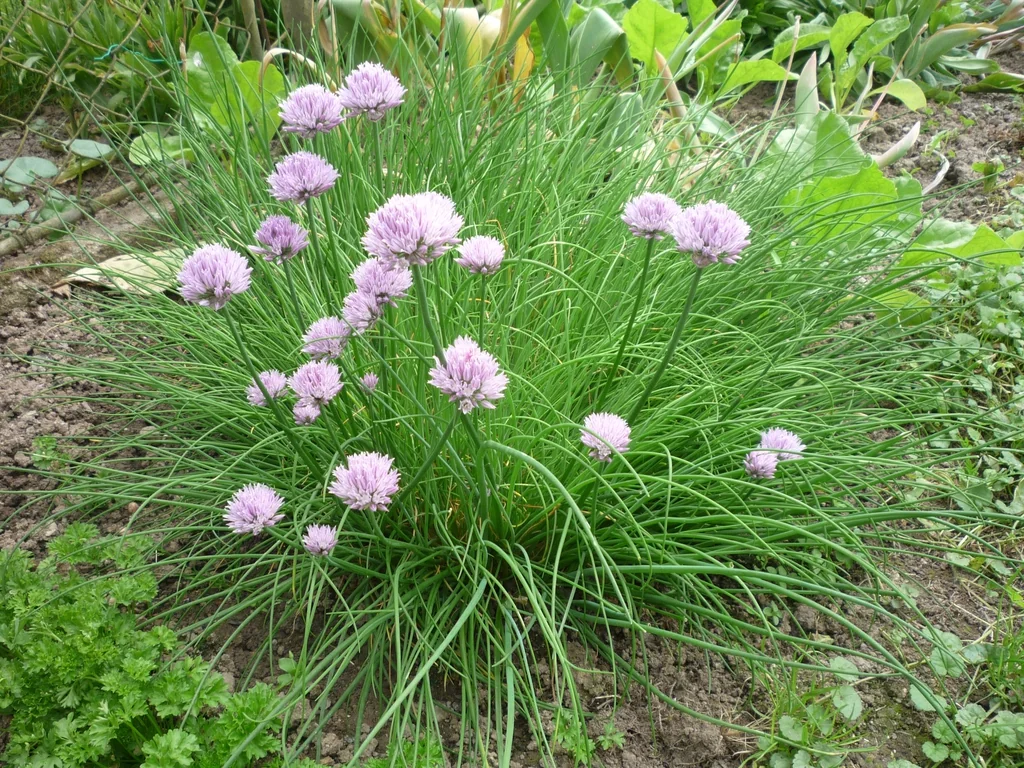
Buy common onion chives, with fine, round, hollow leaves.
- 01
Pick common chives
Check the plant label. This guide is for the onion-flavored, round-leaved type.
- 02
Plant the clump
Set the root ball at its existing soil level in damp mix. Water thoroughly and allow the pot to drain.
- 03
Let new leaves grow
Check moisture each morning. Give the plant time to settle before taking a kitchen handful.
- 04
Snip above the soil
Once established and about 6 inches tall, cut a small bundle, leaving 1–2 inches above the mix. Leave the rest of a young clump growing.
Another way to start
Divide an established clump+
In spring, lift a healthy clump and separate a rooted section containing several bulbs. Pot that section at its previous depth and water it in. Keep leaves and roots attached; a handful of cut supermarket leaves is not a rooted division.
When to water.
Check the top inch each morning. When it feels dry, water slowly until excess drains. Let the pot finish draining before putting it back in an outer planter. Dry spells can slow fresh leaf production even when the plant survives them.
Exactly what to feed it.
Skip added fertilizer when planting into fresh enriched mix. After the starter nutrients are used up, a light feeding routine is enough during active growth.
A SPECIFIC US PRODUCT
Miracle-Gro Water Soluble All Purpose Plant Food (US 24-8-16)
Mix 1½ teaspoons of the US 24-8-16 product in 1 gallon of water. Apply at the roots every 4 weeks outdoors while new leaves are growing. This is half the outdoor label concentration, following University of Minnesota container-herb guidance. Skip dormant periods and do not stack it with another ongoing fertilizer.
Check the manufacturer’s product page ↗Use the named US formulation. A different product or concentration needs different directions. The amount mixed is a batch, not a dose to pour into one pot.
A little patience pays off.
A healthy transplant may be ready for a small harvest around a month after planting, but wait for established new growth. Start modestly rather than shaving a newly planted clump bare.
When should I start where I live?+
Common chives are perennial and can pause growth or die back seasonally. An exposed pot needs a local overwintering plan; do not assume in-ground hardiness guarantees survival in a small container.
For regional planting windows, find your local Cooperative Extension office ↗.
Something looking off?
Are these the same as garlic chives?+
No. This plan uses common chives with hollow, round leaves. Garlic chives are a different species with flatter leaves and a different flavor.
Why has leaf growth slowed?+
Check light, moisture, and the season. If an older clump is crowded, divide it; more fertilizer is not always the answer.
Can I grow them from seed?+
Yes, but a rooted clump is the quicker start used here. Seeds and division are both valid ways to propagate chives; division keeps this first project simple.
A little more growing know-how.
A small harvest at a time+
Keep scissors near the kitchen door and cut what you will use. Leaving foliage on a young clump helps it establish before heavier harvests.
When the clump gets crowded+
A 3-gallon pot gives one starting clump room to expand. Lift and divide an established clump when it fills the space, keeping a rooted piece for this pot.
BEHIND THIS GUIDE
Where the advice comes from.
Plant care is based on the sources below. Planting layouts and beginner routines combine that guidance into one practical plan; they are editorial choices, not results from a Plant Care Steps growing trial.
- Utah State University: chive division and harvest ↗
- NC State: common chive identity and container culture ↗
- University of Minnesota: feeding and dividing herbs ↗
- Manufacturer: US fertilizer formula and application directions ↗
- Manufacturer: starter feed in the named potting mix ↗
Compiled with AI assistance. These first-edition guides have not yet had an independent horticultural review. Read our editorial approach.