YOUR SIMPLE GROWING PLAN
One pot. Here’s the plan.
Before you start Keep one labeled nursery plant in a pot that drains, near bright filtered daylight.
What you need · pot, mix & supplies
- 1 labeled baby rubber plant in a draining pot
- An emptyable saucer or outer pot
- A watering can
The soil
Keep a healthy, draining nursery mix. At repotting, choose an airy houseplant mix rather than dense garden soil.
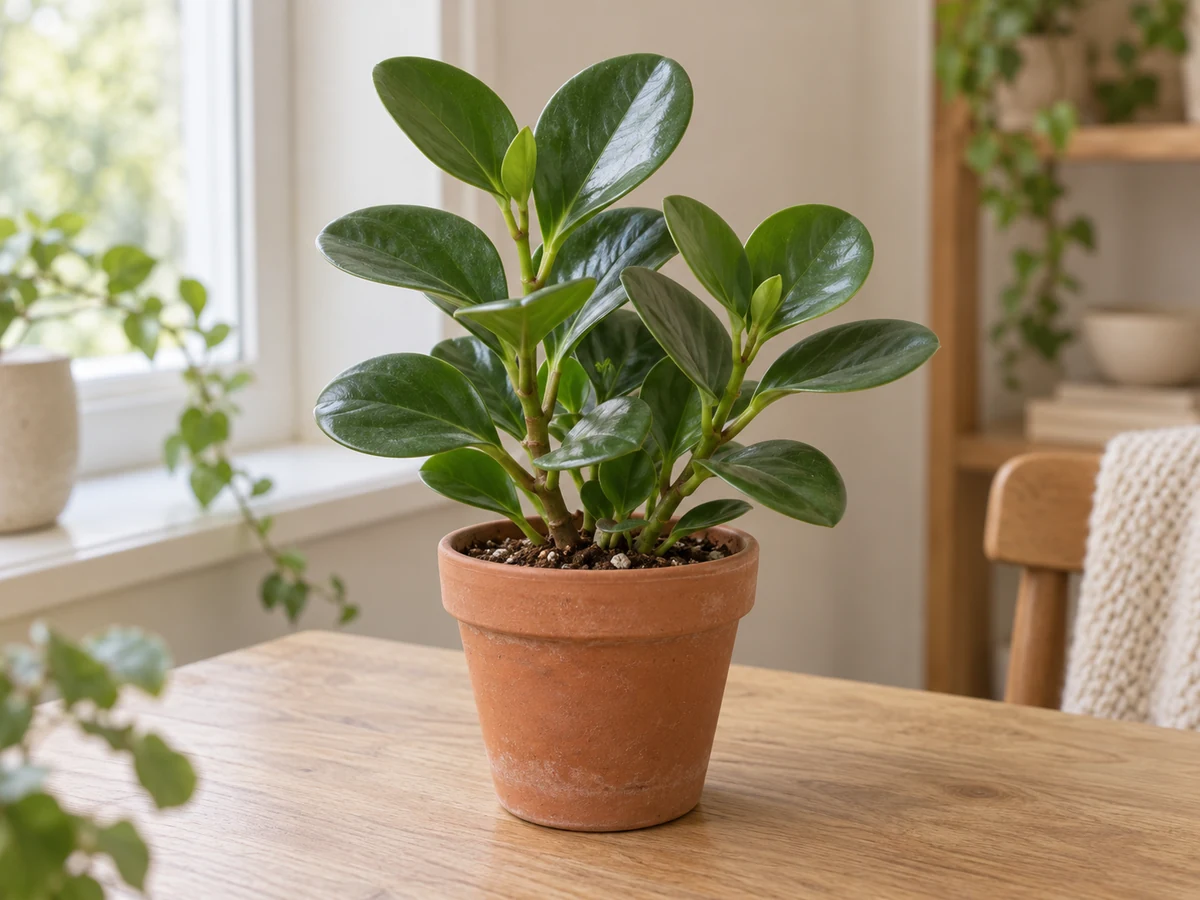
Is this your plant? Baby rubber plant is a peperomia, not Ficus elastica. This plan covers its green and variegated indoor forms.
Indoors, in bright indirect light. Start with nursery plant.
Use its draining pot while roots fit. An oversized replacement can keep the mix wet too long.
Check for Peperomia obtusifolia on the label. It is a peperomia, not the rubber tree Ficus elastica.
- 01
Check its name and pot
Choose Peperomia obtusifolia with firm leaves and stems. Keep its nursery pot if roots have room and excess water can escape.
- 02
Find bright, gentle light
Choose filtered daylight near a window, away from scorching summer sun. Keep it out of cold drafts and above 50°F.
- 03
Wait for partial drying
Feel the top inch of mix. Once dry, water thoroughly and empty the saucer; do not leave the whole root ball dry for long.
- 04
Ease back in winter
As growth slows, let soil checks guide less frequent watering. Skip feeding during the winter rest rather than keeping a summer schedule.
Other ways to start
Try a stem cutting later+
Take a healthy soft stem cutting in spring or summer. Root it in a small pot of free-draining propagation mix or in water, then pot it after roots develop.
YOUR EVERYDAY ROUTINE
Water & fertilizer at a glance.
- Water when
- Let the top inch dry, then water and empty the saucer. Avoid prolonged full drought; water less often during winter rest.
- Fertilizer
- Fertilizer labeled for houseplants
- Amount
- Use its labeled monthly indoor dilution and amount.
- What that amount covers
- Choose the monthly label program, not the dose for every watering.
- How often to feed
- Monthly during active spring or summer growth.
- When to start or pause
- Wait for existing nursery feed to finish; pause in winter rest or when roots struggle.
Bright indirect light supports compact growth; extra fertilizer cannot replace it.
Glossy leaves and little flower spikes
Fresh rounded leaves and branching stems are the main display. Slender cream-colored flower spikes are normal; they do not look like petaled flowers.
Indoor seasons and cuttings
A nursery plant can be started indoors year-round. A warm room suits it; spring or summer is the useful season for stem cuttings.
For regional planting windows, find your local Cooperative Extension office ↗.
Something looking off?
Is this a small rubber tree?+
No. Baby rubber plant is Peperomia obtusifolia. Ficus elastica is a different plant, with different size, care, and pet considerations.
Why are the leaves yellow and soft?+
Check for soggy mix or water trapped in the outer pot. Overwatering can damage roots. Check for pests too, before adding fertilizer.
What are the thin upright spikes?+
They are its flowers. Tiny flowers are packed onto slender spikes; the glossy leaves remain the main feature.
Repotting and a quick plant check
Repot when crowded
Move to the next small pot size with drainage and fresh airy mix. A large pot of unused wet mix increases the risk of root trouble.
Tidy and check for pests
Remove dead growth with clean scissors. Shorten a straggly stem if needed and inspect leaf joints for mealybugs; regular hard pruning is unnecessary.
Sources & dates
Editorial plans, not results from a Plant Care Steps growing trial. Compiled with AI assistance; they have not yet had an independent horticultural review. Editorial approach.
- UF/IFAS: species profile, drainage and cuttings ↗
- NC State: indoor light, overwatering symptoms and flower spikes ↗
- RHS: repotting, seasonal watering and propagation ↗
- RHS: indoor light and minimum temperature ↗
- Maryland Extension: monthly maintenance feeding and label rates ↗
- ASPCA: Peperomia obtusifolia and pets ↗
Something needs updating? Suggest a correction
Published · Updated
Sources checked View sources ↗