YOUR SIMPLE GROWING PLAN
One pot. Here’s the plan.
Before you start Keep one labeled plant in its draining nursery pot, with filtered daylight and soil checks before watering.
What you need · pot, mix & supplies
- 1 cast iron plant in a pot with drainage holes
- A saucer or removable outer pot
- A watering can and a soft cloth
The soil
Keep a healthy, draining nursery mix. At repotting, use a container mix intended for houseplants, not outdoor garden soil.
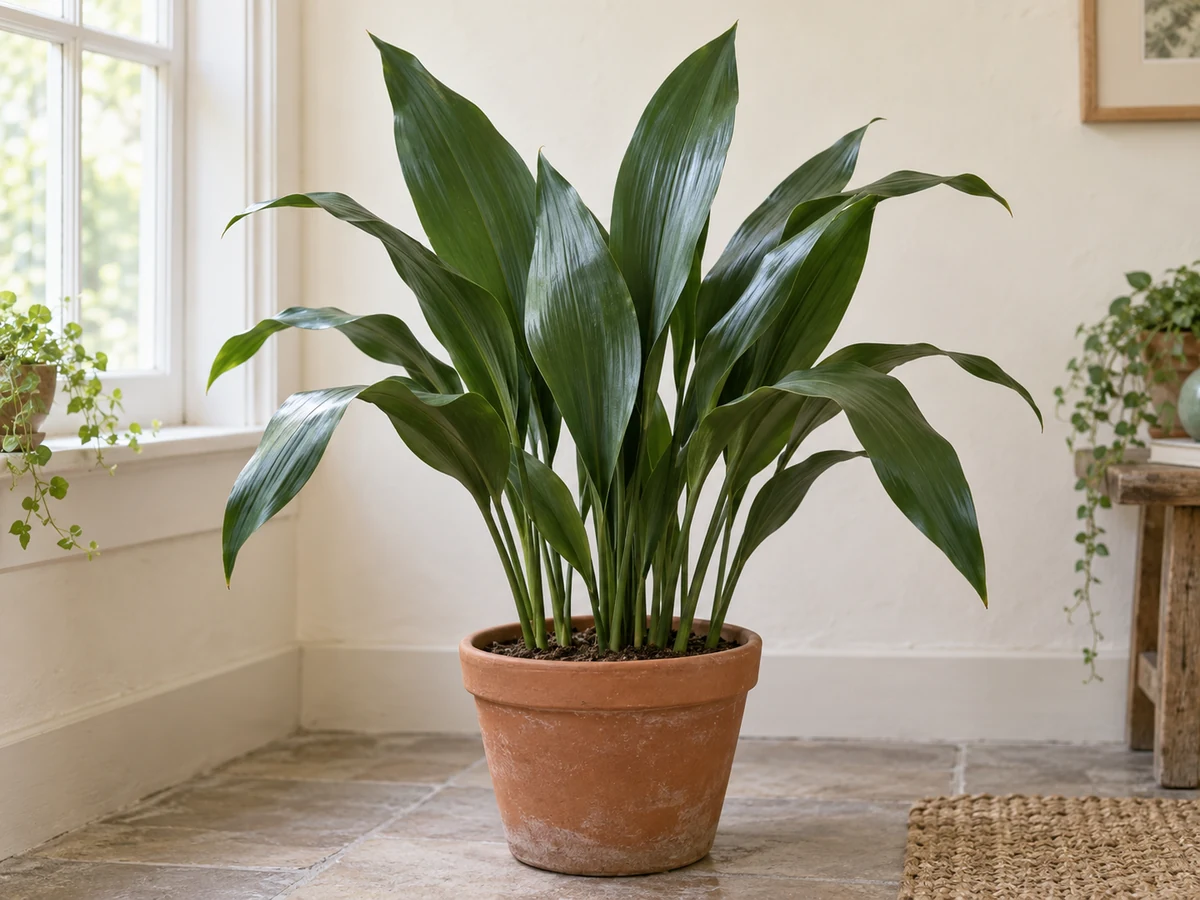
Is this your plant? This plan is for the cast iron plant, Aspidistra elatior. Plain green and variegated forms may grow at different rates.
Indoors, in low or filtered daylight. Start with nursery plant.
Use the existing pot while the roots have room and water can drain. A new purchase does not need an immediate larger pot.
Choose a labeled Aspidistra elatior with firm leaves and no soggy, soft base.
- 01
Keep the useful pot
Check the drainage holes and remove any water trapped in an outer pot.
- 02
Choose softer daylight
Set it in filtered window light or a lower-light room position, away from direct sun and heater blasts.
- 03
Feel before watering
Check weekly. When the top inch starts to dry, water the mix thoroughly and empty the saucer.
- 04
Leave room for slow growth
Wipe dusty leaves with a damp cloth. Turn the pot occasionally; do not repot or feed just to hurry it along.
Other ways to start
Divide an established clump+
In spring, separate a crowded clump through its rhizome. Keep roots and several leaves on each section; pot at the previous depth.
YOUR EVERYDAY ROUTINE
Water & fertilizer at a glance.
- Water when
- Water when the top inch begins to dry; drain and empty the saucer.
- Fertilizer
- General-purpose houseplant fertilizer
- Amount
- Use the labeled indoor dilution and application amount.
- What that amount covers
- Formula strengths differ; there is no universal spoonful.
- How often to feed
- Monthly while actively growing, spring to late summer.
- When to start or pause
- Wait until existing nursery fertilizer ends. Skip winter rest and stressed roots.
Slow growth in low light is normal, not a reason for extra fertilizer.
Slow, steady new leaves
New leaves emerge separately from the base. Growth is naturally slow, especially in lower light; an occasional new leaf is more realistic than a rapid height increase.
When to divide or repot
An indoor nursery plant can be bought year-round. Spring is the useful time to divide or repot a crowded clump. A cool room suits it; avoid freezing conditions and hot radiators.
For regional planting windows, find your local Cooperative Extension office ↗.
Something looking off?
Does low light mean no window?+
No. Give it some natural daylight or suitable plant lighting. Growth slows in poor light; fertilizer cannot replace light.
Why are leaves turning brown?+
Direct sun can scorch leaves. Check its position and whether the mix is staying wet before changing the watering routine. Also inspect for pests.
Can I root one cut leaf?+
Use a division with rhizome, roots and several leaves. This guide does not treat a detached leaf as a reliable new plant.
Repotting and leaf care
Repot when crowded
Look for tightly circling roots or roots emerging from the drainage holes. In spring, move up one pot size and keep the plant at its previous depth.
Clean and trim leaves
Support each leaf as you wipe off dust. Remove a fully dead leaf near the base with clean scissors; routine shaping is unnecessary.
Sources & dates
Editorial plans, not results from a Plant Care Steps growing trial. Compiled with AI assistance; they have not yet had an independent horticultural review. Editorial approach.
- RHS: indoor care, feeding and spring division ↗
- NC State: species identity, slow growth and shade needs ↗
- Minnesota Extension: soil checks, leaf cleaning and repotting ↗
- Maryland Extension: label-based houseplant feeding ↗
- ASPCA: cast iron plant and pets ↗
Something needs updating? Suggest a correction
Published · Updated
Sources checked View sources ↗