YOUR SIMPLE GROWING PLAN
One pot. Here’s the plan.
Indoors, near a bright window. Start with small plant.
Start with a 4–6-inch pot with drainage. A saucer is enough.
A healthy, rooted plant is the easiest starting point.
- 01
Keep the pot it came in
Stand the draining nursery pot on a saucer or inside an outer pot. Do not leave the inner pot sitting in collected water.
- 02
Give the leaves some room
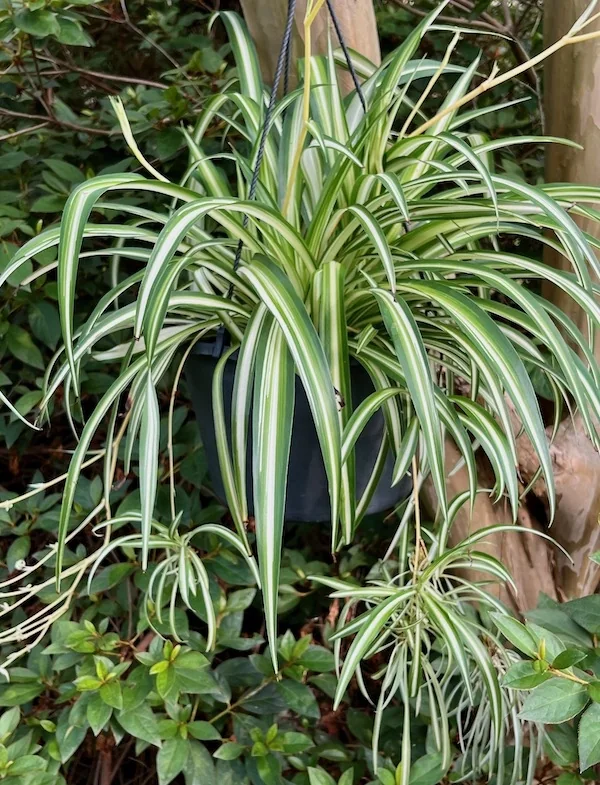
Choose bright indirect light and let the arching leaves hang freely. Keep them away from a hot windowpane.
- 03
Feel before you pour
Check every 3–4 days at first. When the top inch is dry, water the mix thoroughly and let excess drain.
- 04
Watch for new leaves
Give the plant time to settle. If it eventually makes baby plants on long stems, let their roots develop before starting another pot.
Another way to start
Root one baby plant+
Choose a plantlet with developing roots. Set its base into a small draining pot of moist houseplant mix. You can leave it attached to the parent while it roots, then cut the connecting stem. Keep the new plant lightly moist while roots establish; a loose leaf is not a substitute for a plantlet.
When to water.
Use a 3–4-day reminder to check, not to water automatically. Push a finger into the mix: when the top inch is dry, water until excess drains out. Empty the saucer or outer pot. If the mix is still damp, wait and check again. Heating, light, pot size, and season change how quickly it dries.
Exactly what to feed it.
Skip extra fertilizer on a newly bought plant while its nursery feed is still supplying nutrients. Spider plants are light feeders; adding more can brown the leaf tips.
FOR AN ESTABLISHED, ACTIVELY GROWING PLANT
Miracle-Gro Water Soluble All Purpose Plant Food (US 24-8-16)
Mix ½ teaspoon of the US 24-8-16 product into 1 gallon of water. Use enough at the roots to wet the pot and drain, once every 3–4 months during active growth. The dilution comes from the manufacturer; the lighter schedule follows Wisconsin Extension’s spider-plant guidance. Skip feeding while growth has paused or nursery fertilizer is still active.
Check the manufacturer’s product page ↗Use the named US formulation. A different product or concentration needs different directions. The amount mixed is a batch, not a dose to pour into one pot.
A little patience pays off.
Look for fresh leaves from the center. Mature plants may send out long stems with flowers and plantlets, but there is no guaranteed week for the first baby plant.
When should I start where I live?+
Start indoors any time of year. A bright spot supports growth; avoid cold drafts and abrupt moves into direct outdoor sun.
For regional planting windows, find your local Cooperative Extension office ↗.
Something looking off?
Why are the leaf tips brown?+
Drying stress, fertilizer salts, and water quality can all cause brown tips. Check moisture and feeding first. Do not respond by adding extra fertilizer or keeping the pot constantly wet.
Why is my plant not making babies?+
Age and growing conditions matter. Give it good light and modest feeding. A slightly crowded root system is normal; buying a much larger pot will not guarantee plantlets.
Is this a pet-friendly houseplant?+
ASPCA lists Chlorophytum comosum as non-toxic to cats and dogs. That is a species-specific distinction from pothos and ZZ plant.
A little more growing know-how.
When to move up a pot size+
Repot when roots fill the pot and watering becomes difficult to manage, not simply because you brought it home. Choose a pot only 1–2 inches wider with working drainage holes.
A plantlet is already a little plant+
Look for a tiny rosette with its own root beginnings at the end of a stem. Starting with that plantlet is more straightforward than trying to grow a new spider plant from a cut leaf.
BEHIND THIS GUIDE
Where the advice comes from.
Plant care is based on the sources below. Planting layouts and beginner routines combine that guidance into one practical plan; they are editorial choices, not results from a Plant Care Steps growing trial.
- Wisconsin Extension: spider plant feeding, plantlets, and brown tips ↗
- Maryland Extension: top-inch watering trigger ↗
- Illinois Extension: repotting and container size ↗
- ASPCA: spider plant species record ↗
- Manufacturer: US fertilizer formula and application directions ↗
Compiled with AI assistance. These first-edition guides have not yet had an independent horticultural review. Read our editorial approach.