GROWING BASICS · INDOORS
Wet soil. Wilting leaves.
Check before you water.
A wilted houseplant does not always need a drink. Start with drainage, then inspect the roots if the problem continues.
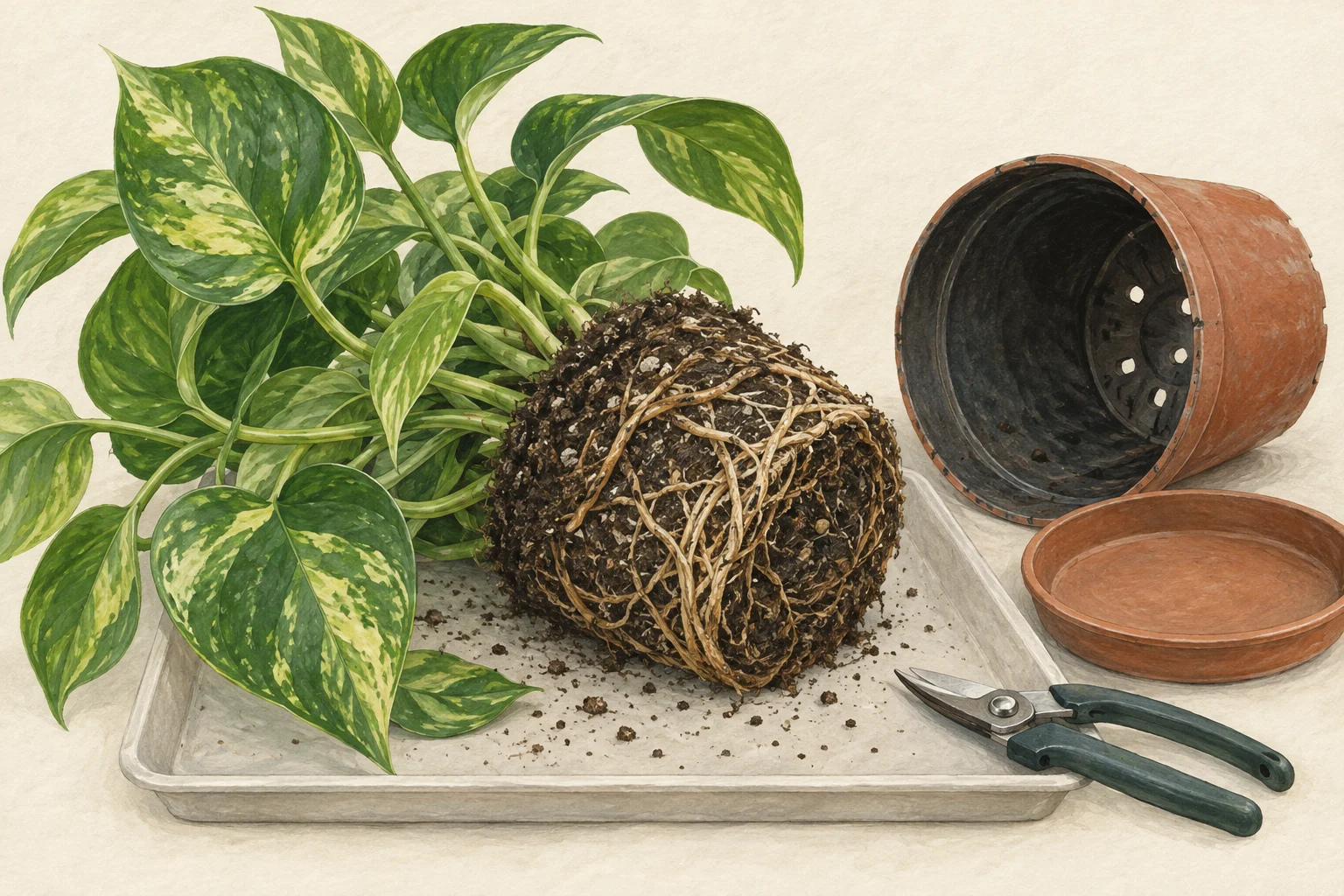
1. Check the pot before adding water.
- Feel the mix. Wet soil with wilted leaves can signal stressed or damaged roots. It does not, by itself, prove a particular disease.
- Empty the saucer or outer pot. Check that the inner pot has open drainage holes. Roots need air as well as moisture; a waterlogged mix can damage them.
- Pause and assess. If wilting continues while the mix stays wet, or the stem base feels soft, check the roots. One yellow leaf alone is not a reason to unpot every plant.
2. Gently inspect the root ball.
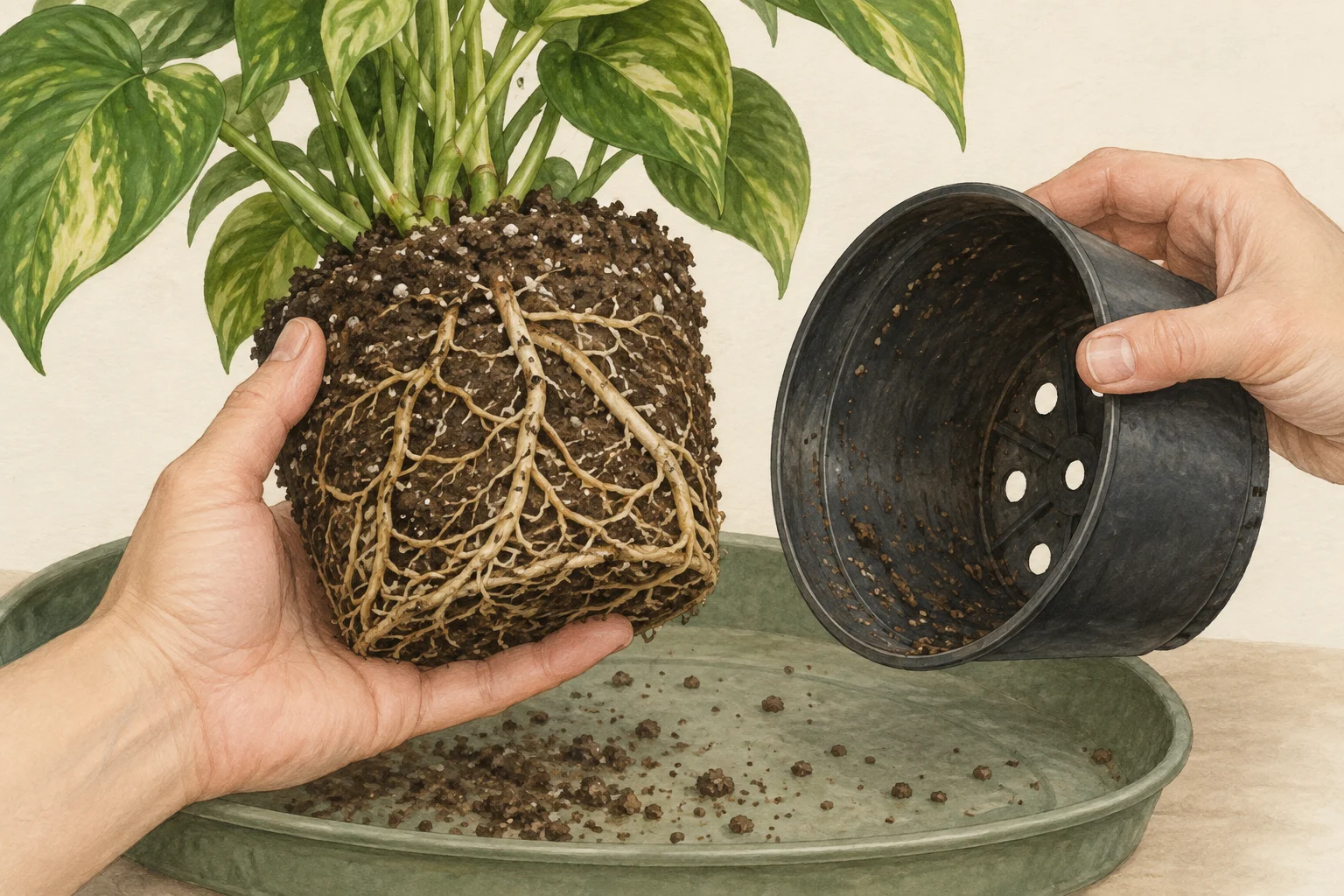
Support the plant and slide the root ball out carefully. Look for firm, intact roots versus roots that feel soft or mushy, or lose their outer tissue. Consider texture and condition together; brown color alone is not a diagnosis.
Keep a plant with suspected rot apart from healthy plants while you assess it. A photograph cannot identify the organism responsible; ask a local Extension diagnostic service if you need to establish the cause.
3. Choose the next step.
Only a few roots have decayed
If healthy roots remain, remove the rotten portions with clean, disinfected cutting tools. Use fresh, well-draining potting mix suited to the plant and a clean pot with drainage.
Choose a pot that fits the remaining roots; extra mix in an oversized pot may stay wet. Recovery is possible, not guaranteed.
Most roots are soft and dead
For a severely rotted plant, discarding it is usually more realistic than repeated rescue attempts. Keep it separate while handling it.
Take a cutting only from healthy tissue and only if that plant can be propagated that way. See the pothos propagation guide for that species.
Clean up between plants. Remove soil and debris from tools and reused pots before disinfecting them. Follow the disinfectant’s label for the tool or container. This is equipment cleaning, not a treatment to pour onto living roots.
After repotting, check moisture before watering again. Follow the plant’s needs rather than a fixed weekly schedule. Review pot drainage and your indoor light, then return to your plant’s care plan:
Sources & editorial notes
- University of Maryland Extension: Overwatered Indoor Plants
- University of Maryland Extension: Root Rots of Indoor Plants
- Clemson Cooperative Extension: Houseplant Diseases & Disorders
- Iowa State University Extension: How to Care for Houseplants
- University of Minnesota Extension: Clean and disinfect gardening tools and containers
Sources checked October 6, 2026. This guide combines Extension advice for houseplants grown in potting mix. It is compiled with AI assistance, not a Plant Care Steps rescue trial. The illustrations explain a setting or action; they do not diagnose a plant or promise recovery. Editorial responsibility · Illustration credits.
Published · Updated
Something needs updating? Suggest a correction