YOUR SIMPLE GROWING PLAN
One pot. Here’s the plan.
Indoors, in bright indirect light. Start with small plant.
Choose a 4–6-inch nursery pot with holes and a saucer.
Buy an established, rooted plant for the simplest start.
- 01
Keep the draining inner pot
Set the nursery pot on a saucer or inside a decorative pot. Empty any collected water; drainage holes must remain open.
- 02
Choose gentle window light
Place it near a bright window, away from harsh direct sun. Avoid cold drafts and heating vents.
- 03
Check the whole pot
Once a week, lift the pot and check below the surface. Wait while the mix is damp or the pot still feels heavy.
- 04
Water, drain, then wait
When the mix has dried throughout, water thoroughly and let it drain. Empty the outer pot. Wait for the same dry conditions before watering again.
Another way to start
Divide a crowded plant+
During a needed repot, gently separate a section with its own rhizome, roots, and shoots. Use a draining pot just large enough for that section. Wear gloves when handling damaged tissue and keep pieces away from pets and children.
Try a leaf cutting, with patience+
Leaf propagation is possible, but a leaf can take months to form a rhizome before there is much to see above the mix. A nursery plant or rooted division is the easier first project; do not keep a cutting waterlogged while waiting.
When to water.
Check weekly, but water only after the mix is dry throughout. The pot should feel light. A wooden skewer inserted gently away from the rhizomes can help check deeper mix; damp mix clinging to it means wait. This can take several weeks in a dim or cool room. When ready, wet the root zone, let it drain fully, and empty the outer pot.
Exactly what to feed it.
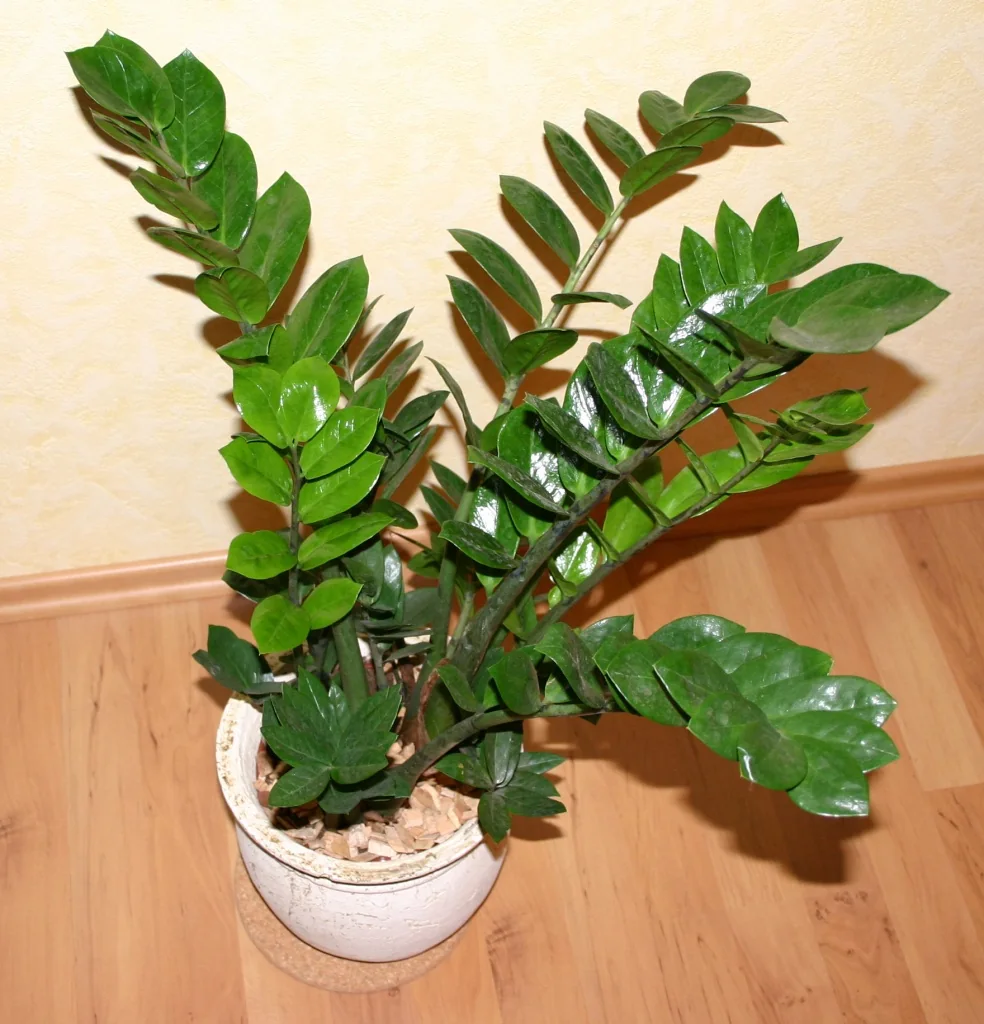
Do not add extra feed while a new nursery plant still has fertilizer in its mix. ZZ plants store resources in thick rhizomes and grow slowly; extra feed will not replace light.
ONCE IN SPRING, WHEN ACTIVELY GROWING
Miracle-Gro Water Soluble All Purpose Plant Food (US 24-8-16)
For an established plant, mix ½ teaspoon of the US 24-8-16 product into 1 gallon of water. Apply enough solution to wet this pot and drain at a normal watering in spring. One feeding a year is this plan’s simple default, within NC State’s once-or-twice-yearly guidance. Skip if nursery feed is still active or the plant is not growing. Do not pour a whole gallon into one small pot.
Check the manufacturer’s product page ↗Use the named US formulation. A different product or concentration needs different directions. The amount mixed is a batch, not a dose to pour into one pot.
A little patience pays off.
A healthy ZZ plant can look unchanged for weeks, then send up a fresh shoot. New leaves are often lighter before they mature. Slow progress does not mean it needs more water.
When should I start where I live?+
This plan is for indoor care year-round. Keep it in a stable, warm room and away from cold windows in winter.
For regional planting windows, find your local Cooperative Extension office ↗.
Something looking off?
Why are the stems soft and the leaves yellow?+
Check the mix first. Persistent wetness can rot roots and rhizomes. Stop watering a wet pot and inspect drainage; yellowing alone does not identify every possible cause.
Can I put it in a dark bathroom?+
Only if there is a useful light source. Low-light tolerance does not mean a plant can grow indefinitely without daylight or a grow light.
Is ZZ plant safe for pets to chew?+
No. It contains irritating calcium oxalate crystals. Choose a different plant or a place pets cannot reach.
A little more growing know-how.
Repot when the plant asks for room+
Crowded roots or a nursery pot bulging around its rhizomes are reasons to repot. Move up just 1–2 inches in diameter during active growth and use a draining mix.
Why a weekly reminder is still useful+
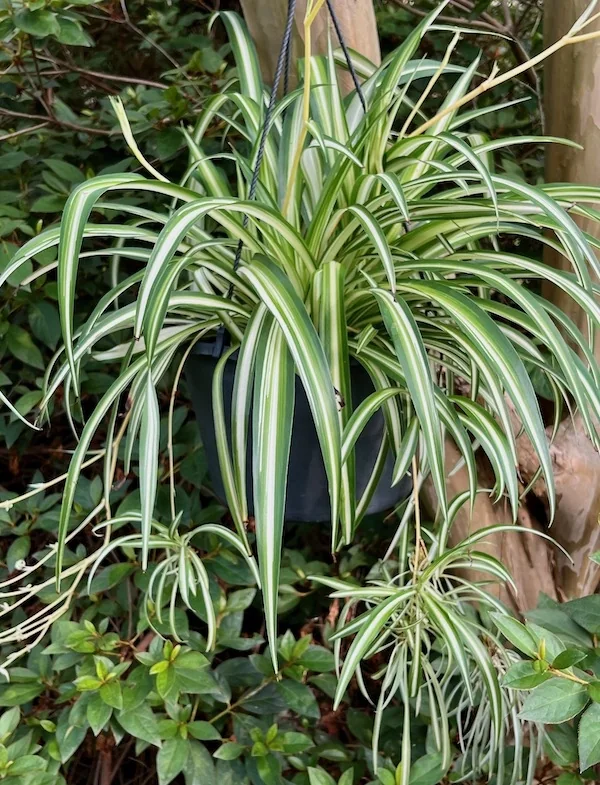
The reminder is a quick moisture check. It helps you notice changes without turning watering into a weekly obligation. A ZZ plant and a spider plant on the same shelf may be ready on very different days.
BEHIND THIS GUIDE
Where the advice comes from.
Plant care is based on the sources below. Planting layouts and beginner routines combine that guidance into one practical plan; they are editorial choices, not results from a Plant Care Steps growing trial.
- NC State: ZZ plant light, dry soil, feeding, and propagation ↗
- UConn Extension: rhizomes, repotting, and symptoms ↗
- Illinois Extension: repotting ↗
- ASPCA: ZZ plant and irritating calcium oxalates ↗
- Manufacturer: US fertilizer formula and application directions ↗
Compiled with AI assistance. These first-edition guides have not yet had an independent horticultural review. Read our editorial approach.