YOUR SIMPLE GROWING PLAN
One pot. Here’s the plan.
Before you start Start Snapshot Rose in cool spring weather in cold-winter areas, or fall in mild-winter areas. Acclimate a greenhouse plant gradually and protect it from a hard freeze.
What you need · pot, mix & supplies
- 1 rooted Snapshot Rose dwarf snapdragon nursery plant
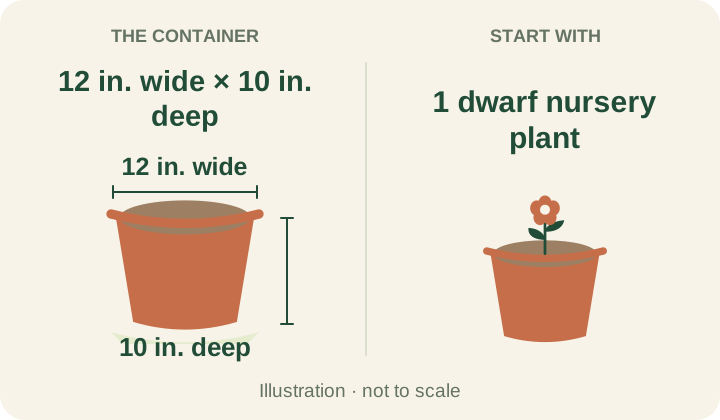
- One 12-inch-wide, 10-inch-deep pot with drainage
- Fresh potting mix, a watering can, and small snips
The soil
Miracle-Gro Organic Potting Mix (US, with starter nutrients; check your bag for its additional-feeding directions)
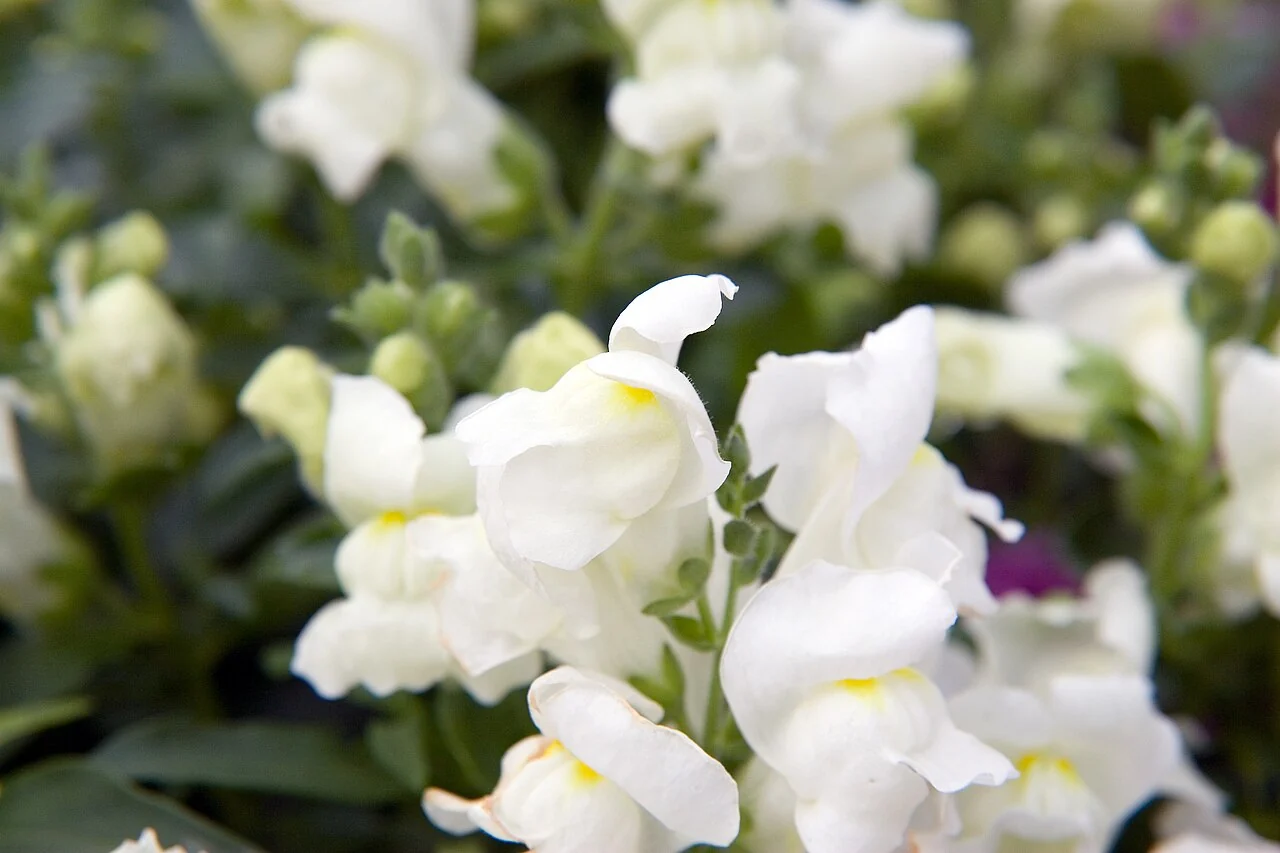
Is this your plant? Choose Antirrhinum majus Snapshot Rose, a dwarf garden selection. This one-plant pot plan is not for tall cutting snapdragons; another series may have a different size or flowering season.
A sunny porch or patio in spring or fall. Start with nursery plant.
One draining pot for one dwarf plant. This roomy starter layout is an editorial choice, not a minimum for all snapdragons; tall cutting types need another plan.
Choose one rooted Snapshot Rose nursery plant, about 8–10 inches tall and 10–12 inches wide at maturity. The nursery tag should name this dwarf selection.
See the planting illustration
- 01
Buy the short kind
Look for Snapshot Rose on the nursery tag. It is a dwarf garden snapdragon. A tall cutting variety will not stay this small just because you use a small pot.
- 02
Plant at the old level
Set the nursery root-ball surface level with the fresh mix. Leave 1 inch below the rim and water until excess drains.
- 03
Choose the cool sunny spot
Ease a greenhouse plant into outdoor sun over about a week. Protect it from a hard freeze while it is settling in.
- 04
Snip spent spikes
Once the flowers on a spike have faded, use clean snips to cut the spent spike just above a healthy leaf or side shoot below it. Leave fresh buds in place. Removing old spikes can encourage more flowers, but cannot overcome summer heat.
Other ways to start
Start from purchased Snapshot Rose seed+
About 8–10 weeks before your local planting-out window, sow 1 seed in each of 2 small cells of moist seed-starting mix. Surface-sow; light is needed, so avoid a thick covering. Mist gently or water from below without washing the seed away. Johnny’s general snapdragon guidance gives 70–75°F and roughly 7–14 days for germination; follow the packet if it differs. Grow seedlings in bright light. Keep one healthy plant for this pot and give away the spare. Two seeds do not guarantee a surviving plant; a nursery start is the simpler fallback.
YOUR EVERYDAY ROUTINE
Water & fertilizer at a glance.
- Water when
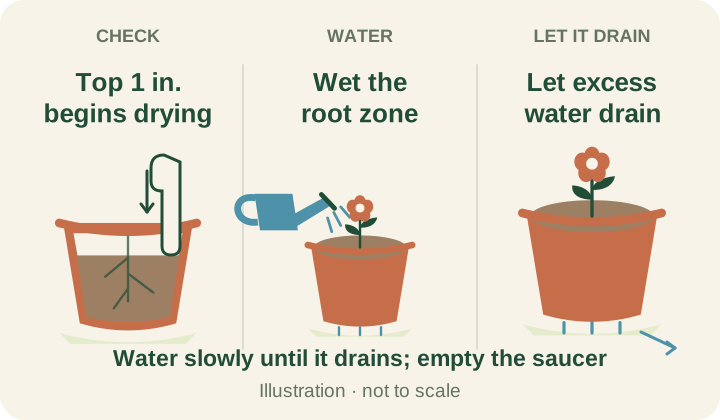
- Check each morning. Water as the top inch starts drying, then drain. Wait if wet; do not let the whole pot dry out. Empty the saucer or outer pot after draining.
- Fertilizer
- Jack’s Classic Blossom Booster (US 10-30-20)
- Amount
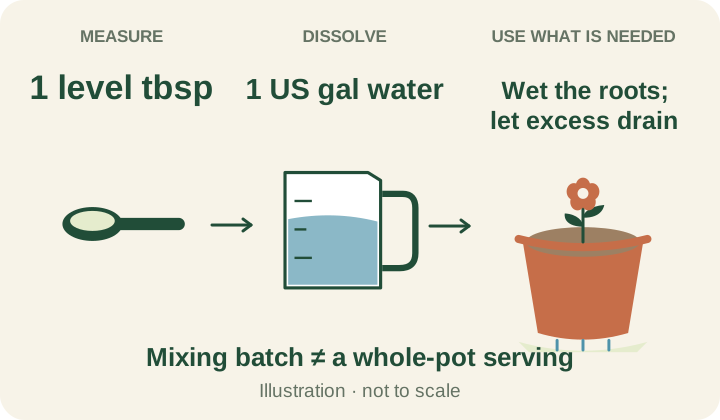
- 1 level tablespoon in 1 US gallon of water
- What that amount covers
- Mix into water. Apply only enough solution to wet this pot and drain; the mixing batch is not the amount to pour on.
- How often to feed
- Every 10 days while buds and flowers develop.
- When to start or pause
- Check the purchased potting-mix bag for when extra feeding is due. A short display may need none. Feed only a growing, rooted plant with buds or flowers; delay if wet and pause during heat stress.
This dilution and 10-day interval follow the manufacturer’s outdoor directions. The gallon is a mixing batch, not a per-pot dose. Use one feeding program and follow your actual US package.
Product directions ↗Use level measures and the exact US formula shown. If your label differs, follow it; do not transfer this dose to another formula or combine feeding programs.
See the watering & feeding illustrations

US PRODUCT REFERENCE
Jack’s Classic
Blossom Booster
10-30-20Soluble: mix into water
Check the official US product ↗Illustrated reference; check the manufacturer’s current packaging and US label.
Cool-season flowers and summer slowdown
Snapshot is a dwarf garden series with short, densely flowered spikes. A nursery plant in bud provides the quickest display. Flowering often slows in summer heat; this is a spring or fall pot, rather than a promise of nonstop midsummer flowers.
Choose a local spring or fall window
Use a cool spring window in cold-winter regions. In mild-winter areas, fall planting can provide winter or early-spring color. Acclimated snapdragons tolerate light frost, but protect a fresh greenhouse plant from a hard freeze. Local weather decides the planting date.
For regional planting windows, find your local Cooperative Extension office ↗.
Something looking off?
Why did flowering slow when it got hot?+
Snapdragons prefer cooler conditions. Keep checking moisture, remove spent spikes, and wait for suitable weather. More fertilizer will not cancel heat stress.
Can I use the tall snapdragons sold for bouquets?+
Choose labeled dwarf Snapshot Rose for this recipe. Tall cutting types need more root room and stem support, and their flower timing can differ.
Will it grow back next year?+
Most US gardeners use snapdragons as seasonal flowers. Some survive mild winters, but this container plan does not guarantee a permanent perennial.
Starting seedlings and keeping leaves healthy
Start tiny seeds in small indoor cells
Start indoors in small cells, then move a sturdy seedling to its final pot. Direct-sowing tiny seeds into a big outdoor container makes moisture and spacing harder to manage.
Allow airflow and inspect damaged foliage
Rust, leaf spots, and root problems can affect snapdragons. Space the pot so air moves around it, remove damaged foliage, and inspect the plant before assuming a nutrient shortage.
Help with your next step.
- Check the mix before watering
Learn to check the mix before watering a cool-season pot.
- Check the feed already in your mix
Check what food is already in the mix before measuring a liquid feed.
Sources, dates & detailed PDF
Editorial plans, not results from a Plant Care Steps growing trial. Compiled with AI assistance; they have not yet had an independent horticultural review. Editorial approach.
- PanAmerican Seed: Snapshot size, sun, and seasons ↗
- NC State: snapdragon moisture, heat, and disease cautions ↗
- Johnny’s: seed-starting depth, temperature, and timing ↗
- Iowa State: container care ↗
- Manufacturer: US fertilizer formula and application directions ↗
- Manufacturer: starter feed in the named potting mix ↗
- JR Peters: Blossom Booster product identity ↗
- Illinois Extension: cool-season growth and removing spent spikes ↗
- RHS: where to cut a spent flower head ↗
Something needs updating? Suggest a correction
Published · Updated
Sources checked View sources ↗
Detailed PDF ↓Full reference edition with expanded explanations and illustrations. Its publication dates appear in the file.