YOUR SIMPLE GROWING PLAN
One pot. Here’s the plan.
A porch or patio with morning sun and easy access to shelter. Start with nursery plant.
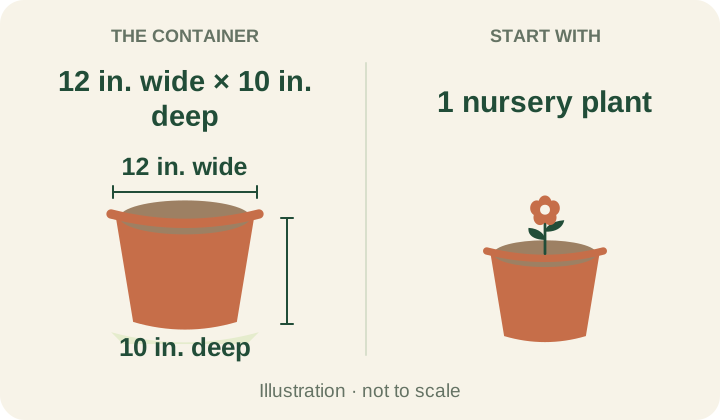
Use one pot with open drainage holes. This is a roomy one-plant starting recipe, not a packed instant-display planter.
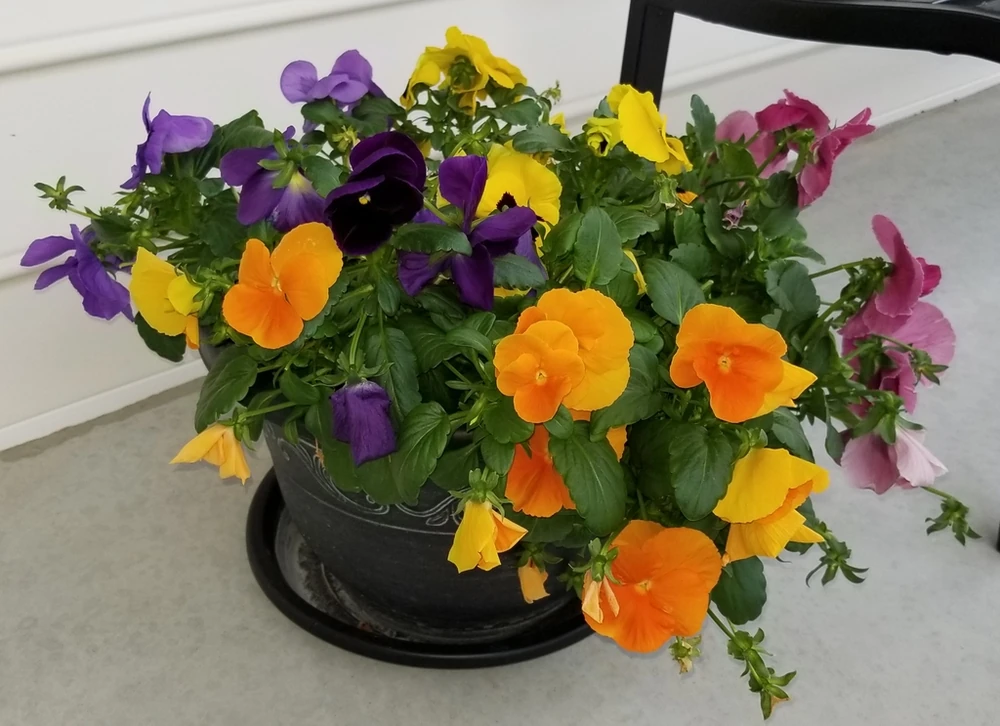
Choose an upright garden pansy with a tag spread of 6–12 inches. This plan excludes vigorous trailing pansies and perennial violets.
- 01
Choose cool weather and a healthy start
Buy a compact plant with dark green leaves and buds, rather than long floppy stems. Spring or fall is usually simplest; in mild-winter regions, a fall display may continue through winter. Do not start this project in peak summer heat.
- 02
Plant one at its nursery level
Fill the pot with moist potting mix, set the root-ball surface level with the new mix, and leave about 1 inch below the rim for watering. Keep the leafy crown above the mix. One plant has room to spread as it grows.
- 03
Water, drain, and settle it in
Water slowly until excess runs from the holes, then empty the saucer. If the plant came from a warm sheltered greenhouse, introduce it gradually to outdoor sun and wind over about a week; protect it during that transition.
- 04
Remove the whole finished bloom
Check weekly for fading flowers. Follow each finished flower’s thin stalk down to its base and snip it off, including any forming seed pod. Leave healthy leaves, unopened buds, and fresh flowers.
Help with the setup: drainage holes and saucers · potting mix vs. garden soil.
Other ways to start
Start pansies from seed+
Allow roughly 8–10 weeks before the intended outdoor planting time, plus any extra lead time on your seed packet. Use a seed-starting mix and follow the packet’s depth and germination instructions. Young plants need bright light and cool growing conditions; a nursery start is quicker for one pot.
Buy a ready-planted bowl+
A nursery bowl gives an immediate fuller display. Check that it drains and ask whether it already contains fertilizer. Follow its plant count and feeding information rather than adding another full dose to this one-plant recipe.
YOUR EVERYDAY ROUTINE
Water & fertilizer at a glance.
- Water when
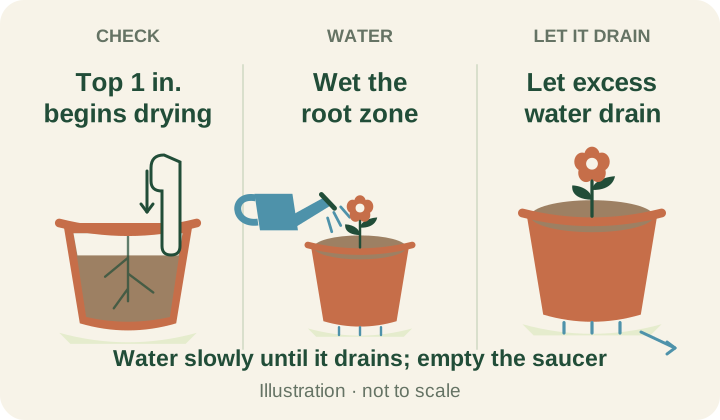
- Check daily. When the top inch begins to dry, water the mix slowly until excess drains. Empty the saucer; wait if moist or frozen.
- Fertilizer
- Jack’s Classic Blossom Booster (US 10-30-20)
- Amount
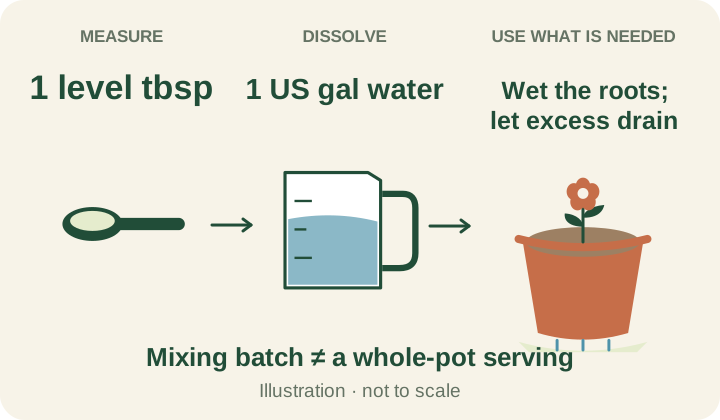
- 1 level tablespoon in 1 US gallon of water
- What that amount covers
- Mix into water. This is a mixing batch, not the total to pour into one pot.
- How often to feed
- Every 10 days during active growth after the starter feed ends.
- When to start or pause
- Use the fresh mix’s starter nutrients first. Delay if wet; pause when frozen, heat-stressed, or not growing. Use only enough solution to wet the root zone and drain.
When to water.
Check the top inch of potting mix each morning. When it starts to feel dry, water slowly at the mix surface until excess drains; empty the saucer. Leave still-moist mix alone. Cool cloudy weather may mean several days between drinks, while a windy sunny spot dries faster. Shelter a pot before a hard freeze, and do not pour water onto frozen mix. A wilted plant in wet mix needs a drainage check, not an automatic extra drink.
Exactly what to feed it.
Add no extra fertilizer when planting in the enriched mix named here. It supplies starter nutrients for up to 2 months; check your bag because that is not a guaranteed duration. Once that starter feed is spent, use the recipe below only if the plant is still actively growing, budding, or flowering.

US PRODUCT REFERENCE
Jack’s Classic
Blossom Booster
10-30-20Soluble: mix into water
Check the official US product ↗Illustrated reference; check the manufacturer’s current packaging and US label.
A SPECIFIC US PRODUCT
Jack’s Classic Blossom Booster (US 10-30-20)
Dissolve 1 level tablespoon of Jack’s Classic Blossom Booster 10-30-20 in 1 US gallon of water. Use the solution for a normal thorough root watering every 10 days during active growth after the starter feed ends. Apply only enough to wet this pot and let excess drain; the gallon is a mixing batch, not one pot’s dose. Delay if the mix is still wet. Pause during frozen conditions, stopped growth, or heat stress; do not stack another fertilizer on top.
Check the manufacturer’s product page ↗This combines the manufacturer’s outdoor flower-food rate with Extension guidance for active container pansies. It is not a professional winter-bed feeding program. Check your US package if its directions differ.
A cool-season display and when it finishes
Ordinary upright pansies are small mounds, usually about 4–10 inches tall and wide, with larger cultivars approaching 12 inches. A plant already in bud can color a pot quickly. Treat it as a cool-season display: hot weather often ends the show, even if watering and feeding have been correct.
Local spring, fall, and winter conditions
Use your local cool spring or fall planting window. Acclimated pansies tolerate light freezes, but an exposed pot can freeze harder than a garden bed. In mild winters they may keep flowering; in colder places, plan for a seasonal display and shelter the pot during a hard freeze. There is no single planting month for the whole US.
For regional planting windows, find your local Cooperative Extension office ↗.
Something looking off?
Do pansies need full sun or shade?+
They flower well in full to part sun during cool weather. As temperatures rise, morning sun with afternoon shade is gentler. Deep shade can mean fewer flowers and stretched stems.
Will this pansy come back every year?+
Some plants survive a mild winter, but ordinary bedding pansies are usually grown as cool-season annuals. Do not plan on a permanent perennial pot. Renew the display when plants decline in sustained heat or severe winter weather.
Why are my pansies wilting?+
Feel the mix first. Dry mix needs a thorough watering; persistently wet mix needs drainage and root checks. Hot weather can also make plants decline. Fertilizer is not a cure for summer heat or rotting roots.
Can I use the same plan for trailing pansies or violets?+
Not the one-plant size plan. Trailing pansies can spread much farther, and perennial violets have different growth habits. Check for an upright Viola × wittrockiana with a 6–12-inch tag spread before buying.
Season changes and a simple weekly tidy
Adjust the position as the season changes
Start with full to part sun while the weather is cool. A move to morning sun and afternoon shade can help during a brief warm spell. When heat persists and growth deteriorates, replace the plant with a summer flower instead of trying to rescue the display with more feed.
Remove old blooms and check the forecast
Remove old blooms and seed pods, then clear fallen petals from the mix. Check the coming forecast. Before a hard freeze, move the pot to a sheltered, unheated space for the coldest period; return it to outdoor light once conditions improve. Keep drainage open, and resume watering only when the mix is unfrozen and needs it.
A pot you can move with the weather
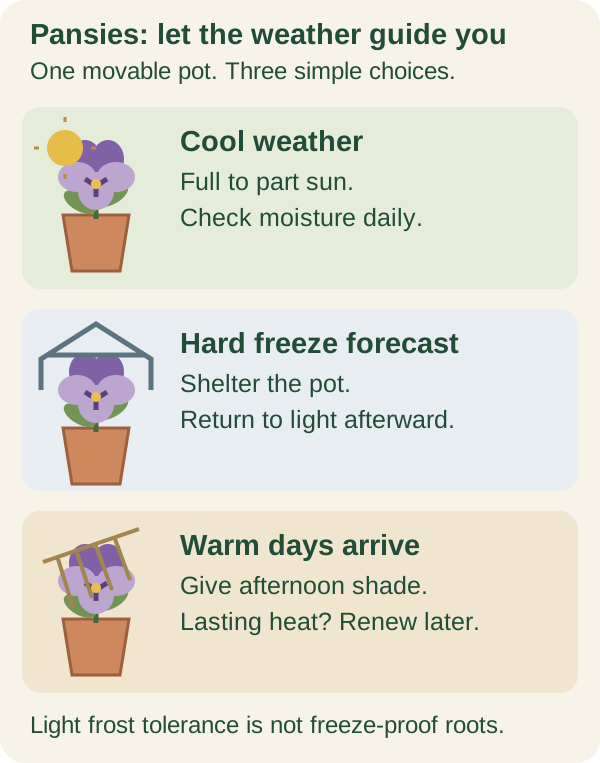
Seasonal care: Iowa State Extension. Protection for pots: UGA Extension. Original teaching schematic; timing depends on your local weather.
BEHIND THIS GUIDE
Where the advice comes from.
Plant care is based on the sources below. Planting layouts and beginner routines combine that guidance into one practical plan; they are editorial choices, not results from a Plant Care Steps growing trial.
- Iowa State: pansy size, cool-season care, container feeding, and seed starting ↗
- Clemson Extension: choosing pansies, seasonal decline, and deadheading ↗
- NC State: Viola × wittrockiana identity and growing conditions ↗
- Iowa State: moisture checks and care for a container ↗
- Iowa State: acclimating and planting nursery bedding plants ↗
- UGA Extension: drainage and protection for winter pots ↗
- Iowa State: when to replace cool-season flowers ↗
- Manufacturer: starter feed in the named potting mix ↗
- Manufacturer: US fertilizer formula and application directions ↗
- JR Peters: Classic outdoor watering-can dose and frequency ↗
Something needs updating? Suggest a correction
Published · Updated
Compiled with AI assistance. These first-edition guides have not yet had an independent horticultural review. Read our editorial approach.