YOUR SIMPLE GROWING PLAN
One pot. Here’s the plan.
Before you start Start in mild spring or fall weather; protect tender nursery growth from frost, and expect slower flowering during prolonged summer heat.
What you need · pot, mix & supplies
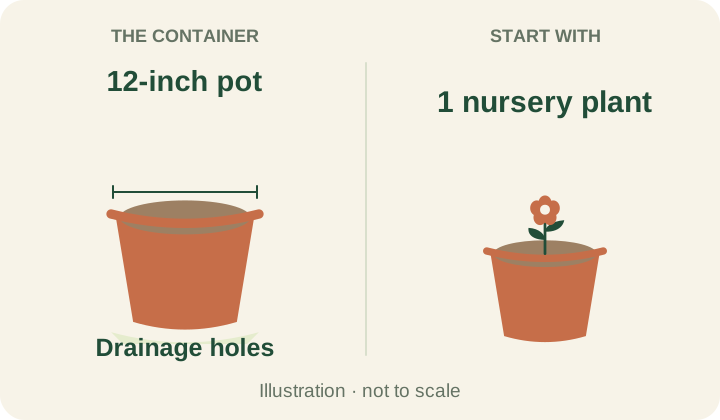
- One draining pot, 12 inches wide and at least 10 inches deep
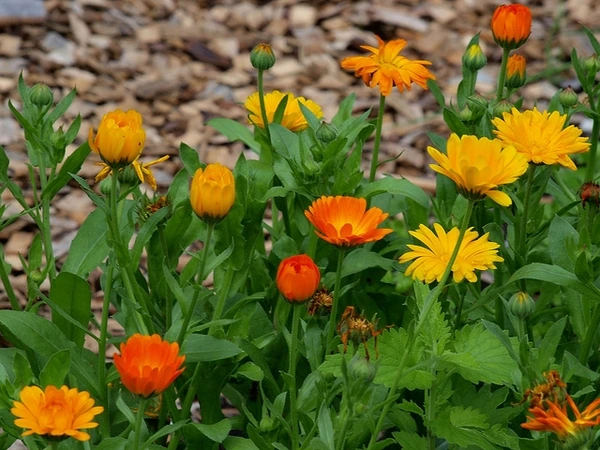
- 1 compact Bon Bon calendula nursery plant
- Fresh potting mix, a watering can, and scissors
The soil
Miracle-Gro Organic Potting Mix (US; includes starter nutrients—check your bag)
A sunny porch or patio in mild weather. Start with nursery plant.
About 12 inches wide and at least 10 inches deep, with drainage; keep one compact Bon Bon plant.
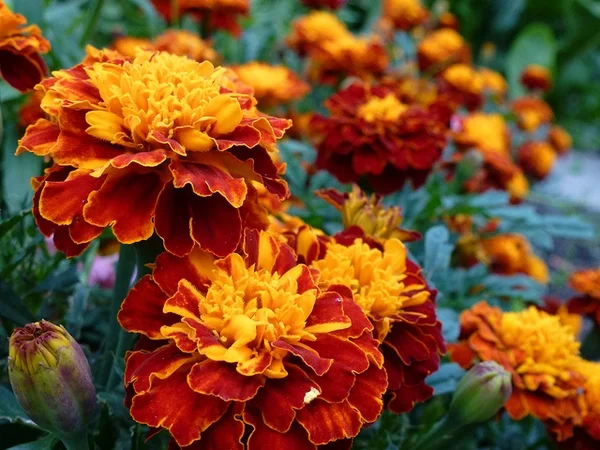
Choose a Calendula Bon Bon plant, not a Tagetes marigold.
See the planting illustration
- 01
Choose a compact calendula
Look for Calendula officinalis and Bon Bon on the label. The name pot marigold does not mean it is the same plant as a French marigold.
- 02
Plant at nursery depth
Moisten the mix and set the root ball at its previous level. Leave an inch below the rim and water until the pot drains.
- 03
Let the new roots settle
Check the root ball and nearby mix daily and keep both lightly moist. After the plant is growing well, use the top-inch moisture check below. Leave room for air between plants.
- 04
Snip spent flowers
Remove faded flower heads before they set seed. A few stems can go in a vase; keep healthy leaves on the plant.
Other ways to start
Sow two seeds instead+
Sow 2 Bon Bon seeds about 2 inches apart near the center, ½ inch deep. Keep the seed zone moist. After true leaves appear, snip the weaker seedling at mix level; do not pull on its neighbor’s roots. Keep one plant. This two-seed layout gives you a spare, not a second plant to crowd in.
YOUR EVERYDAY ROUTINE
Water & fertilizer at a glance.
- Water when
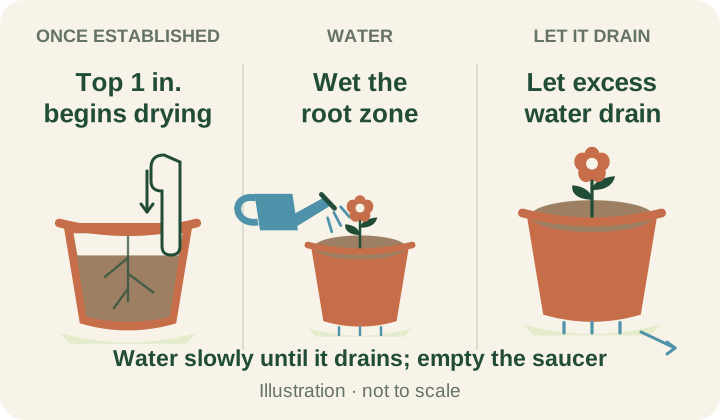
- Keep the seed zone and young roots moist. Check a new nursery plant’s root ball too. Once growing well, check daily; water as the top inch starts drying, then drain and empty the saucer.
- Fertilizer
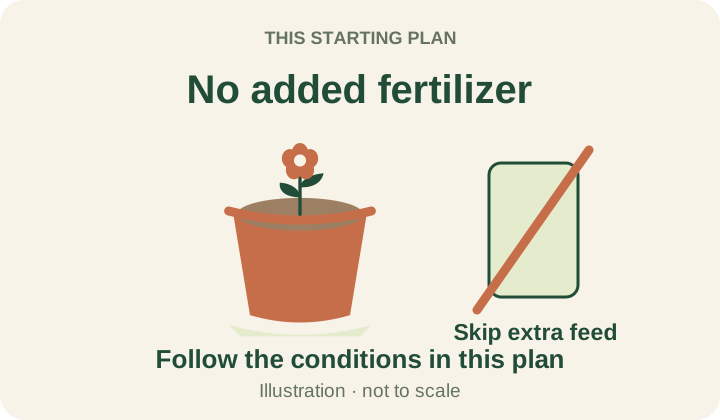
- No added fertilizer for this starting plan
- Amount
- None
- What that amount covers
- No fertilizer dose to calculate.
- How often to feed
- No automatic feeding schedule.
- When to start or pause
- Add no extra fertilizer with fresh enriched mix. If growth later weakens, check light, moisture and drainage before reassessing the bag’s nutrients; few flowers alone do not call for feeding.
See the watering & feeding illustrations
Sprouting and first flowers
Bon Bon is a compact series, about 12 inches tall and wide. A nursery plant may already have buds. From seed, allow roughly 5–15 days for emergence, then time for leafy growth before flowering.
Choose a mild growing season
Calendula favors mild conditions and can slow down during prolonged summer heat. Choose a local spring or fall window and protect tender nursery growth if frost is forecast.
For regional planting windows, find your local Cooperative Extension office ↗.
Something looking off?
Can I start calendula indoors for earlier flowers?+
Yes. Wisconsin Extension suggests starting 6–8 weeks before your local last frost. Use individual seed pots and provide strong light once they sprout. Gradually introduce outdoor sun and wind before planting out; a protected indoor seedling is not ready for a sudden full day on the patio.
Does white powder on the leaves mean I should feed it?+
No. A white or gray powdery coating can be powdery mildew, which calendula can get. Give the plant more air and avoid extra nitrogen. Mild patches need not mean losing the plant; monitor new growth and flowering. Get the problem identified if it spreads. Fertilizer will not remove a fungal coating.
Will the same calendula plant come back next year?+
Treat this as an annual starter project. Calendula can drop seed and produce new seedlings, so a new plant next spring does not mean the old plant survived. Keep the Bon Bon label and buy that named type again when you want the same compact layout; do not assume a volunteer seedling has the same size.
Removing faded flowers and choosing a size
Remove faded flower heads
If faded heads remain, the plant puts energy into seed formation. Snipping them regularly helps extend the display without adding another product.
Choose a compact calendula for this pot
Bon Bon grows about 12 inches tall and wide. The 12-inch width, 10-inch depth, and one-plant layout are our roomy beginner recipe, not an Extension-tested minimum. Taller cutting cultivars need a different space plan. The reference photo does not prove the cultivar or show a trial of this recipe.
Help with your next step.
- Read the starter-feed instructions on your potting mix
Check what the bag already supplies before beginning calendula’s later feeding plan.
- Compare more flower pots
Compare starting methods and pot sizes if you want another small outdoor flower project.
Sources, dates & detailed PDF
Editorial plans, not results from a Plant Care Steps growing trial. Compiled with AI assistance; they have not yet had an independent horticultural review. Editorial approach.
- Wisconsin Extension: Bon Bon, seed depth, flowering, and restrained feeding ↗
- NC State: calendula growing conditions and identity ↗
- Iowa State: nutrients and care in containers ↗
- Manufacturer: starter feed in the named potting mix ↗
- Minnesota Extension: seed moisture, thinning, and acclimating seedlings ↗
- Minnesota Extension: recognizing and managing powdery mildew ↗
- RHS: calendula as an annual that can self-seed ↗
Something needs updating? Suggest a correction
Published · Updated
Sources checked View sources ↗
Detailed PDF ↓Full reference edition with expanded explanations and illustrations. Its publication dates appear in the file.