YOUR SIMPLE GROWING PLAN
A garden bed. Here’s the plan.
Before you start Plant a 3–5-eye bare-root division in early fall, with eyes 1–2 inches below settled soil; use a permanent garden bed with winter chill.
What you need · pot, mix & supplies
- 1 healthy ‘Krinkled White’ peony division with 3–5 eyes
- A spade, ruler, and watering can
- An optional support hoop for a windy site
The soil
Well-drained, reasonably fertile garden soil. Keep the crown clear of deep mulch.
A sunny, permanent garden bed. Start with bare-root division.
Allow at least 2 ft from the plant center to the bed edge. Choose a place it can stay.
Buy a firm, healthy ‘Krinkled White’ division with 3–5 eyes. This plan is for an herbaceous peony, not a woody tree peony.
See the planting illustration
- 01
Choose a lasting spot
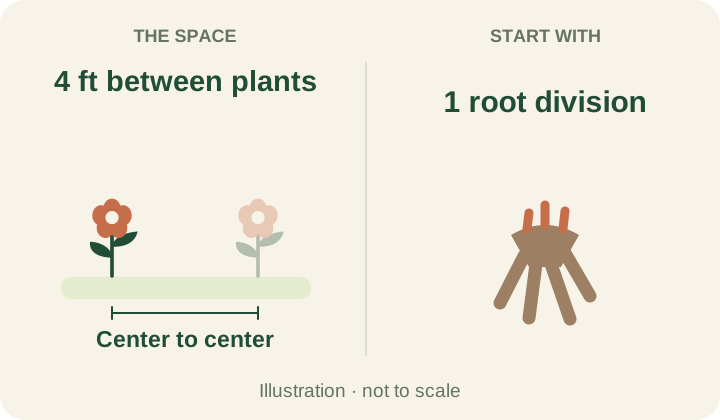
Leave 4 ft between centers. Peonies dislike being moved repeatedly and need winter chill.
- 02
Measure from the eyes
Place the roots with the eyes facing up. After backfilling and settling, the eyes should have only 1–2 inches of soil above them. Measure from the buds, not the bottom of the roots. Deeper planting can prevent flowering.
- 03
Backfill gently and water
Settle the garden soil around the roots and water. Recheck the eyes’ depth after the soil settles.
- 04
Keep the crown clear
Do not pile mulch over the eyes. Mark the spot so you can protect the emerging shoots next spring.
Other ways to start
Start with a potted peony in spring+
Buy the same cultivar as a nursery plant. Check where its eyes/crown sit rather than blindly burying the entire nursery surface deeper. Keep the eyes shallow, with drainage and the same eventual spacing.
Divide an established peony+
Divide in early fall when needed, keeping 3–5 healthy eyes and good roots in each piece. Replant promptly at the same shallow eye depth. Seeds do not reliably reproduce this named cultivar and take much longer; a healthy established clump does not need routine division.
YOUR EVERYDAY ROUTINE
Water & fertilizer at a glance.
- Water when
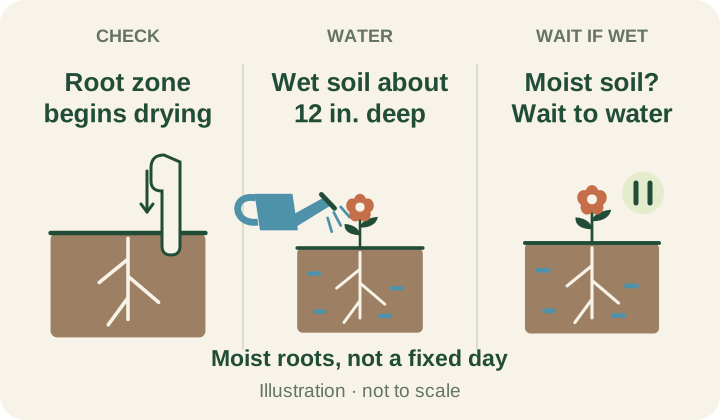
- Water deeply when root-zone soil is drying, moistening about 12 inches down. Check weekly during the first season, sooner in heat; wait after sufficient rain.
- Fertilizer
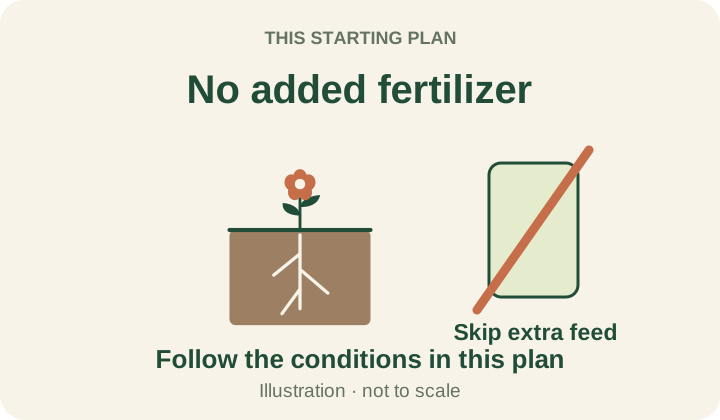
- No added fertilizer for this starting plan
- Amount
- None
- What that amount covers
- No fertilizer dose to calculate.
- How often to feed
- No routine feeding.
- When to start or pause
- Start without extra feed in fertile ground. Check eye depth, light, and drainage, then use a soil test if growth is weak. Avoid late-summer or fall fertilizer.
Keep any soil-test-directed fertilizer away from the crown.
See the watering & feeding illustrations
First blooms and an established display
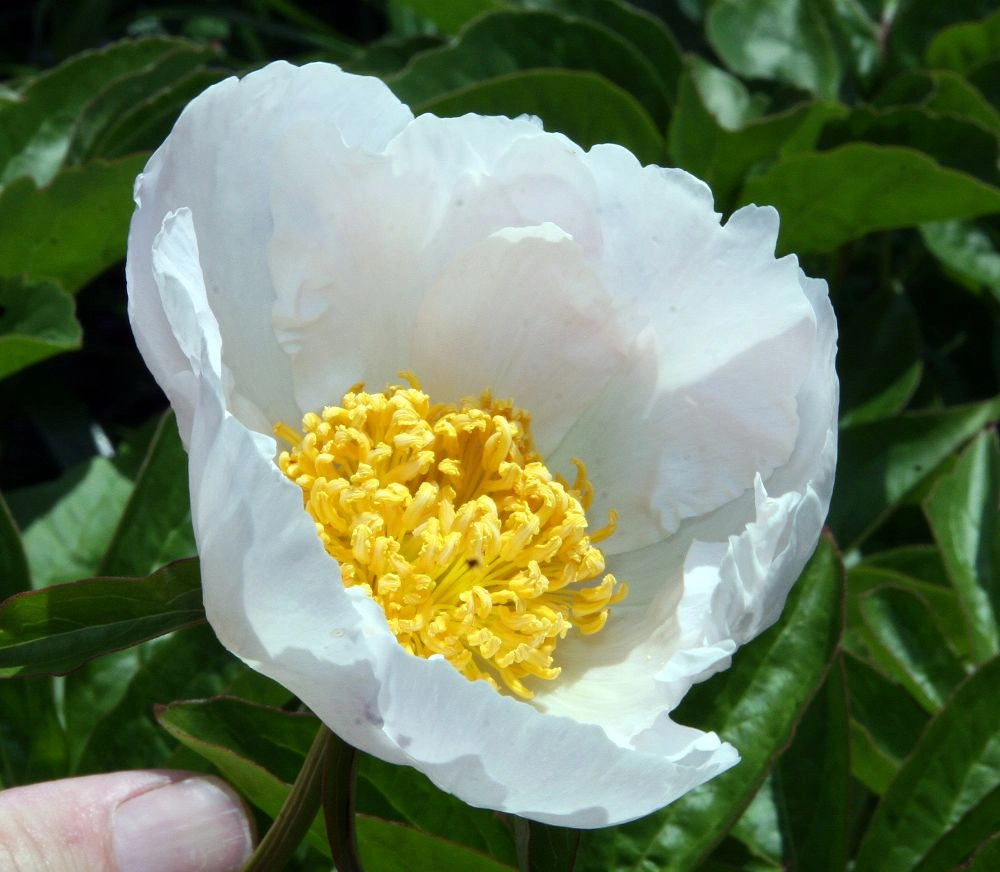
‘Krinkled White’ has single white flowers and golden centers, reaching about 32 inches tall and roughly 2–3 ft wide. Expect a spring or early-summer flowering period, rather than all-season bloom. A new division may give few flowers at first; a fuller display can take three or four growing seasons.
Fall planting and winter chill
Plant bare roots in early fall while soil is workable. Herbaceous peonies generally suit USDA zones 3–8, with cultivar and local climate differences. A mild winter without enough chill can limit flowering.
For regional planting windows, find your local Cooperative Extension office ↗.
Something looking off?
It has leaves but no flowers. What went wrong?+
A young plant may simply need time. Also check eyes buried too deeply, too much shade, or excessive nitrogen. More fertilizer is not the default fix.
Do the ants help flowers open?+
Peony buds can attract ants, but flowers do not need ants to open. Their presence alone is not a reason to spray.
Buds turned dark and moldy.+
Cool wet conditions can favor botrytis. Remove affected material, improve airflow, and avoid wetting foliage. Local Extension can help distinguish disease from frost or other bud damage.
Can I use this plan for a tree peony?+
No. ‘Krinkled White’ is herbaceous: its stems die back in fall. Tree peonies retain woody stems and have different planting and pruning requirements. Check the nursery tag before applying the shallow planting or fall cutback steps.
Is it a good plant for a pet that chews leaves?+
Choose an inaccessible spot instead. ASPCA lists peony as toxic to pets, and RHS flags ‘Krinkled White’ as potentially harmful to cats and dogs. Keep dug roots and cut foliage out of reach.
Supporting flowers and caring after bloom
Add a hoop before shoots grow tall
The single flowers of ‘Krinkled White’ are less top-heavy than many double peonies. A hoop can still help in an exposed site; place it early so shoots grow through.
Remove spent heads and clear dead stems
Remove spent flower heads but leave healthy foliage to feed the roots. After a hard freeze, cut back dead stems and remove the debris. Do not leave diseased foliage around the crown.
Help with your next step.
- Compare your first flower project
Check whether a garden-bed plant or a smaller container project fits your space.
- Browse flower growing plans
Compare the named varieties and starting spaces before choosing another plant.
Sources, dates & detailed PDF
Editorial plans, not results from a Plant Care Steps growing trial. Compiled with AI assistance; they have not yet had an independent horticultural review. Editorial approach.
- RHS: ‘Krinkled White’ identity and growth ↗
- American Peony Society: cultivar registry ↗
- Iowa State: planting, flowering, and peony care ↗
- Illinois Extension: dividing peonies ↗
- UConn: peony care and problems ↗
- Maryland Extension: soil-test-based peony feeding ↗
- Maryland Extension: soil-test-led care of garden perennials ↗
- ASPCA: peony and pets ↗
Something needs updating? Suggest a correction
Published · Updated
Sources checked View sources ↗
Detailed PDF ↓Full reference edition with expanded explanations and illustrations. Its publication dates appear in the file.