YOUR SIMPLE GROWING PLAN
One garden plant. Here’s the plan.
A sunny garden border with room for a tall clump. Start with nursery plant.
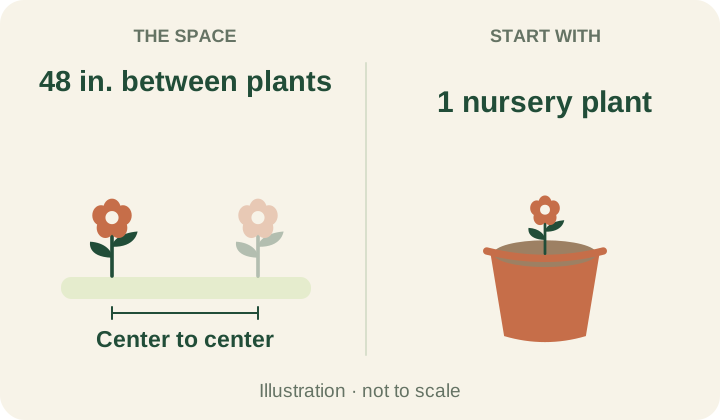
Reserve a 4 × 4 ft patch for one plant. If repeating, measure 4 ft from center to center. This is a roomy layout, not a minimum.
Choose a plant labeled ‘Becky’. It is a tall Shasta daisy, not a compact pot variety or wild oxeye daisy.
- 01
Pick the spot before buying
Mark a 4 × 4 ft patch in a sunny border. Avoid low ground where water stands after rain. ‘Becky’ can reach about 3–4 ft tall, so place it behind shorter flowers.
- 02
Keep the nursery soil level
Water the nursery pot before planting. Dig a hole wide enough for the root ball and set its surface level with the surrounding ground. Backfill gently; do not bury the leafy base.
- 03
Soak the root ball, then check
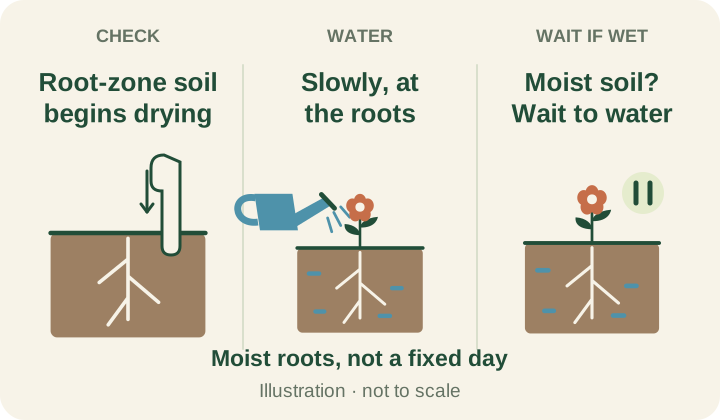
Water slowly after planting so the original root ball and surrounding soil are moist. Check the root ball regularly through the first growing season, especially during dry or windy weather. Water when it starts drying; skip still-wet soil.
- 04
Snip off finished flowers
Remove faded flower heads as you notice them. This can encourage another flush. Once a stem has finished flowering, cut it back to the low leaves and leave those green leaves in place.
Other ways to start
Divide an established ‘Becky’+
In spring as new growth begins, lift an overcrowded clump and split it into smaller rooted sections. Keep healthy growing points on each piece, discard a dead center, and replant promptly at the same depth. Division keeps the named plant’s characteristics.
Choose seed as a different project+
Seed-grown Shasta daisies are available, but a generic seed packet is not a reliable way to reproduce ‘Becky’. For this exact plan, buy a labeled nursery plant or divide an established ‘Becky’. Follow a seed strain’s own packet for sowing and final spacing.
YOUR EVERYDAY ROUTINE
Water & fertilizer at a glance.
- Water when
- Keep a new root ball from drying out. Once established, water when the top 2 inches of soil are dry. Wet the root zone slowly; wait if rain has kept it moist.
- Fertilizer
- No added fertilizer for this starting plan
- Amount
- None
- What that amount covers
- No fertilizer dose to calculate.
- How often to feed
- No routine feeding.
- When to start or pause
- Start in average garden soil. For weak growth, check sun, drainage, and crowding; use a soil test before choosing fertilizer.
When to water.
During the first growing season, check the original nursery root ball as well as the soil around it; water before the new roots dry out. Once established, use the top 2 inches of dry soil as the cue. Water slowly at ground level until moisture reaches through the root zone, then wait for drying before repeating. Rain counts. There is no fixed gallon amount or weekly schedule for every garden soil.
Exactly what to feed it.
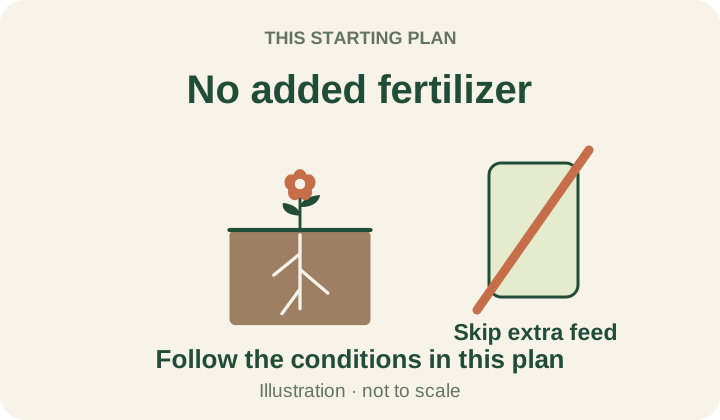
No fertilizer purchase is needed for this starting plan in average garden soil. Ball Seed lists ‘Becky’ for no fertilizer or feeding only when needed. More plant food is not the first fix for poor flowering.
THE SIMPLE FEEDING PLAN
Start without extra fertilizer.
If growth stays weak, first check sun, drainage, and whether the clump is crowded. In poor soil, use a soil test to choose an amendment and its rate. Do not copy a container’s liquid-feed schedule onto this garden bed; no routine fertilizer dose is prescribed here.
Summer flowers and mature clump size
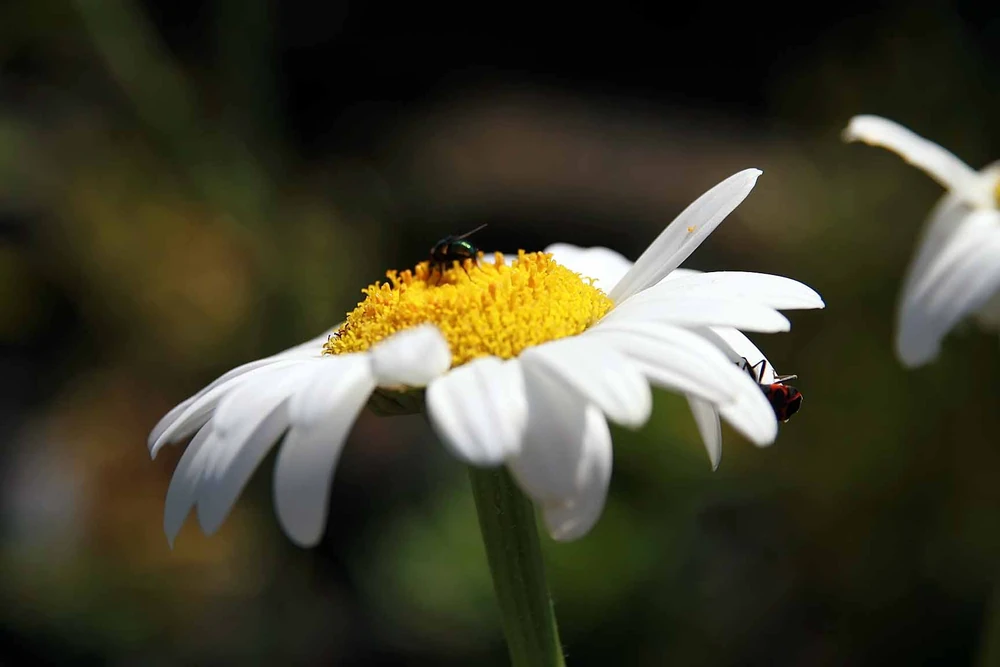
Expect white flowers with yellow centers in summer, sometimes continuing into early fall. ‘Becky’ is a clump-forming perennial, commonly around 3–4 ft tall in flower. Published spreads vary; the Perennial Plant Association lists about 40 inches. The 4-ft space in this recipe gives that mature clump room. A new plant may take a growing season to fill out.
Spring planting and winter drainage
Mild spring weather is the simplest time to start, once the ground is workable and drains well. The Perennial Plant Association and Monrovia list ‘Becky’ for USDA zones 4–9. Early-fall planting can work where roots have time to establish before winter; avoid planting just before the ground freezes.
For regional planting windows, find your local Cooperative Extension office ↗.
Something looking off?
Does Shasta daisy come back every year?+
‘Becky’ is a perennial, so a healthy plant can return after winter. It is not permanent: crowded clumps can lose vigor and benefit from division. Wet winter soil can kill the crown even where temperatures are within its hardiness range.
Why is my Shasta daisy not flowering?+
Check that it receives enough sun and that the clump is not overcrowded. A newly planted or recently divided plant may be settling in. Excess fertilizer can produce soft leafy growth; do not add a bloom booster automatically.
Can I grow this in a small patio pot?+
This recipe is for tall ‘Becky’ in the ground. A compact Shasta cultivar, such as ‘Snowcap’, is a different plant-size choice and needs its own container plan. Do not squeeze this full-size plant into a small pot.
Is this the same as oxeye daisy?+
No. Look for Leucanthemum × superbum ‘Becky’ on the tag. Oxeye daisy is Leucanthemum vulgare. Washington’s weed board specifically lists ‘Becky’ as an alternative to invasive oxeye daisy; that local recommendation is not a claim that every daisy is suitable everywhere.
After flowering, winter care, and division
Keep the green base after flowering
After flowering, shorten finished stems to the low leafy base. Keep healthy green basal leaves. Clear old dead foliage before spring growth, and keep mulch away from the crown. Freely draining soil is the main winter requirement; a soggy crown needs a better site, not extra fertilizer.
Divide an older clump in spring
Check an older clump every 2–3 years. A dead middle, crowded growth, or fewer flowers can signal time to divide; leave a vigorous clump alone. In early spring, dig it up, keep healthy outer sections with roots and shoots, and discard the dead center. Replant with the crowns at soil level and water them in.
What to cut after flowering
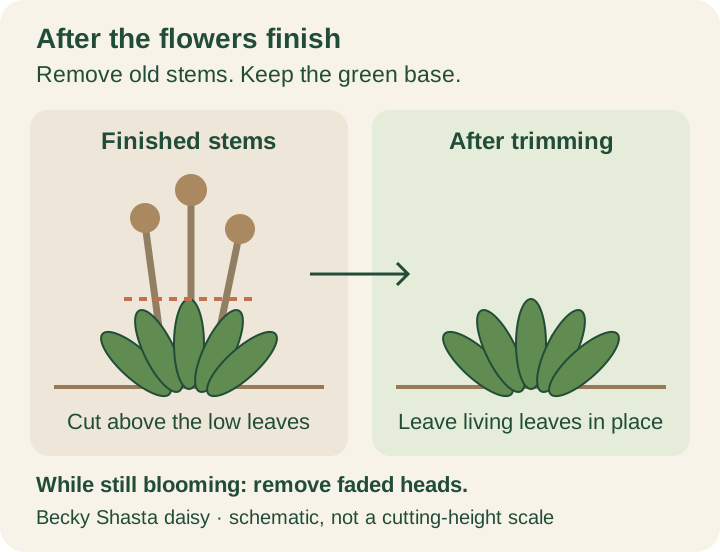
Care basis: the Perennial Plant Association’s Becky profile. Original teaching schematic by Plant Care Steps; not a plant-identification image.
BEHIND THIS GUIDE
Where the advice comes from.
Plant care is based on the sources below. Planting layouts and beginner routines combine that guidance into one practical plan; they are editorial choices, not results from a Plant Care Steps growing trial.
- Perennial Plant Association: Becky size, US zones, flowers, and cutting back ↗
- NC State: Shasta daisy identity, sun, drainage, and division ↗
- Monrovia: Becky watering trigger and first-season care ↗
- Ball Seed: Becky fertilizer needs ↗
- Illinois Extension: planting depth, spring planting, and overfeeding ↗
- Maryland Extension: soil-test-led feeding and crown-safe mulch ↗
- Oregon State: signs a clump needs dividing and division method ↗
- Iowa State: spring division for Shasta daisies ↗
- Illinois Extension: why vegetative propagation retains the parent plant ↗
- Washington weed board: Becky versus oxeye daisy ↗
Something needs updating? Suggest a correction
Published · Updated
Compiled with AI assistance. These first-edition guides have not yet had an independent horticultural review. Read our editorial approach.