YOUR SIMPLE GROWING PLAN
A sunny bed. Here’s the plan.
Before you start Plant Echinacea purpurea in sun and soil that does not stay wet in winter. Read the cultivar tag for height and hardiness.
What you need · pot, mix & supplies
- Labeled Echinacea purpurea plants
- A sunny bed that drains
- A trowel and mulch kept off the crown
The soil
Well-drained garden soil. Purple coneflower tolerates average fertility. It does not tolerate a hollow that stays wet in winter.
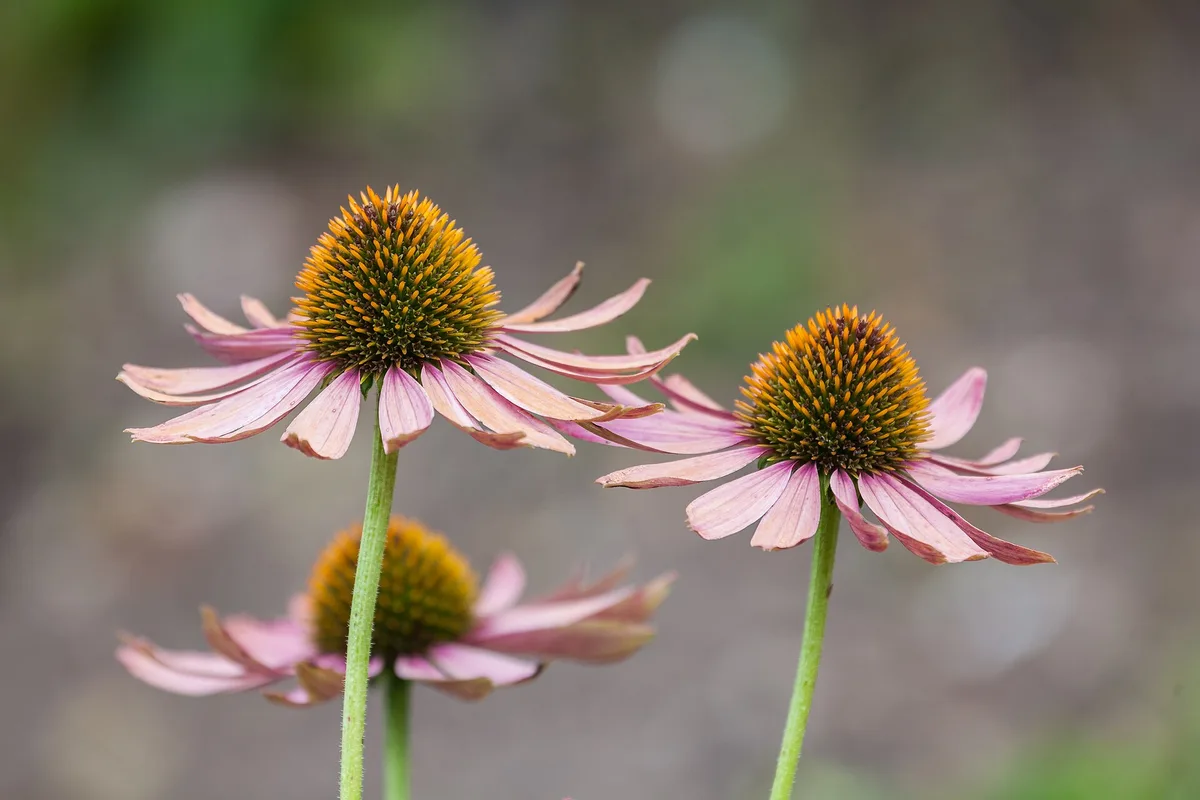
Is this your plant? This plan is purple coneflower, Echinacea purpurea. Other Echinacea species and some hybrid cultivars differ in size and how long they persist. It is not Rudbeckia.
A sunny, open garden bed. Start with nursery plants.
Space Echinacea purpurea about 15–18 inches apart, or as the label states for that cultivar. Narrow hybrid selections may be smaller; very large forms need the spacing on the tag.
Nursery plants labeled Echinacea purpurea are the straightforward start. Seed of the straight species is possible but slower to flower and more variable.
- 01
Match the name
Prefer a tag that says Echinacea purpurea. Hybrids may list a cultivar name only. If the species is missing, expect the mature size on the pot, not a generic purple coneflower.
- 02
Plant level with the soil
Set the crown at the soil surface in full sun. Water in. Space plants so air can move between them.
- 03
Water the first season
Soak when the upper few inches dry during the first summer. After the plant is established, water in a drought rather than on a fixed schedule.
- 04
Leave some seed heads
Deadhead for a tidier look, or leave cones for winter interest. Cut old stems back before strong spring growth. Do not bury the crown in mulch.
Other ways to start
One plant in a large pot+
A single coneflower can grow in a draining pot at least 12 inches wide and deep. Check water more often than in a bed, and treat winter in a pot as an experiment, not a guarantee.
Know the species limit+
Pale purple coneflower and other Echinacea species have different native ranges and garden behavior. Do not copy this spacing onto an unlabeled hybrid and call it the same plant.
YOUR EVERYDAY ROUTINE
Water & fertilizer at a glance.
- Water when
- Water through the first season when the upper soil dries. Later, water in a drought. Winter wet around the crown is the failure to avoid.
- Fertilizer
- Fertilizer labeled for flowering garden plants, only if a soil test or pale growth says so
- Amount
- Use the garden-bed rate for the area you planted.
- What that amount covers
- A flower-bed rate only if nutrients are actually lacking.
- How often to feed
- Only as that label allows during active growth.
- When to start or pause
- Do not feed on a schedule by default. Skip dormant plants and waterlogged soil.
Echinacea purpurea. Drainage matters more than fertilizer.
Summer flowers once the plant is settled
Plants usually flower from summer into early fall once established. The first season may be mostly leaves. Clumps can live for years in well-drained soil and fail quickly in wet winter clay. Cultivar height varies; the tag beats a single number.
Plant in spring, or early fall with time to root
Plant in spring, or in early fall with time to root before a hard freeze. Avoid planting into waterlogged soil. In hot, humid summers, airflow matters as much as the watering can.
For regional planting windows, find your local Cooperative Extension office ↗.
Something looking off?
How do I grow purple coneflowers?+
Plant Echinacea purpurea in full sun and well-drained soil, about 15–18 inches apart. Water during the first season, then avoid keeping the crown wet.
Why did my coneflower die over winter?+
Winter wet around the crown is a common cause. Improve drainage before replanting. A tender hybrid may also be less durable than the straight species. Fertilizer is not a winter rescue.
Can I grow coneflowers in pots?+
Yes, one plant in a large draining pot, with more frequent water checks. A pot is a harsher winter than the ground.
Do they need rich fertilizer?+
No. Average soil and sun are the point. Extra feed often makes floppy stems. Use a soil test if you think nutrients are actually lacking.
Are coneflowers the same as black-eyed Susans?+
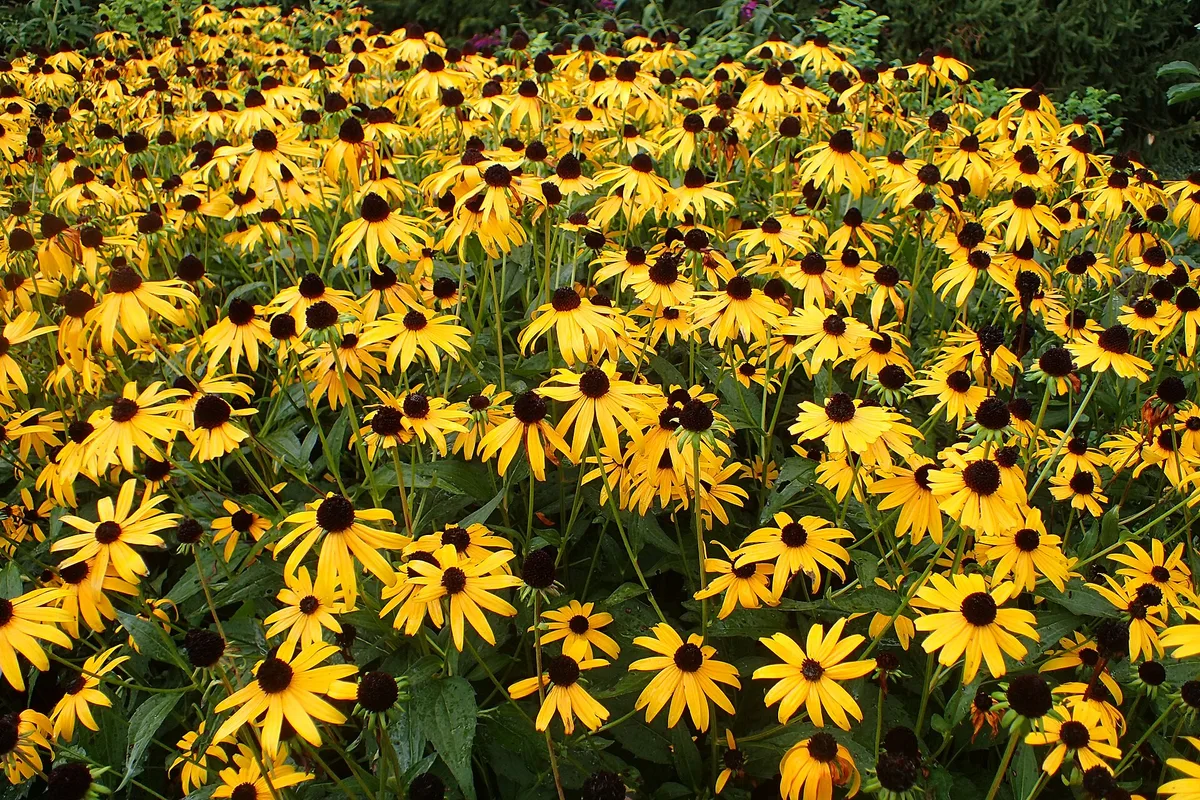
No. Purple coneflower is Echinacea. Black-eyed Susan in our other guide is Rudbeckia fulgida. They like similar sunny beds and are not interchangeable labels.
Drainage, cultivars, and seed heads
Drainage decides the lifespan
Echinacea purpurea is often lost to wet soil, not to underfeeding. If your bed puddles, fix that before you buy another plant.
Cultivars are not all equally tough
Double flowers and unusual colors can be less persistent than a simple purple purpurea. Believe the nursery’s hardiness note for that plant.
Seed heads are optional
Leaving cones feeds birds and looks structural in winter. Cutting them is a tidiness choice, not a requirement for the plant’s health every year.
Help with your next step.
- Feel the soil before you water a bed
Established coneflowers want drainage more than a daily soak.
- Browse other sunny perennials
Hybrid coneflowers can be less durable than straight Echinacea purpurea.
Sources & dates
Editorial plans, not results from a Plant Care Steps growing trial. Compiled with AI assistance; they have not yet had an independent horticultural review. Editorial approach.
- NC State Extension: Echinacea purpurea ↗
- Illinois Extension: purple coneflower ↗
- The Morton Arboretum: purple coneflower ↗
Something needs updating? Suggest a correction
Published · Updated
Sources checked View sources ↗