YOUR SIMPLE GROWING PLAN
A sunny bed. Here’s the plan.
Before you start Plant Rudbeckia fulgida in a sunny, well-drained bed. Check that the tag is not Rudbeckia hirta if you want a lasting clump.
What you need · pot, mix & supplies
- Labeled Rudbeckia fulgida plants
- A sunny, draining bed
- A trowel and mulch that stays off the crown
The soil
Average, well-drained garden soil. If water stands after rain, plant on a slight rise. Do not bury the crown.
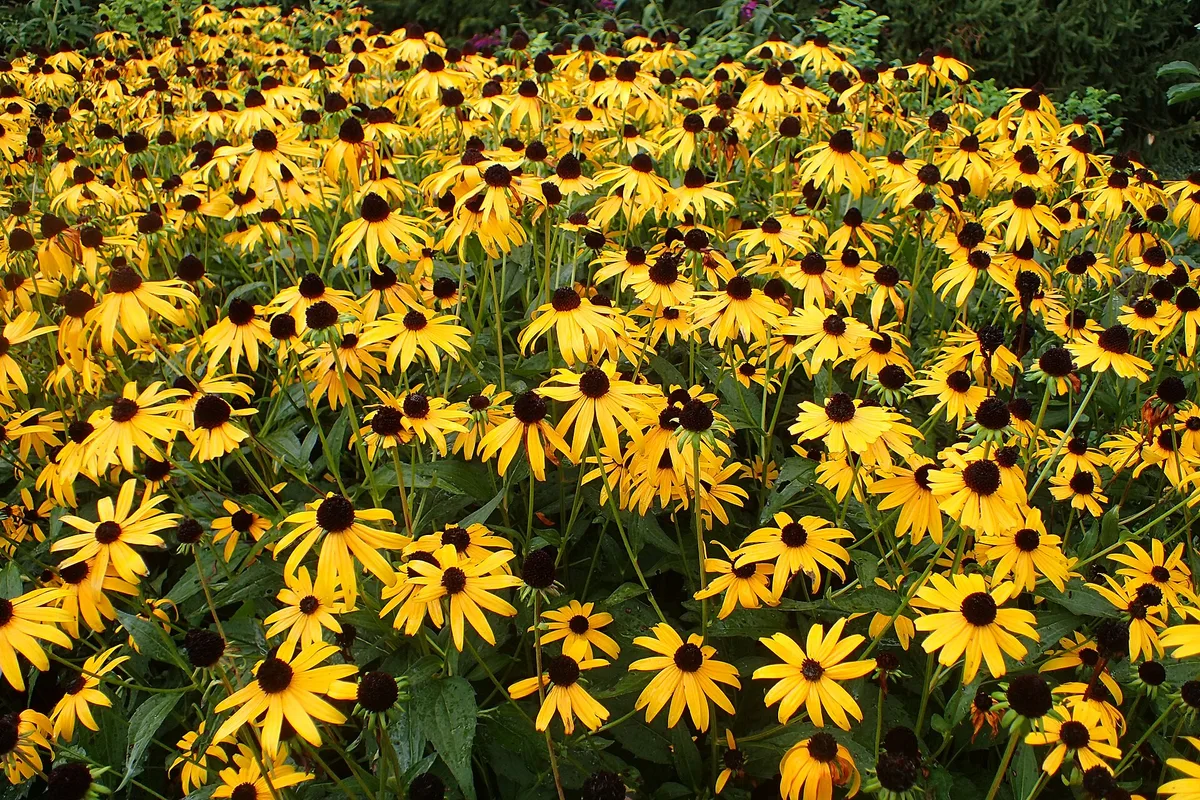
Is this your plant? This plan is orange coneflower, Rudbeckia fulgida. Rudbeckia hirta (gloriosa daisy) is often shorter-lived and is not this perennial clump.
A sunny garden bed with drainage. Start with nursery plants.
Space plants about 12–18 inches apart so ‘Goldsturm’ and similar forms can fill in without sitting in a damp mat. Read the label for the mature width of the form you bought.
Start with rooted plants labeled Rudbeckia fulgida or ‘Goldsturm’. A seed packet labeled R. hirta is a different project.
- 01
Read the species on the tag
Look for Rudbeckia fulgida. If the tag says Rudbeckia hirta or gloriosa daisy, expect a shorter life and do not follow this perennial spacing as a promise of next year’s clump.
- 02
Plant at the nursery depth
Set the crown level with the soil, in full sun. Water in. Space centers 12–18 inches apart unless the label says otherwise.
- 03
Water to establish
For the first season, water when the soil a couple of inches down starts to dry. After that, water during extended drought. Do not keep the crown constantly wet.
- 04
Cut back tired stems
Deadhead if you want a tidier plant. Leave some seed heads if you want winter structure or birds. Cut the clump back in late winter or early spring before new growth, following local timing.
Other ways to start
Use a large pot for one season+
One plant can grow in a draining pot at least 12 inches wide. A pot needs more frequent water checks than a bed and is more exposed in winter. This is not the default perennial plan.
Do not treat hirta as fulgida+
Gloriosa daisies are often grown as annuals or short-lived perennials from seed. Enjoy them, but do not expect Goldsturm’s clump behavior.
YOUR EVERYDAY ROUTINE
Water & fertilizer at a glance.
- Water when
- Water a new plant when the upper soil dries. Established clumps need water mainly in a dry spell. Do not keep the crown wet.
- Fertilizer
- Fertilizer labeled for flowering garden plants, only if a soil test or pale growth says so
- Amount
- Use the garden-bed rate for the area you planted.
- What that amount covers
- A flower-bed rate if a soil test calls for it. Excess feed makes floppy stems.
- How often to feed
- Only as that label allows during active growth.
- When to start or pause
- Do not feed on a schedule by default. Skip dormant plants and waterlogged soil.
Rudbeckia fulgida, including Goldsturm. Not Rudbeckia hirta.
Summer into fall flowers
A settled plant flowers in summer into fall, with daisy-like heads. ‘Goldsturm’ is widely grown because it clumps and repeats, but hardiness and performance still depend on your climate and drainage. The first year may show fewer flowers while roots establish.
Plant in spring or early fall
Plant in spring or early fall when the soil is workable and extreme heat is not immediate. Fall planting needs enough weeks to root before a hard freeze. In very wet winter climates, spring planting and sharp drainage are safer.
For regional planting windows, find your local Cooperative Extension office ↗.
Something looking off?
How do I grow black-eyed Susans?+
Plant Rudbeckia fulgida in full sun and well-drained soil, 12–18 inches apart. Water it in the first season, then avoid a soggy crown. Confirm the tag is not Rudbeckia hirta if you want a lasting clump.
Are all black-eyed Susans perennials?+
No. Rudbeckia fulgida is the perennial orange coneflower this guide covers. Rudbeckia hirta is often grown as an annual or short-lived plant. The common name covers both.
Can I grow them in pots?+
One plant can live in a large draining pot for a season, with more frequent watering than a bed. Winter survival in a pot is less reliable than in the ground.
Why is the center of the clump dying?+
Wet soil and a buried, crowded crown are common reasons. Improve drainage and reset plants at the soil surface. Do not bury stems in mulch.
Should I fertilize for more flowers?+
Usually no. Excess fertilizer makes soft, floppy growth. Sun and drainage matter more. If a soil test shows a need, use a flower-garden product at the labeled rate.
Goldsturm, hirta, and crowns
Goldsturm is a selection, not every Susan
‘Goldsturm’ is a well-known Rudbeckia fulgida form. Other fulgida forms differ in height. The species name is the scope; the cultivar explains the usual nursery plant.
Hirta seed is a different plant
A cheap “black-eyed Susan” seed packet is often R. hirta. It can be a good annual. It is not a failed Goldsturm if it dies after flowering.
Crowded, wet crowns fail
Air and drainage keep the clump healthier than a thick, constantly watered mat. Divide an overcrowded plant in spring if flowering drops.
Help with your next step.
- Water to establish, then back off
A new Rudbeckia needs water. A swampy crown does not.
- Check the flower you actually bought
Rudbeckia hirta and Rudbeckia fulgida share a common name and not a lifespan.
Sources & dates
Editorial plans, not results from a Plant Care Steps growing trial. Compiled with AI assistance; they have not yet had an independent horticultural review. Editorial approach.
Something needs updating? Suggest a correction
Published · Updated
Sources checked View sources ↗