YOUR SIMPLE GROWING PLAN
One perennial plant. Here’s the plan.
A sunny garden edge or cottage-garden border. Start with nursery plant.
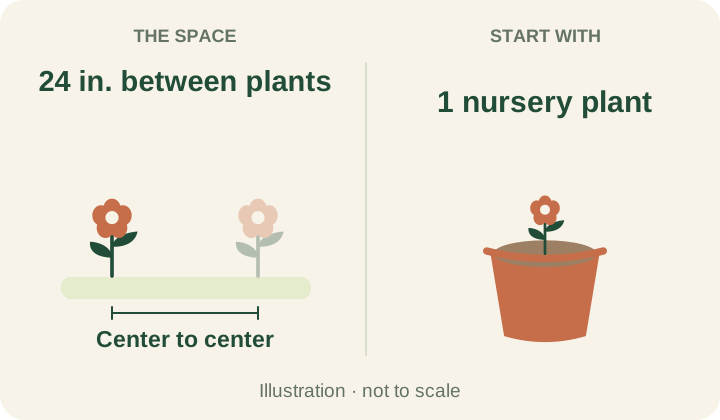
Allow a 2 × 2 ft garden patch for one plant. If repeating, measure 24 inches from the center of one clump to the next.
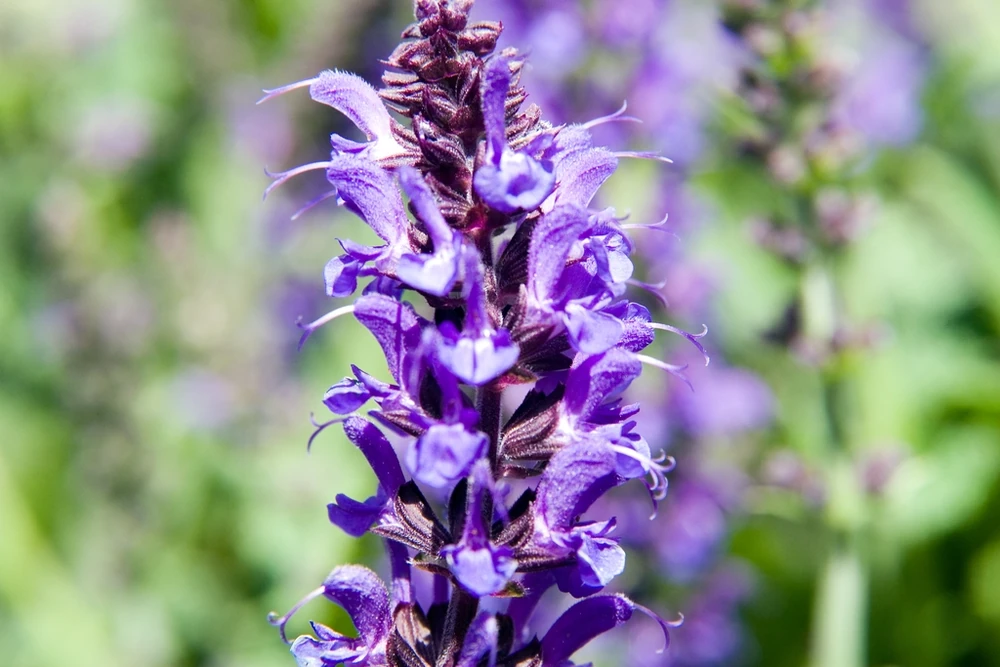
Buy a plant labeled May Night or Mainacht. This is the purple ornamental perennial, not culinary sage.
- 01
Check the name and space
Choose May Night, also sold as Mainacht. Mark a 2-ft-wide space in a sunny bed. The nursery tag may use Salvia nemorosa or Salvia × sylvestris; the cultivar name is the key to this plan.
- 02
Plant at the nursery level
Water the nursery plant, then set the top of its root ball level with the surrounding soil. Keep the crown, where stems meet the roots, at the surface. Firm the soil gently without burying that base.
- 03
Water to settle the roots
Soak the root ball and surrounding ground slowly after planting. During the first season, check the original root ball in dry weather and water before it dries out completely. Skip watering while it is still moist.
- 04
Remove finished flower spikes
When a spike has finished flowering, cut its old stem down to the low leafy growth. Keep the new green shoots. This can encourage a smaller repeat flush; it is not a promise of flowers all summer.
Other ways to start
Divide your own established clump+
In early spring, lift a crowded plant and separate healthy pieces with roots and new shoots. Replant each at its original depth and water it in. A division retains the May Night cultivar; it is a simpler way to make a matching plant than seed.
Root a softwood cutting+
This salvia can also grow from softwood cuttings. Use a healthy nonflowering shoot, remove its lower leaves, and root it in moist propagation mix in bright indirect light. Keep it sheltered until rooted; this is a propagation project rather than an instant replacement for a nursery plant.
YOUR EVERYDAY ROUTINE
Water & fertilizer at a glance.
- Water when
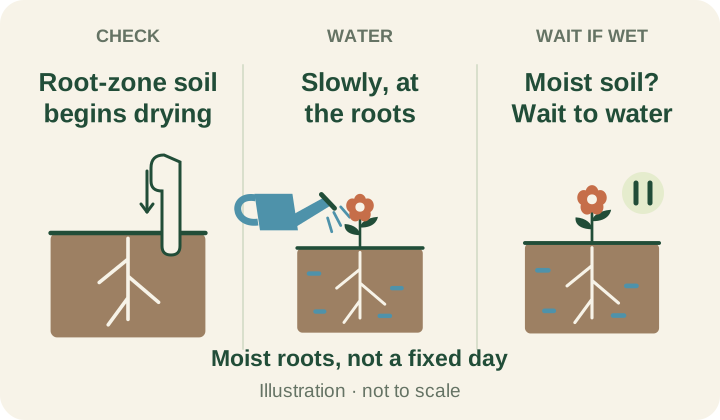
- Keep a new root ball from drying out. Once established, let the soil dry between thorough waterings. Water slowly at the roots during dry spells; wait if the soil is moist.
- Fertilizer
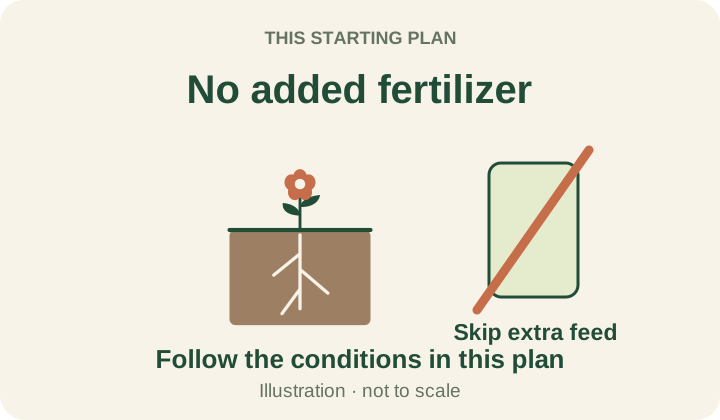
- No added fertilizer for this starting plan
- Amount
- None
- What that amount covers
- No fertilizer dose to calculate.
- How often to feed
- No routine feeding.
- When to start or pause
- Use average, freely draining garden soil. Check light, drainage, and crowding before considering a soil-test-led feed.
When to water.
Check new plants regularly through their first growing season, particularly during dry spells. Feel the nursery root ball as well as the surrounding bed. Once established, allow the soil to dry between thorough waterings; water slowly at the roots when that zone is becoming dry. Short dry spells are usually tolerated, but a long drought can reduce flowering. Do not follow an automatic daily schedule or add water to soggy soil.
Exactly what to feed it.
Start without extra fertilizer in an average, reasonably fertile garden bed. Salvia is not a reason to buy a high-dose bloom booster. Sun, drainage, and removing finished flower spikes come first.
THE SIMPLE FEEDING PLAN
Start without extra fertilizer.
If growth remains weak after those checks, use a soil test before buying fertilizer. Apply only the amendment and rate the result calls for. This ground-grown starting plan has no routine fertilizer dose; commercial nursery feeding schedules are for a different growing setup.
First flowers and a possible repeat flush
May Night usually reaches roughly 18–24 inches tall and wide, with deep violet-blue spikes in early summer. Removing the first finished stems can lead to another flush later, often with fewer or smaller flowers. A newly planted clump may take time to fill its allotted space.
Spring planting and winter dormancy
Plant in mild spring weather once the ground is workable, rather than during a heat wave or into frozen soil. Monrovia lists May Night for USDA zones 4–9; performance still depends on the site and winter drainage. This plant dies back in cold weather and starts new leafy growth from its base in spring.
For regional planting windows, find your local Cooperative Extension office ↗.
Something looking off?
Is this the salvia used as a kitchen herb?+
No. May Night is an ornamental perennial grown for purple flowers. Culinary garden sage is Salvia officinalis, a different plant. Keep this nursery flower planting ornamental.
Why does my label say Salvia nemorosa?+
May Night is also called Mainacht. Nurseries use both Salvia nemorosa and Salvia × sylvestris for this cultivar, and the RHS lists these names as synonyms. Match the cultivar, not just the broad word “salvia.”
Should I cut all salvias back this way?+
No. The cut-to-low-foliage method here is for this herbaceous perennial. Shrubby salvias, tender bedding salvias, and culinary sage have different growth habits and pruning needs.
My salvia is floppy or flowering poorly. Does it need fertilizer?+
Check shade, persistently wet soil, and crowded growth first. Too much fertilizer can also produce soft growth. Once its flowers are finished, cut untidy stems to the new low foliage; adding feed will not fix a wet planting site.
Cutting after bloom and care for older clumps
Cut old spikes while keeping new shoots
Look below the fading flower stems for fresh green foliage. Remove the spent stalks while keeping that new growth. Continue normal soil checks afterward. Repeat flowers may be smaller, fewer, or absent if heat, drought, or the season limits growth.
Care for the crown through winter
Leave the crown at soil level and keep piled mulch away from it. Remove dead growth as the new spring shoots become visible, taking care not to cut those shoots. If an older clump becomes crowded or weak in the middle, divide it in early spring; a healthy vigorous clump can stay undisturbed.
Where to cut the finished spikes
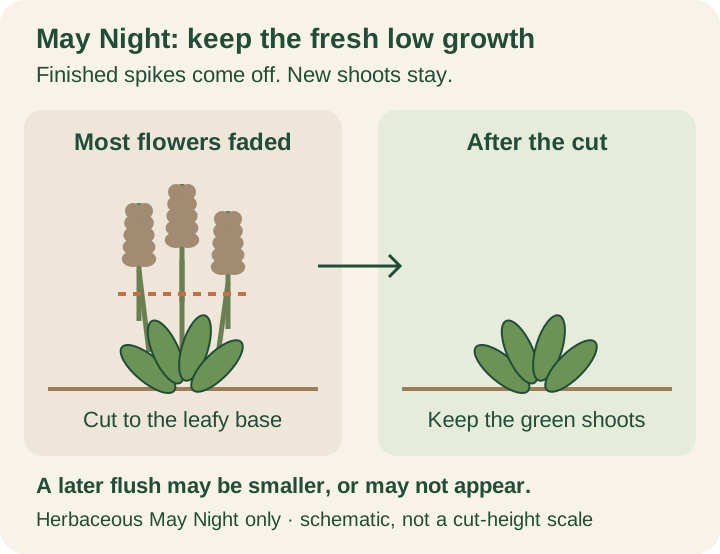
Pruning: NC State. Repeat flowers may be fewer or smaller: Walters Gardens. Original teaching schematic, not an exact cutting-height measurement.
BEHIND THIS GUIDE
Where the advice comes from.
Plant care is based on the sources below. Planting layouts and beginner routines combine that guidance into one practical plan; they are editorial choices, not results from a Plant Care Steps growing trial.
- NC State: wood sage identity, drainage, pruning, and propagation ↗
- RHS: May Night and Mainacht naming, including nemorosa synonyms ↗
- Monrovia: May Night size, zones, and establishment watering ↗
- Walters Gardens: May Night garden care and realistic repeat flowering ↗
- Illinois Extension: perennial planting depth and overfeeding ↗
- Maryland Extension: soil-test-led perennial feeding and crown-safe mulch ↗
- Oregon State: how to divide an established perennial ↗
- Heritage Perennials: May Night size and spring division ↗
- Illinois Extension: vegetative propagation preserves the parent ↗
Something needs updating? Suggest a correction
Published · Updated
Compiled with AI assistance. These first-edition guides have not yet had an independent horticultural review. Read our editorial approach.