YOUR SIMPLE GROWING PLAN
One pot. Here’s the plan.
Outdoors, on a sunny patio with winter protection available. Start with nursery shrub.
A weather-resistant container with drainage. This starting size is for compact Peach Sorbet, not a full-size highbush blueberry.
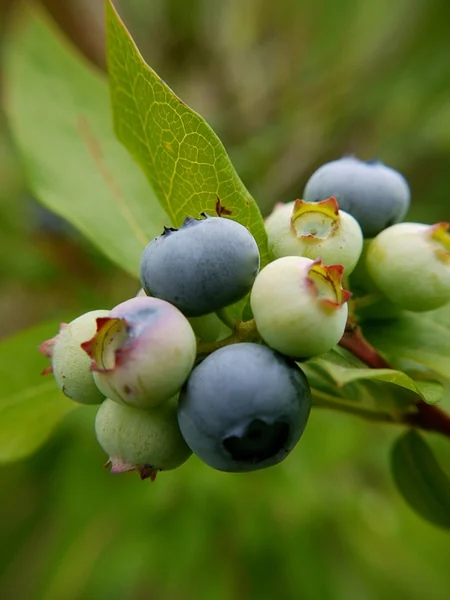
Choose Peach Sorbet (ZF06-043), sold as a compact, self-fruitful blueberry.
- 01
Start with the right mix
Use a bag labeled for blueberries or acid-loving container plants, with a pH of 4.5–5.5. Moisten it before planting. Do not add lime or assume ordinary compost has the right acidity.
- 02
Plant one shrub at its old level
Ease apart circling roots gently. Set the top of the root ball level with the surrounding mix, leaving watering space below the rim.
- 03
Water the whole root ball
Water slowly until the pot drains. Put it in a sunny spot and keep drainage holes clear. Check moisture daily during warm weather.
- 04
Help it settle before a big harvest
If starting with a young one-year-old plant, remove its first spring flowers so it can establish. An older nursery shrub may fruit sooner, but avoid expecting a full crop immediately.
Another way to start
Start in a garden bed instead+
Use the same labeled shrub only if a soil test confirms an acidic site and there is room for its mature spread. Follow a garden-bed fertilizer rate, not this pot rate. Where soil is alkaline, the container plan is often easier to manage.
Choose another nursery cultivar+
A different locally recommended compact blueberry can be a good choice, but check its mature size, winter needs, and whether it needs a second variety. Seeds and unverified grocery-fruit seedlings do not reproduce this named cultivar reliably.
When to water.
Check each morning in warm weather. Feel just below the surface and water as it begins to dry, before the root ball dries through. Wet the mix slowly until water runs from the holes. A hot, windy day may require a second check; cool, damp weather needs less water. Do not leave the pot standing in a full saucer.
Exactly what to feed it.
Wait until the shrub is established and any fertilizer in the nursery or fresh mix has finished. Plan a light feed in early spring and another in late spring, at least one month apart. If you plant after that window, wait until the next spring rather than adding a fall feed.
1 TABLESPOON PER US GALLON OF MIX · TWO SPRING FEEDS
Down To Earth Acid Mix 4-3-6 (US granular fertilizer)
Use 1 tablespoon of Down To Earth Acid Mix 4-3-6 per US gallon of growing mix: for example, 5 tablespoons for 5 gallons of mix. Note the mix volume when filling your pot; a 16-inch pot does not automatically hold 5 gallons. This is the lower end of the product’s container rate. Distribute it across the surface away from the stem, work it in very shallowly without damaging roots, then water. Repeat once in late spring, at least a month later. This two-feed starter plan follows the breeder’s spring timing; skip additional summer and fall applications.
Check the manufacturer’s product page ↗This is a dry fertilizer dose per gallon of growing mix, not per gallon of water. Use the named 4-3-6 formulation. Do not combine it with another active fertilizer program.
A little patience pays off.
Expect a small harvest at first, with production building as the shrub establishes. Ripe berries are fully blue and release easily. Peach Sorbet stays about 1½–2 feet tall; it is a small patio shrub, not a full-size orchard bush.
When should I start where I live?+
Spring is the simplest starting point. Peach Sorbet is listed for USDA zones 5–10, but zone ratings do not guarantee survival in an exposed pot. Ask a local nursery whether it fruits reliably in your climate and where to protect its container over winter.
For regional planting windows, find your local Cooperative Extension office ↗.
Something looking off?
Do I need two blueberry plants?+
Peach Sorbet can fruit by itself. Another compatible blueberry that flowers at the same time may improve the crop. Some other blueberry types do need a partner, so do not extend this one-plant plan to every cultivar.
Is acid-loving fertilizer the same as soil acidifier?+
No. Acid Mix 4-3-6 supplies nutrients. A soil acidifier is used to change pH. If leaves yellow, check moisture, drainage, and the mix’s pH before adding either. More fertilizer is not a reliable way to fix the wrong soil.
Can I keep the pot in my living room all winter?+
This is an outdoor shrub with seasonal needs. In cold areas, use locally appropriate protection, such as a sheltered unheated space, and keep roots from drying out. A warm living room is not the default winter plan.
A little more growing know-how.
Keep the first pot manageable+
The breeder recommends compact blueberries for 12–16-inch-wide containers. This recipe uses the wider end. Repot as the shrub and root ball need more space; larger highbush varieties need much larger containers.
Prune lightly while the shrub is young+
Remove dead or damaged growth. Avoid cutting the whole shrub back each spring: much of the next crop forms on existing wood. Check the cultivar’s pruning guidance as it matures.
BEHIND THIS GUIDE
Where the advice comes from.
Plant care is based on the sources below. Planting layouts and beginner routines combine that guidance into one practical plan; they are editorial choices, not results from a Plant Care Steps growing trial.
- Bushel and Berry: Peach Sorbet size and US hardiness range ↗
- Bushel and Berry: compact blueberry pots and spring feeding ↗
- Bushel and Berry: self-pollination and winter care ↗
- University of Maryland: container establishment, moisture, and first-year flowers ↗
- Oregon State: soil acidity and the limits of acidifying fertilizer ↗
- Manufacturer: US fertilizer formula and application directions ↗
Compiled with AI assistance. These first-edition guides have not yet had an independent horticultural review. Read our editorial approach.