YOUR SIMPLE GROWING PLAN
One pot. Here’s the plan.
A sunny patio with easy access for picking. Start with nursery plant.
At least 12 inches wide and 8 inches deep, with drainage.
Choose Seascape, a day-neutral variety, for this plan.
- 01
Find the crown
The crown is the short, thick center where leaves meet roots. Dampen the mix and make a hole deep enough for the roots.
- 02
Plant at the right level
Keep a potted plant at its previous level: roots covered, the middle of the crown at the surface, and the leafy growing point above the mix. Water it in.
- 03
Help a new plant establish
For a newly establishing crown, remove flowers for the first 4–6 weeks and until it has 5–6 expanded leaves. Then allow flowers; snip off runners so the pot stays focused on one plant.
- 04
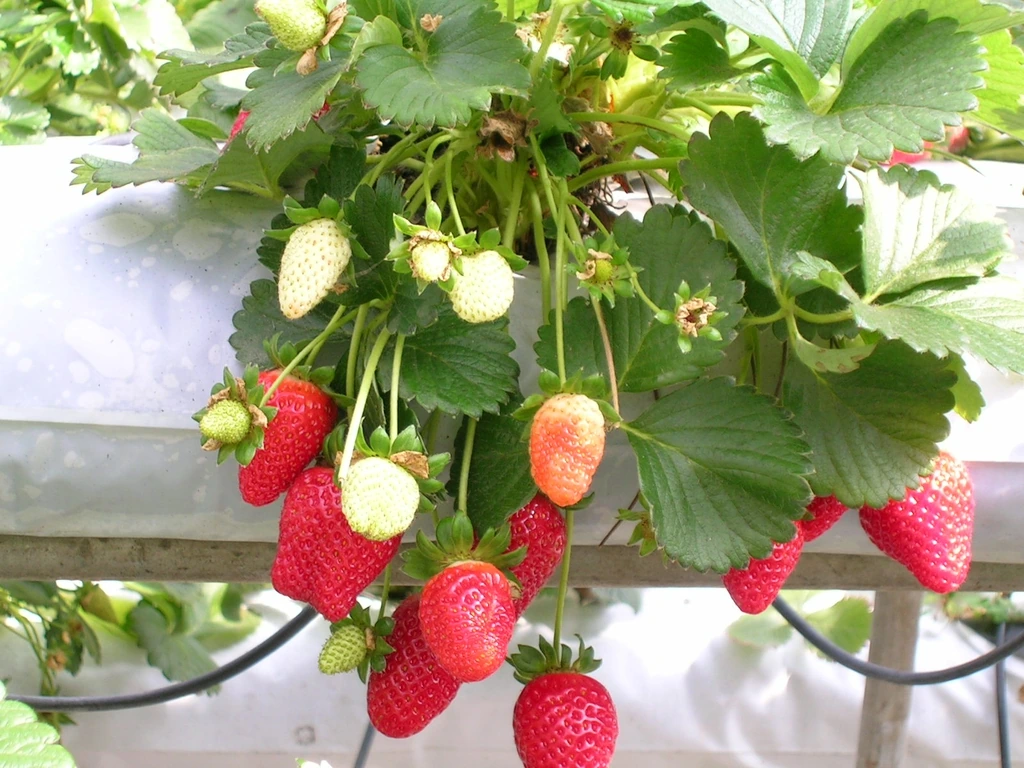
Pick fully red berries
Check ripening fruit every few days. Snip it with the green cap and a short stem attached. Expect small pickings from one plant.
Another way to start
Plant one bare-root Seascape crown+
Spread the roots downward in a hole deep enough to avoid folding them upward. Cover the roots while leaving the middle of the crown at the surface and the growing point exposed. Keep it moist as it establishes.
Use a healthy rooted runner+
A rooted runner from a known Seascape plant keeps the cultivar identity. Pot it at the same crown level. Seeds do not reliably reproduce Seascape; seed-grown alpine strawberries need a separate plan.
When to water.
Check each morning, and again during hot afternoons if the pot dries quickly. Water when the surface becomes dry, before the root zone dries throughout. Apply slowly to the mix, let excess drain, and empty the saucer. Aim away from flowers and ripe berries.
Exactly what to feed it.
Add no extra fertilizer at planting with the fresh enriched mix. Follow the bag’s starter-feeding period before topping up. This container plan does not need automatic weekly feeding.
2–3 TOP-UPS ACROSS THE GROWING SEASON
Miracle-Gro Water Soluble All Purpose Plant Food (US 24-8-16)
After the starter feed is used up, mix 1 tablespoon of the US 24-8-16 product into 1 gallon of water. Apply enough at the roots to wet the pot and drain. Plan on 2–3 supplemental feedings spread through active growth, preferably after a flush of fruit, following Iowa State’s container guidance. Keep applications at least 14 days apart and skip extra feeding while existing fertilizer is still active.
Check the manufacturer’s product page ↗Use the named US formulation. A different product or concentration needs different directions. The amount mixed is a batch, not a dose to pour into one pot.
A little patience pays off.
A newly planted day-neutral strawberry may begin producing around 10 weeks after planting, but nursery size and weather change the timing. A single plant offers a few berries at a time, with production slowing in very hot weather.
When should I start where I live?+
Start in spring for the simplest seasonal plan and protect tender new growth from frost. Keeping the pot through winter needs local advice; this first plan does not assume an exposed pot can overwinter everywhere.
For regional planting windows, find your local Cooperative Extension office ↗.
Something looking off?
Should I remove every flower all year?+
No. This is a day-neutral Seascape plan: remove the earliest flowers only while a new crown establishes, then let it fruit. June-bearing strawberries follow a different first-year routine.
Why are some berries soft with gray fuzz?+
Remove affected fruit promptly, allow air around the plant, and avoid repeatedly wetting the berries. Do not leave rotting fruit sitting in the pot.
Why did fruit production stop in summer?+
Intense heat can temporarily reduce day-neutral flowering and fruiting. Keep moisture steady, remove runners, and wait for more favorable conditions; extra fertilizer is not a cure for heat.
A little more growing know-how.
The crown should not disappear+
Burying the leafy center can encourage rot; leaving roots exposed dries them out. After watering settles the mix, check that the roots remain covered and the growing point stays above it.
A runner is a future plant+
Long runners carry small daughter plants. This recipe removes them to keep one manageable fruiting plant. Start a separate pot if you later want to grow a healthy daughter plant.
BEHIND THIS GUIDE
Where the advice comes from.
Plant care is based on the sources below. Planting layouts and beginner routines combine that guidance into one practical plan; they are editorial choices, not results from a Plant Care Steps growing trial.
- Iowa State: strawberry containers and seasonal feeding ↗
- University of Minnesota: planting depth and home strawberry care ↗
- University of Minnesota: day-neutral flower and runner management ↗
- University of Maryland: Seascape and strawberry types ↗
- Oregon State: runners and cultivar identity ↗
- Manufacturer: US fertilizer formula and application directions ↗
- Manufacturer: starter feed in the named potting mix ↗
Compiled with AI assistance. These first-edition guides have not yet had an independent horticultural review. Read our editorial approach.