YOUR SIMPLE GROWING PLAN
One pot. Here’s the plan.
Outdoors, on a sunny patio during a cool growing season. Start with seeds.
Use a pot with drainage holes and room around it for leaves. This roomy starter layout is for dwarf Sugar Ann, not a six-foot climbing pea.
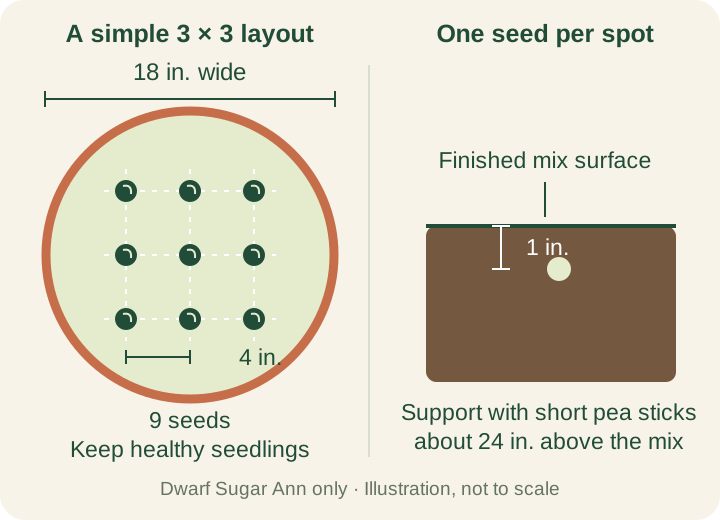
Sow one seed at each spot in a 3 × 3 grid, with spots 4 inches apart. Keep any healthy seedlings; a seed that fails to sprout simply leaves a gap.
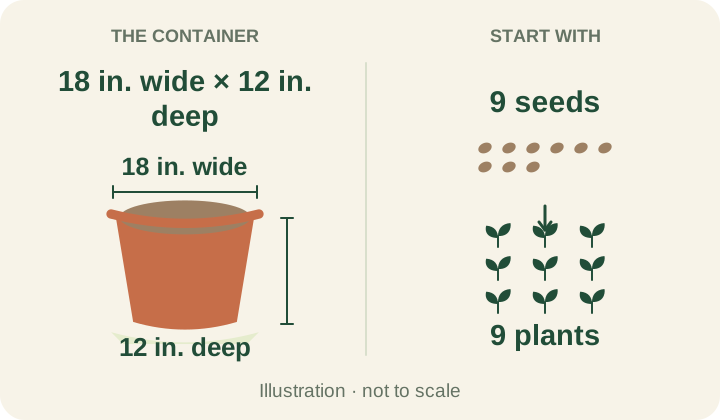
Nine spots, without crowding the rim.
- 01
Choose a cool spell
Start in cool spring weather when the potting mix is at least 40°F and not frozen or waterlogged. Fill the pot with damp enriched mix, leaving 1 inch below the rim.
- 02
Sow nine marked spots
Center a 3 × 3 grid in the pot, with spots 4 inches apart. Push one seed 1 inch below the surface at each spot, cover, and water gently. This depth follows the US seed supplier’s instructions.
- 03
Give the tendrils a hand
Add branched pea sticks between the seed rows at sowing. Leave about 24 inches above the mix and anchor them firmly. Keep the surface moist while the seeds emerge; do not thin healthy seedlings in this layout.
- 04
Pick the pods while crisp
Check each day once pods begin to swell. Pick when they look plump but still feel tender; hold the vine with one hand and detach the pod with the other. Remove any fibrous string before eating.
Help with the setup: drainage holes and saucers · potting mix vs. garden soil.
Other ways to start
Use young Sugar Ann starts+
Plant one small seedling at each of the same nine spots. Keep each root ball intact and at its old depth; do not tear apart a dense tangle of roots. Gradually acclimate indoor-raised starts outdoors. Direct sowing avoids the extra handling.
Use a garden row instead+
Follow the packet’s row spacing for Sugar Ann. A variety labeled Sugar Snap or Super Sugar Snap may be a much taller climber, so its support and planting layout need a separate plan.
YOUR EVERYDAY ROUTINE
Water & fertilizer at a glance.
- Water when
- Check each morning. Keep the seed zone moist; later water as the top inch starts drying, then drain. Avoid drying out during flowers and pod filling.
- Fertilizer
- No added fertilizer for this starting plan
- Amount
- None
- What that amount covers
- No fertilizer dose to calculate.
- How often to feed
- No routine top-up for the first short crop.
- When to start or pause
- Start with fresh enriched mix. If growth is weak, check weather, light, moisture, and roots before reassessing nutrients. Refresh the plan for a later sowing.
When to water.
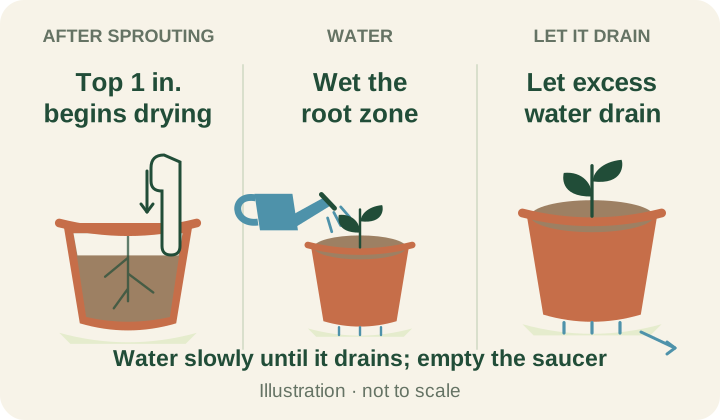
Check every morning. During germination, keep the seed zone moist without leaving the pot saturated. Once plants are growing, water as the top inch starts drying, slowly wetting the roots until excess drains. Keep moisture steady through flowers and pod filling. Hot or windy days may need a second check; cool rainy days may need no extra water. Never use the calendar alone to decide.
Exactly what to feed it.
This plan starts with fresh enriched potting mix. Add no extra fertilizer at sowing and do not automatically start a weekly liquid feed. Peas need nutrients, but extra nitrogen after an adequate starting feed can delay flowering and reduce pod set.
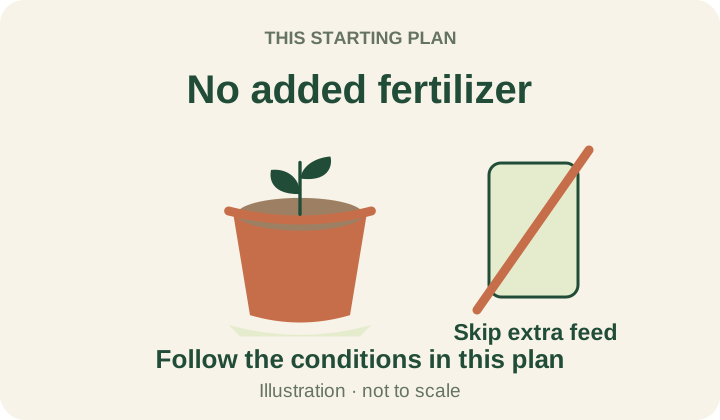
ONE SHORT CROP · NO AUTOMATIC FERTILIZER TOP-UP
Use the starting nutrients before buying more
Sugar Ann may start cropping around the time an enriched mix’s starter nutrients run out. That is not a guarantee that every bag feeds every pot for exactly two months. If growth is weak, first check the weather, sun, drainage, and moisture. If the crop continues beyond the bag’s feeding window, reassess nutrition using that bag’s directions. Start a later sowing with refreshed nutrients; do not assume the old mix still has a full supply.
Sprouts, flowers, and your first pods
In suitable 55–65°F conditions, shoots often appear in about 7–10 days. Johnny’s lists Sugar Ann at about 51 days from direct sowing to harvest, with weather affecting the result. Its dwarf vines reach around 20 inches and crop over a relatively concentrated period. Nine plants give small fresh pickings, not a season-long family supply.
Choose a cool sowing window
Early spring is the simplest starting window in much of the US. Peas grow well in cool conditions around 55–65°F, and sustained heat can stop good pod production. Mild-winter locations use different sowing months; check local guidance instead of following one national date. A fall crop needs enough cool growing time before hard freezes. Protect flowers and forming pods if frost threatens.
For regional planting windows, find your local Cooperative Extension office ↗.
Something looking off?
Why are there leaves but hardly any pods?+
Check for hot weather, water stress during flowering, or extra nitrogen fertilizer. Sugar Ann also crops for a limited period; it is not a perennial vine. More plant food is not the default fix.
Why have the seeds not come up?+
Cold, wet mix, damaged seeds, or eaten seedlings can leave gaps. Give cool-weather seeds time, check drainage, and look for slug or bird damage. Replace missing plants by sowing a fresh seed rather than digging through the roots of neighboring seedlings.
Do I shell sugar snap peas?+
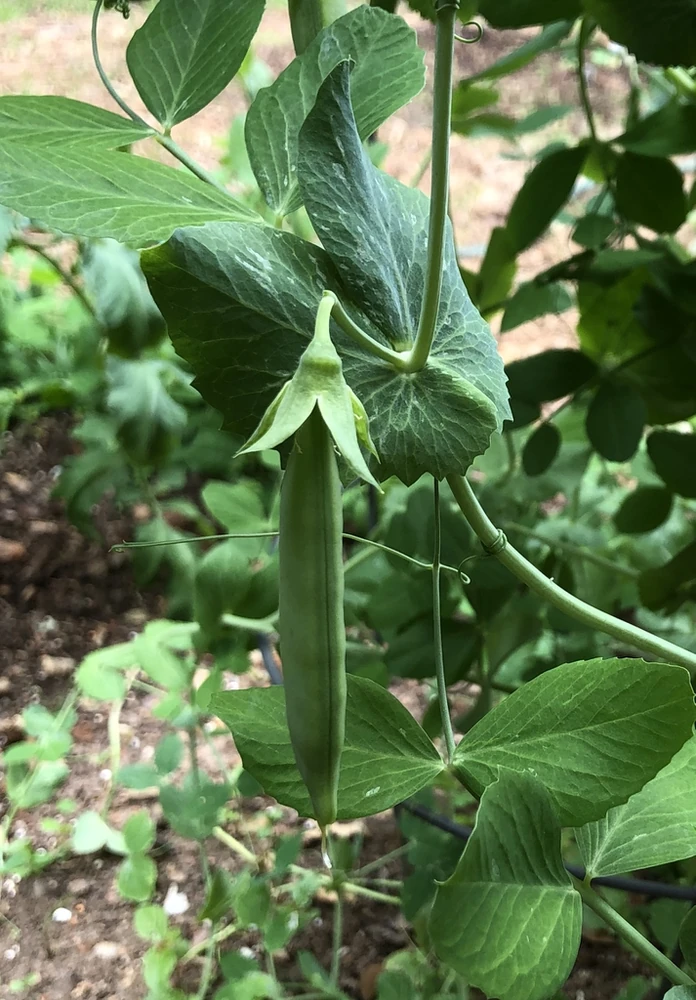
No: tender Sugar Ann pods are edible with their peas inside. Pick them before they turn fibrous, and remove any tough string. Snow peas are picked flatter, while shelling peas have pods you discard; check which packet you planted.
Supporting the vines and picking pods
Support this dwarf pea
Sugar Ann is a dwarf edible snap pea. Short branching sticks help keep its tendrils and pods off the mix. Put supports in before roots fill the pot. Our 24-inch above-soil support allows room for its roughly 20-inch vines; it is not a structure for a tall Sugar Snap cultivar.
Pick pods at the tender stage
Pods should be rounded and juicy without becoming hard or leathery. Pick regularly and refrigerate promptly if you are not using them immediately. Once production declines in summer heat, remove the spent plants and plan a suitable next crop instead of trying to keep the old vines going with more nitrogen.
BEHIND THIS GUIDE
Where the advice comes from.
Plant care is based on the sources below. Planting layouts and beginner routines combine that guidance into one practical plan; they are editorial choices, not results from a Plant Care Steps growing trial.
- Johnny’s Selected Seeds: Sugar Ann identity, dwarf size, sowing depth, and maturity estimate ↗
- RHS: dwarf peas in large containers and short supports ↗
- Utah State: germination conditions, moisture, and avoiding extra nitrogen after starting feed ↗
- Minnesota Extension: cool-season pea care and sugar-snap harvest stage ↗
- Maryland Extension: checking and watering container crops ↗
- RHS: ornamental sweet-pea pods are not edible ↗
- Manufacturer: starter feed in the named potting mix ↗
Something needs updating? Suggest a correction
Published · Updated
Compiled with AI assistance. These first-edition guides have not yet had an independent horticultural review. Read our editorial approach.