YOUR SIMPLE GROWING PLAN
One pot. Here’s the plan.
A sunny patio in warm weather. Start with seeds.
At least 12 inches deep with drainage. Give the plants space beyond the rim.
Two seeds at each of 3 spots, about 5–6 inches apart.
- 01
Wait for warm conditions
Choose a frost-free period with the mix at least 60°F. Fill the pot with damp mix and leave 1 inch below the rim.
- 02
Mark three planting spots
Make a triangle with the spots about 5–6 inches apart. Sow 2 seeds at each spot, 1 inch deep, and water gently.
- 03
Keep three plants
After seedlings establish, snip the weaker seedling at each spot. Keep the mix moist while they emerge, but not saturated.
- 04
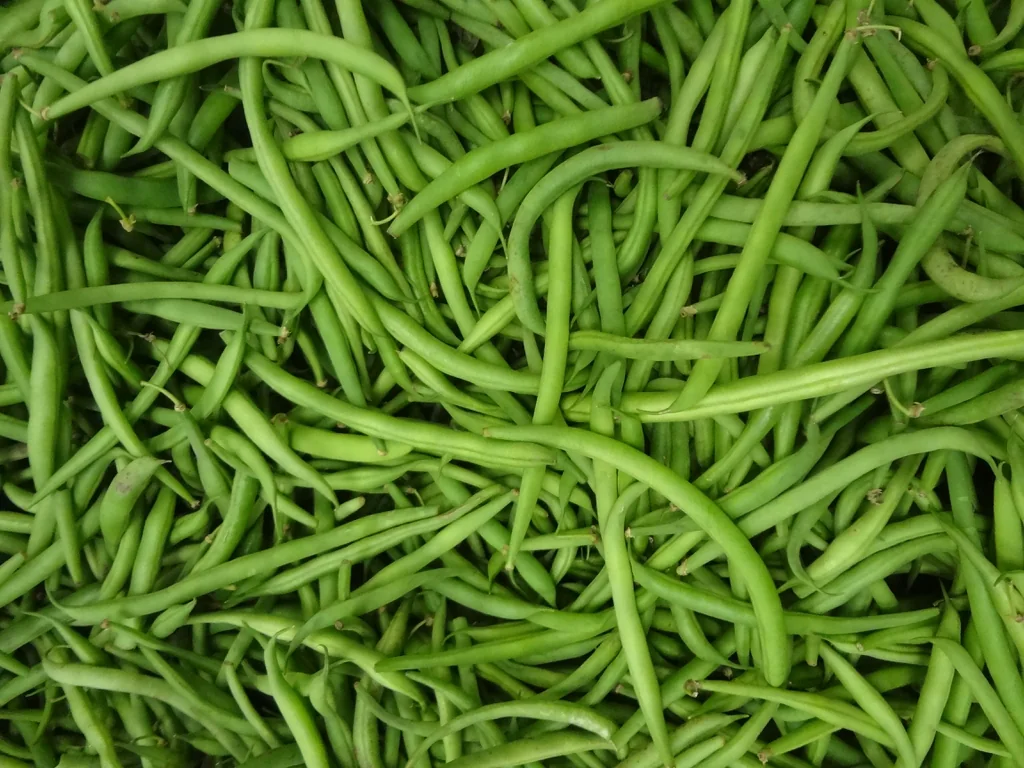
Pick tender pods
Check often once pods form. Pick while they are slender and before the seeds bulge. Hold the stem as you detach a pod so you do not pull up the plant.
Another way to start
Plant three young starts+
Use one young bush-bean seedling at each of the three spots, keeping each root ball intact. Choose individual starts rather than pulling apart a crowded root ball. Direct sowing is usually the simpler option for this quick crop.
When to water.
Check every morning. Water when the top inch is beginning to dry and let excess drain below. Keep moisture steady during flowering and pod filling. In hot or windy weather the pot may need another check later; cold, saturated mix can rot seeds before they emerge.
Exactly what to feed it.
With fresh enriched mix, add no fertilizer at sowing and do not begin a routine 7–14-day liquid feed. Extra nitrogen can make leaves at the expense of a timely bean harvest.
FRESH MIX FIRST; NO AUTOMATIC TOP-UP
Start this crop without extra fertilizer
The mix supplies the starting nutrients and a short crop may finish before a top-up is needed. If plants remain weak, check warmth, sun, moisture, and roots before diagnosing a nutrient shortage. For a later sowing in the same mix, reassess its nutrients rather than assuming the first crop left everything the next one needs.
A little patience pays off.
In suitable warmth, shoots often appear in 7–14 days. Blue Lake 274 is listed at about 58 days to harvest, with weather affecting the result. Three plants give a small picking, not a family-sized supply.
When should I start where I live?+
Sow after frost danger and once the mix has warmed. For another pot later, leave enough frost-free growing time for the packet’s maturity estimate.
For regional planting windows, find your local Cooperative Extension office ↗.
Something looking off?
Why did the seeds never come up?+
Cold, wet mix can rot bean seeds. Check temperature and drainage before resowing. Adding fertilizer will not make cold soil suitable.
Why are there plenty of leaves but few pods?+
Excess nitrogen and very hot weather can both interfere with pod production. Check your feeding history and conditions instead of adding more fertilizer.
Does Blue Lake need a trellis?+
This recipe names Blue Lake 274, a bush type. Other Blue Lake beans are pole varieties and need tall support. Read the packet’s growth habit, not just the first two words.
A little more growing know-how.
A simple triangle, with spare seeds+
Three final plants at 5–6-inch spacing are our roomy container adaptation of garden spacing. The second seed at each spot is insurance; thinning is part of the plan.
Harvest as a snap bean+
Pick the green pods while tender, rather than leaving them to dry on the plant. Pole beans, runner beans, and dry-bean harvests need different space or timing.
BEHIND THIS GUIDE
Where the advice comes from.
Plant care is based on the sources below. Planting layouts and beginner routines combine that guidance into one practical plan; they are editorial choices, not results from a Plant Care Steps growing trial.
- University of Maryland: beans and supplemental nitrogen ↗
- University of Minnesota: bean planting, thinning, and problems ↗
- Burpee: Blue Lake 274 bush habit and harvest ↗
- University of Maryland: container growing ↗
- University of Maryland: young bean transplants ↗
- Manufacturer: starter feed in the named potting mix ↗
Compiled with AI assistance. These first-edition guides have not yet had an independent horticultural review. Read our editorial approach.