YOUR SIMPLE GROWING PLAN
One pot. Here’s the plan.
Before you start Start indoors any time in bright indirect light. Confirm the label says Philodendron hederaceum before using the pothos guide’s cuttings.
What you need · pot, mix & supplies
- 1 heartleaf philodendron in a pot with drainage
- A saucer or cachepot you can empty
- A watering can
The soil
A houseplant potting mix that drains. Do not use outdoor garden soil.
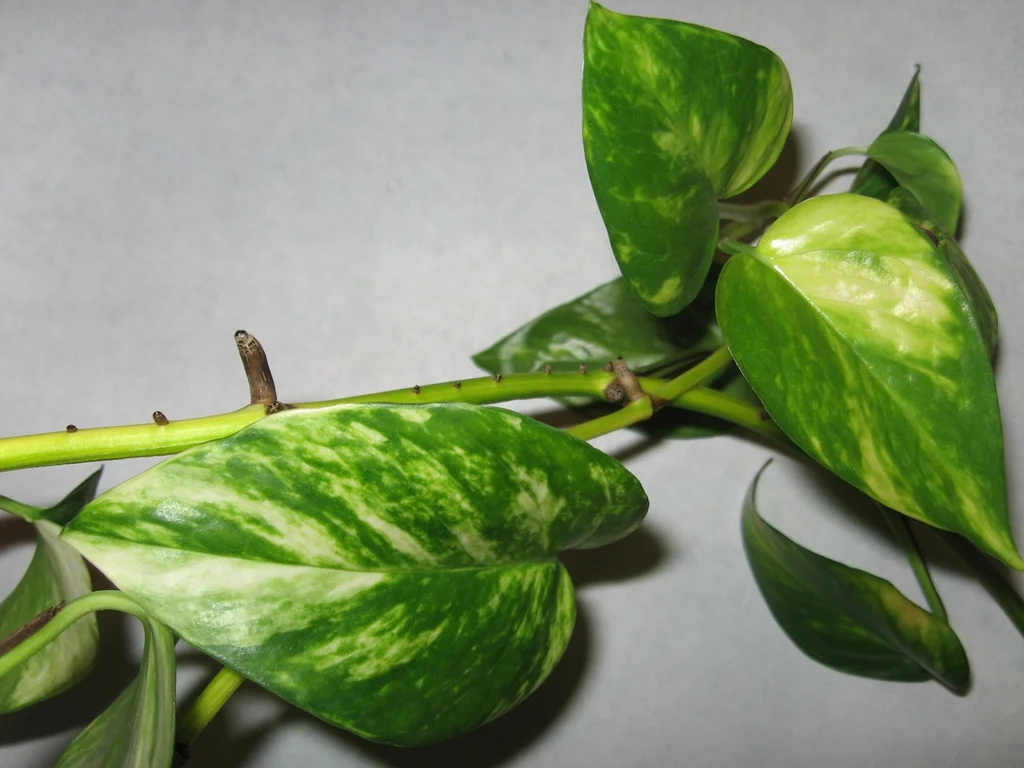
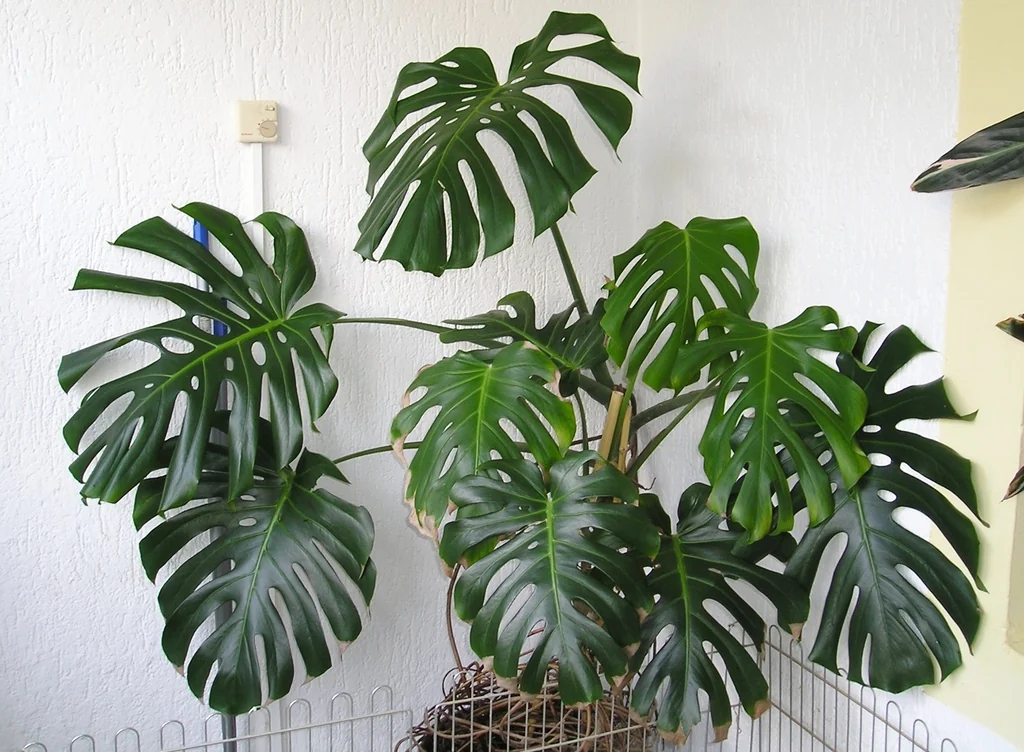
Is this your plant? Look for Philodendron hederaceum, heartleaf philodendron. Golden pothos is Epipremnum aureum. Similar vines are not interchangeable, especially for cuttings.
Indoors, near a bright window out of harsh sun. Start with nursery plant.
Start in the draining nursery pot. When roots circle tightly, move up one pot size. A large pot of unused wet mix is harder to manage than a slightly snug one.
Choose a labeled Philodendron hederaceum. Chartreuse and variegated forms are still this species; solid green is the usual type. Pothos has a different leaf and node pattern.
- 01
Confirm it is not a pothos
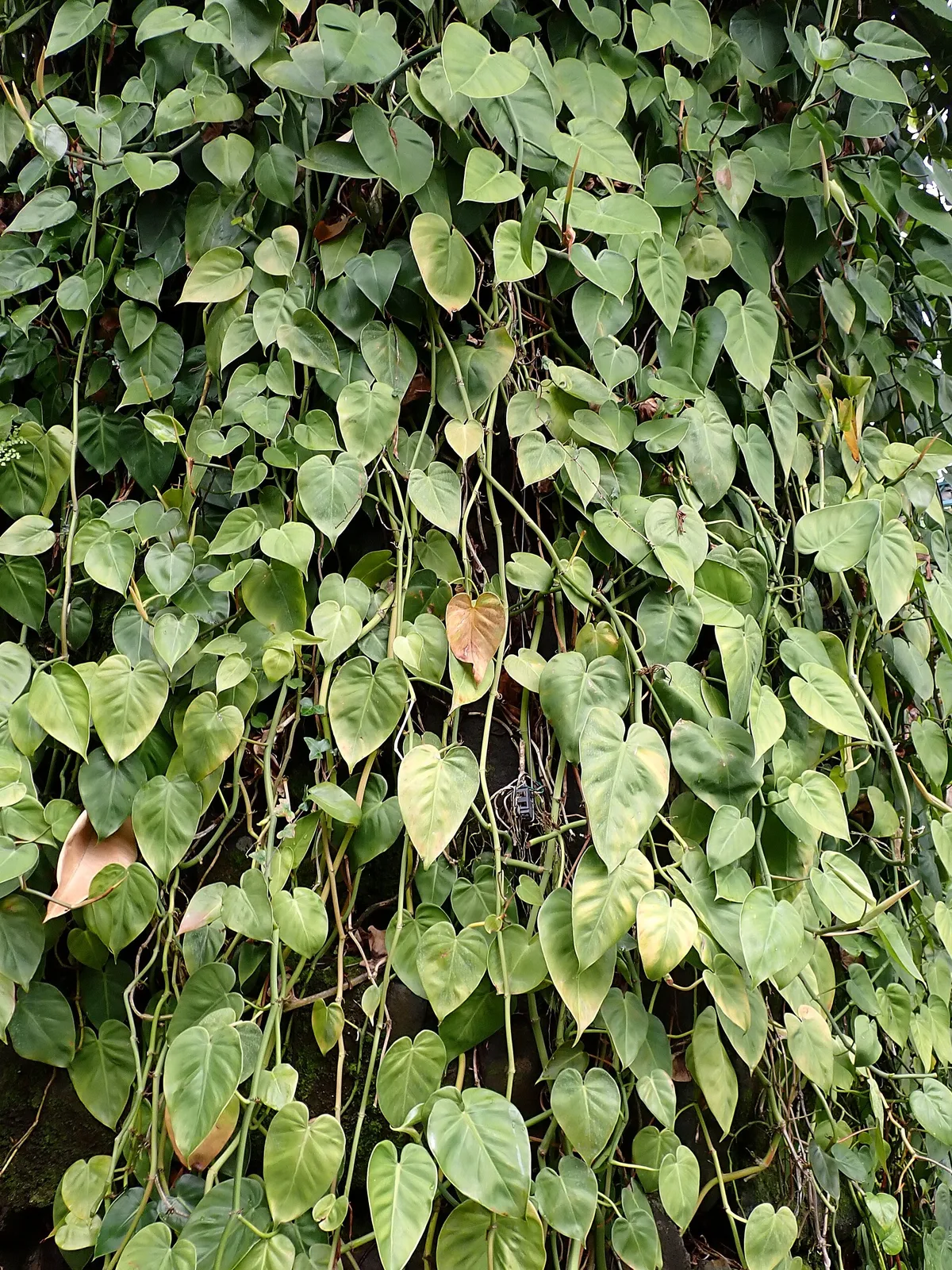
Heartleaf philodendron leaves are typically matte and heart-shaped, with a cataphyll (a small sheath) at the node on many plants. Pothos leaves are often thicker and waxier. When you are unsure, follow the label rather than a photo.
- 02
Set it in indirect light
Give it a bright room without hours of direct sun. A dark shelf will not grow a full vine, and fertilizer will not replace light.
- 03
Water by feel
Check weekly as a reminder. Water only when the upper inch or so is dry and the pot feels lighter. Soak the mix, let it drain, and empty the outer pot.
- 04
Prune above a node
To shorten a vine, cut just above a node so the remaining stem can branch. Use those stem pieces for propagation, not a single detached leaf.
Other ways to start
Root a node cutting+
Follow the heartleaf philodendron propagation guide: a stem section with a node, in water or a moist mix. Do not use the pothos propagation steps as if the plants were the same.
Let it climb+
A moss pole or hook is optional. Trailing from a shelf is the usual houseplant shape. Either way, the watering check stays the same.
YOUR EVERYDAY ROUTINE
Water & fertilizer at a glance.
- Water when
- Check weekly, then water only after the upper mix dries and the pot feels lighter. Drain and empty the saucer or outer pot.
- Fertilizer
- Houseplant fertilizer at its indoor label rate
- Amount
- Use the dilution printed for houseplants. Do not use a vegetable dose.
- What that amount covers
- Enough solution to wet this pot and drain. The mixing jug is not a dose to pour out in full.
- How often to feed
- About monthly in active growth, or as that label says.
- When to start or pause
- Wait until nursery feed is spent and new leaves are growing. Skip a wet, wilted, or resting plant.
Philodendron hederaceum, not pothos. Cuttings need a stem node.
New leaves when the light is enough
In decent light you should see new leaves and longer vines over the growing season. A plant in a dim room may sit still for weeks. That is a light problem first. One yellow older leaf can be ordinary; several at once need the moisture check.
Indoors year-round, slower in winter
An indoor plant year-round. Keep it out of cold drafts and off a freezing windowsill. Growth usually slows in winter; water and feed less often then, based on the plant, not the calendar alone.
For regional planting windows, find your local Cooperative Extension office ↗.
Something looking off?
How do I care for a heartleaf philodendron?+
Give Philodendron hederaceum bright indirect light, water after the upper mix dries, and feed lightly only during active growth. Keep water out of the outer pot.
Is a heartleaf philodendron the same as a pothos?+
No. Pothos is Epipremnum aureum. The vines look alike in photos, but the plants are different. Do not copy a pothos cutting diagram onto this plant without checking for a node on a philodendron stem.
How often should I water it?+
There is no universal number of days. Check the mix. Water when the top has dried and the pot feels lighter, then drain it. Low light and cool rooms stretch the gap.
Why are the leaves turning yellow?+
Start with wet mix and a pot that cannot drain. Constant moisture damages roots and yellows leaves. An occasional oldest leaf can yellow on its own. Do not add fertilizer to a soggy plant.
Can I propagate it from one leaf?+
No. You need a piece of stem with a node. A leaf or petiole alone will not make a new vine. Use the propagation guide.
Repotting, nodes, and pets
Repot one size up
Wait until roots are crowded. A much larger pot holds water the roots cannot use. Keep the stem at the same depth.
Nodes are the propagation unit
Find the bump or joint on the stem where a leaf attaches. That node is what roots. The pothos guide is a different plant’s workflow.
Keep the vine away from chewing pets
ASPCA lists philodendron among plants reported as toxic if eaten. Keep trails out of reach of pets and children who chew, and use the ASPCA page for poisoning questions rather than this care guide.
Help with your next step.
- Propagate from a node
A leaf without a stem node will not root. Do not substitute the pothos steps.
- Check the mix before you water
This vine should dry somewhat. A wet cachepot yellows leaves.
- If the mix stays wet and the plant wilts
Soft roots are a drainage problem, not a cue to water again.
Sources & dates
Editorial plans, not results from a Plant Care Steps growing trial. Compiled with AI assistance; they have not yet had an independent horticultural review. Editorial approach.
- NC State Extension: Philodendron hederaceum ↗
- RHS: philodendrons indoors ↗
- ASPCA: philodendron on the toxic-plant list ↗
Something needs updating? Suggest a correction
Published · Updated
Sources checked View sources ↗