YOUR SIMPLE GROWING PLAN
One pot. Here’s the plan.
Before you start Begin with one rooted Nana plant in a draining nursery pot. Give it outdoor sun during the growing season and frost-free shelter for winter.
What you need · pot, mix & supplies
- 1 labeled, rooted Punica granatum 'Nana'
- A nursery pot with drainage holes
- A watering can and a frost-free winter location
The soil
At repotting, use fertile, well-drained container potting mix. Drainage holes matter more than a decorative outer pot; keep them clear.
Is this your plant? Choose Punica granatum 'Nana' (also sold as var. nana). This flower-and-small-fruit plan is not for a full-size orchard variety.
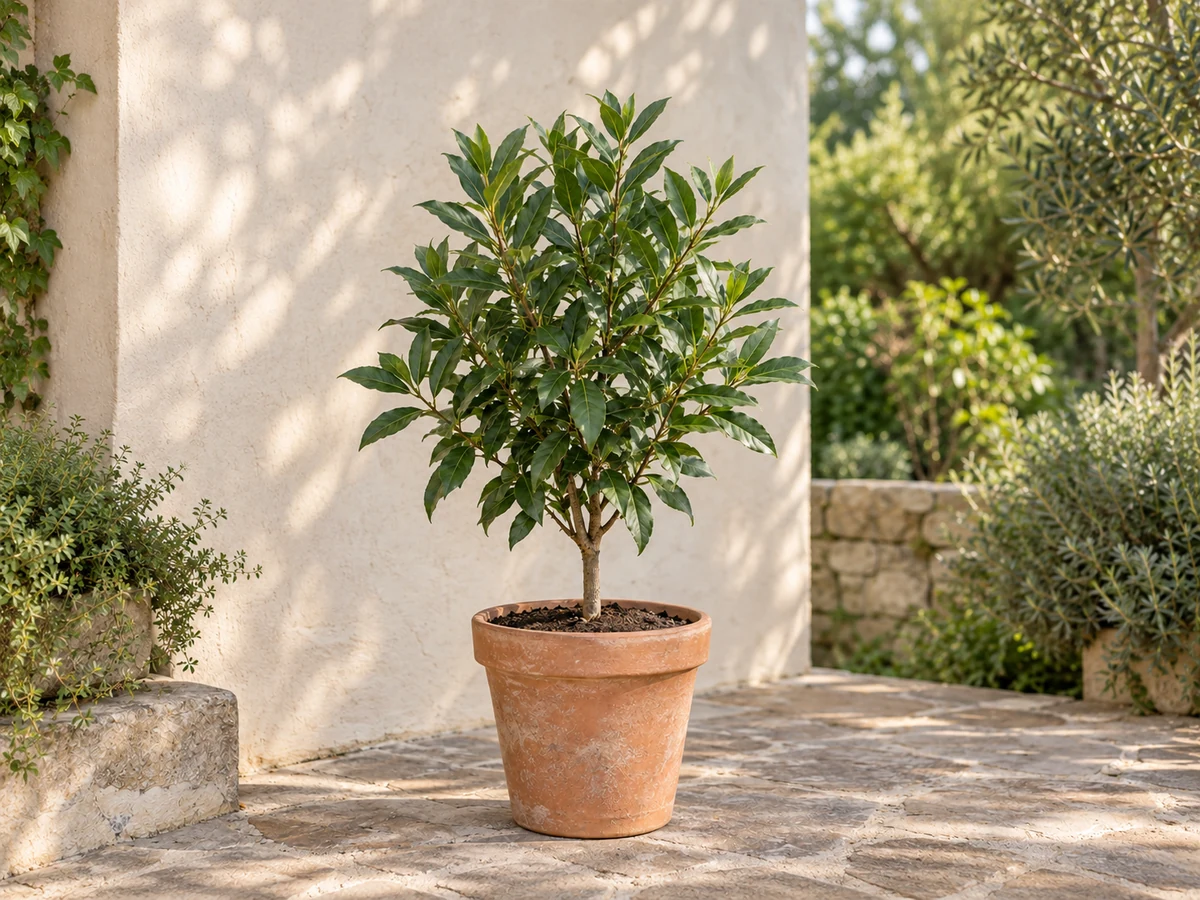
A sunny patio in the growing season, with frost-free winter shelter. Start with nursery plant.
Keep the draining nursery pot while roots have room. When crowded, move to the next size rather than a large final container.
Look for Punica granatum 'Nana' or var. nana on the label. A seedling from a grocery-store pomegranate is not the same starter plant.
- 01
Start with the dwarf form
Choose a healthy rooted plant labeled Nana. Keep its pot unless the roots are crowded, and allow all excess water to drain away.
- 02
Find the sun
After local frost danger passes, gradually move it into full outdoor sun. This is a sunny-patio shrub, not a plant for a dark indoor corner.
- 03
Water by feel
Check the surface of the mix. When it starts to dry, water the root ball thoroughly and empty the saucer. In hot weather, check daily rather than following a fixed watering calendar.
- 04
Shelter it for winter
Move this small container plant to a cool, bright, frost-free place before freezing weather. If it loses leaves and rests, water sparingly without letting the root ball dry completely.
Other ways to start
Try cuttings after it is established+
RHS lists semi-hardwood cuttings for Nana. Take these from healthy summer growth to reproduce the parent plant. Seed propagation is possible, but this guide starts with a labeled, already-rooted dwarf plant.
YOUR EVERYDAY ROUTINE
Water & fertilizer at a glance.
- Water when
- Water as the surface dries; keep summer roots moist, not soggy. Empty the saucer or outer pot after draining.
- Fertilizer
- Balanced fertilizer labeled for container plants
- Amount
- Use the labeled container rate.
- What that amount covers
- Use your pot size and the specific fertilizer label, not an orchard-tree dose.
- How often to feed
- Follow the label while the plant is actively growing.
- When to start or pause
- Wait until nursery feed is spent; pause during winter rest.
Avoid extra fertilizer to force fruit or enlarge this dwarf variety.
Flowers first, small fruit as a bonus
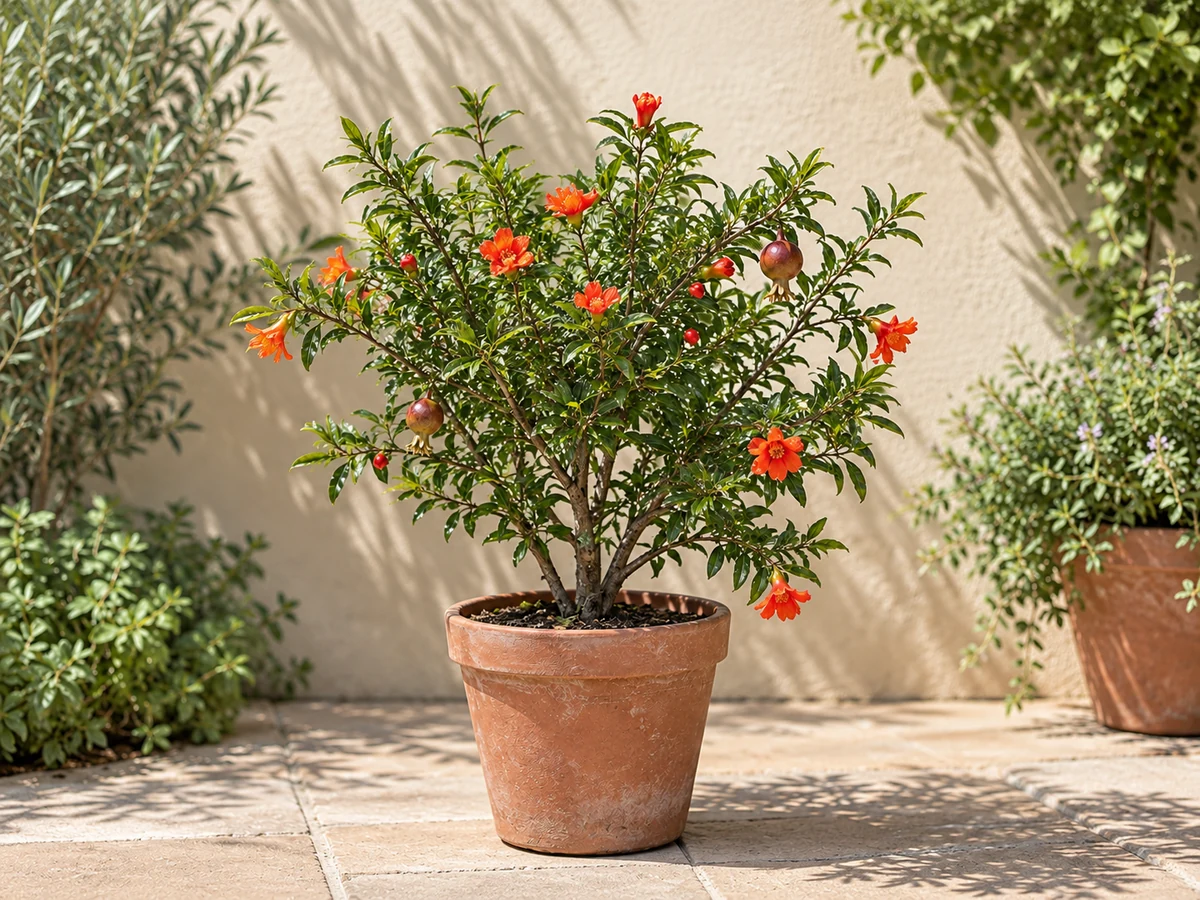
Nana is a small shrub, commonly around 2–3 feet, with orange-red flowers and small ornamental fruits. Size and fruit set vary. Enjoy the flowers first; this plan does not promise a harvest or a date for first fruit.
The growing season and winter rest
Start outdoors once frost risk has passed. The RHS rates Nana for mild conditions, not severe winters. This beginner container plan uses frost-free winter shelter; ground hardiness ratings are not a guarantee for pot-grown roots.
For regional planting windows, find your local Cooperative Extension office ↗.
Something looking off?
Will Nana make supermarket-size pomegranates?+
No. Nana is chosen for compact growth, flowers, and small fruit. Full-size fruiting varieties need a different growing plan; fertilizer cannot change the variety.
Why did it lose its leaves?+
Nana can be deciduous in cool conditions. Seasonal leaf fall does not by itself mean the plant has died. Keep it frost-free and avoid watering a resting, leafless plant as often as a leafy summer plant.
Why are there flowers but no fruit?+
Not every flower becomes a fruit. Check that the plant gets full sun and consistent root moisture. Local conditions and the plant itself affect fruit set; more fertilizer is not a reliable fix.
Repotting and light pruning
Move up only as needed
In spring, inspect the root ball. Repot a crowded plant into the next size with fresh container mix and open drainage holes. Keep the trunk base at the same depth and water to settle the mix.
Keep pruning light
Remove dead or wayward shoots with clean pruners. Keep enough healthy branching to carry flowers. A small nursery shrub does not need an orchard pruning system.
Sources & dates
Editorial plans, not results from a Plant Care Steps growing trial. Compiled with AI assistance; they have not yet had an independent horticultural review. Editorial approach.
- RHS: Nana identity, compact habit, sun, hardiness, pruning, and propagation ↗
- RHS: pomegranate container watering, seasonal feeding, and winter reduction ↗
- NC State: Nana dwarf habit and limits to reliable fruiting ↗
- Minnesota Horticultural Science: dwarf pomegranate research and small fruit ↗
- NC State: drainage and incremental repotting ↗
- Minnesota Extension: container moisture and fertilizer labels ↗
Something needs updating? Suggest a correction
Published · Updated
Sources checked View sources ↗