YOUR SIMPLE GROWING PLAN
One pot. Here’s the plan.
Before you start Sow garden beet seed directly in the pot during a cool spring or fall window. Thin the clusters; do not expect Swiss chard to make these roots.
What you need · pot, mix & supplies
- A draining pot at least 10 inches deep
- Garden beet seed (a round table type)
- Potting mix and a watering can
The soil
Loose container mix that drains. Stones and a compacted garden soil make forked roots, so do not use yard soil in this pot.
Is this your plant? This plan is for table beets (Beta vulgaris), sown for the root. Swiss chard is the leaf-beet crop and has its own guide. Sugar beet and fodder beet are different crops.
A sunny outdoor pot in cool spring or fall weather. Start with seed.
A draining pot at least 10 inches deep gives round garden beets room. Wider is better if you want more than a handful of roots.
Sow seed and thin; do not transplant a crowded clump and expect round roots. Each “seed” is often a cluster and can make several seedlings.
- 01
Sow in cool weather
Plant in your local spring or late-summer window so roots finish while the weather is cool. Hot midsummer is a poor finish for tender beets.
- 02
Sow shallow clusters
Sow about ½ inch deep and 1–2 inches apart. Keep the surface moist until seedlings appear, often in 5–14 days depending on temperature.
- 03
Thin for the root you want
When seedlings have a few true leaves, snip extras so plants are about 3 inches apart for full-size roots. Crowded beets stay small. You can eat the thinnings as greens.
- 04
Water evenly
Check the top inch. Water when it starts to dry, until excess drains, and empty the saucer. Repeated drought makes roots tough and woody.
- 05
Pull while roots are tender
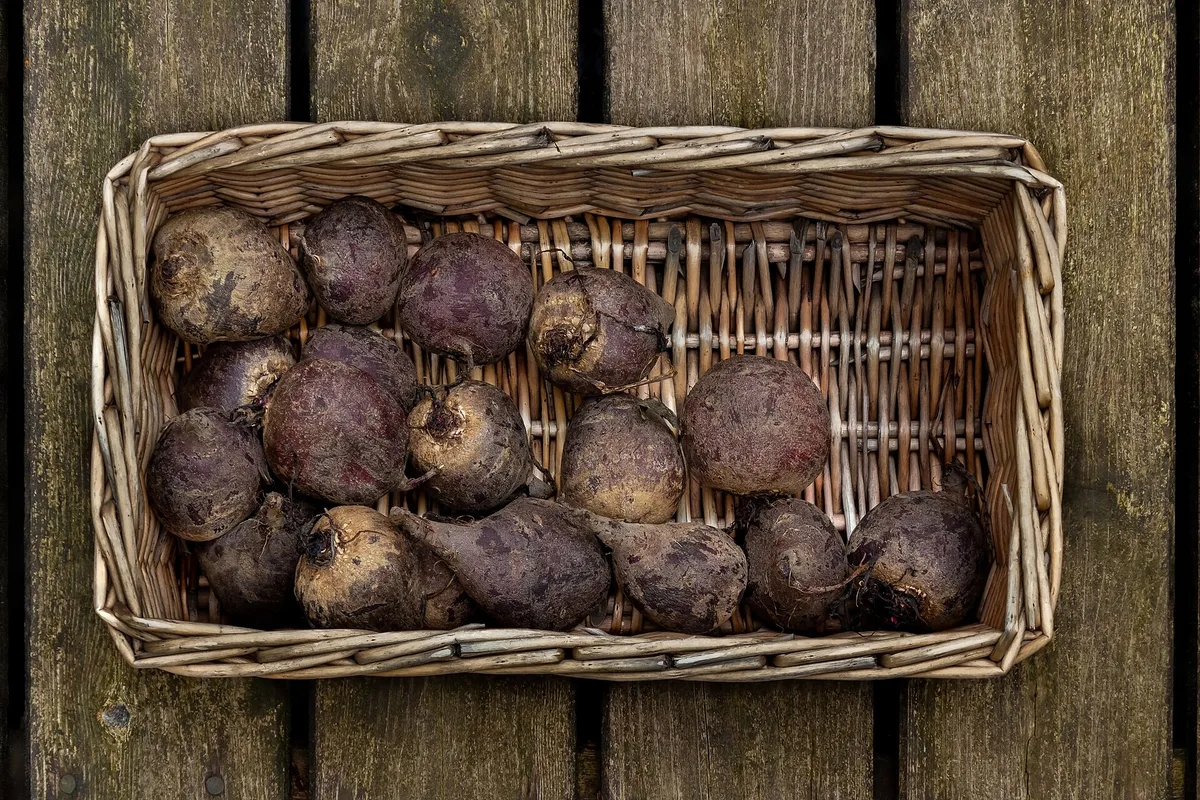
Harvest many round types around 1½–3 inches across. Larger roots are more likely to be woody. Twist off the leaves if you are storing roots, so they do not draw moisture out of the beet.
Other ways to start
Grow them in a short garden row+
The same thinning distance works in loose garden soil. A soil test guides any fertilizer; do not move this pot’s feeding note onto the bed unchanged.
Pick leaves only from extras+
Thinnings and a few outer leaves are useful greens. Stripping every leaf from a plant you want for roots slows the beet.
YOUR EVERYDAY ROUTINE
Water & fertilizer at a glance.
- Water when
- Keep seedlings moist. Later, water when the top inch starts to dry and empty the saucer.
- Fertilizer
- Fertilizer labeled for edible container plants
- Amount
- Use the rate printed on that product for your pot.
- What that amount covers
- The label’s container or edible-plant rate applies to the pot you have, not a guessed spoon dose from another formula.
- How often to feed
- Only while the plant is actively growing, and only as often as that label allows.
- When to start or pause
- Skip extra feed at planting if the mix already contains a starter charge. Do not feed a wilted, waterlogged, or finished plant.
Thin clusters to about 3 inches for roots. Harvest while roots are still tender.
Root timing for a small pot
Many garden beets are ready in about 50–70 days from sowing, depending on variety and temperature. A 12-inch pot is a salad project, not a storage crop. Heat and drought reduce quality faster than a missed fertilizer dose.
Sow in a cool spring or fall window
Sow for a cool finish: early spring, or late summer for fall roots. Use local frost dates. Beets tolerate light frost better than a long heat wave.
For regional planting windows, find your local Cooperative Extension office ↗.
Something looking off?
How do I grow beets from seed in a pot?+
Sow garden beet seed ½ inch deep in a draining pot at least 10 inches deep. Thin to about 3 inches apart. Keep moisture even and pull roots while they are still small and tender.
Why are there so many seedlings in one spot?+
A beet “seed” is usually a cluster. Several sprouts from one spot are normal. Snip the extras so one strong plant remains every few inches.
Can I transplant beets?+
This plan sows the final pot. Moving seedlings often forks or stalls the root. If you use starts, choose young ones and do not disturb the root.
Are beets the same as Swiss chard?+
No. Both are Beta vulgaris, but chard is grown for leaves and stems. This page is for garden beet roots. Use the Swiss chard guide for the leaf crop.
Why are my beet roots woody or pale?+
Heat, drought, and leaving roots too long are common reasons. Harvest smaller, keep water steady, and grow them in a cool window. More fertilizer will not soften an old root.
Thinning, leaves, and which beet
Thin clusters so roots can size
Unthinned clusters make a tangle of leaves and skinny roots. Snip rather than pull, so you do not disturb the seedling you are keeping.
Leaves and roots are different harvests
Young leaves are edible, but a plant stripped of foliage has little energy for the root. Take thinnings and a few outer leaves, not the whole top.
Know which beet you bought
This plan is for table beets grown for the root. Sugar beet and fodder beet are different crops. Swiss chard will not make this root.
Help with your next step.
- Check moisture before you water
Even moisture matters for beet roots; a calendar does not.
- Use potting mix, not garden soil
Packed soil forks roots in a pot.
Sources & dates
Editorial plans, not results from a Plant Care Steps growing trial. Compiled with AI assistance; they have not yet had an independent horticultural review. Editorial approach.
- Utah State University Extension: growing beets ↗
- RHS: beetroot sowing, thinning, and harvest ↗
- University of Florida IFAS: beets ↗
Something needs updating? Suggest a correction
Published · Updated
Sources checked View sources ↗