Vegetables & herbs
What to plant in fall: five vegetables and herbs
Fall planting works best when the crop matches the time you have left. Choose leafy crops for a possible cool-season harvest, or plant garlic for bulbs next year. Start with your weather, then choose your plant.
Published · Updated
Find your local planting window first
This guide is for temperate gardens moving from summer warmth toward shorter, cooler days. September–November is a Northern Hemisphere example, not a worldwide planting calendar. In the Southern Hemisphere, use your local autumn. In tropical climates, plan around cooler periods, rainfall and the local wet or dry season; do not assume these crops suit every rainy season.
Find your average first frost date, then check the forecast and the seed packet. A fall harvest often starts with sowing in late summer. Shorter days and lower temperatures slow growth, so a packet's maturity estimate needs a margin. University of Maryland Extension explains how to calculate this fall planting window. Check whether the estimate starts at sowing or transplanting before counting backward.
Choose by the result you want
| Plant | Start with | Main goal |
|---|---|---|
| Spinach | Seed | Young leaves in cool weather |
| Kale | Seed early; transplants later | Repeated leaf harvests |
| Garlic | Planting cloves | Bulbs next growing season |
| Cilantro | Seed | Fresh leaves before flowering |
| Parsley | Established young plant | Continue a modest herb harvest |
These are different projects, not five crops to sow on the same date. The conditions and sources below explain where each fits.
1. Spinach: sow for leaves as heat eases
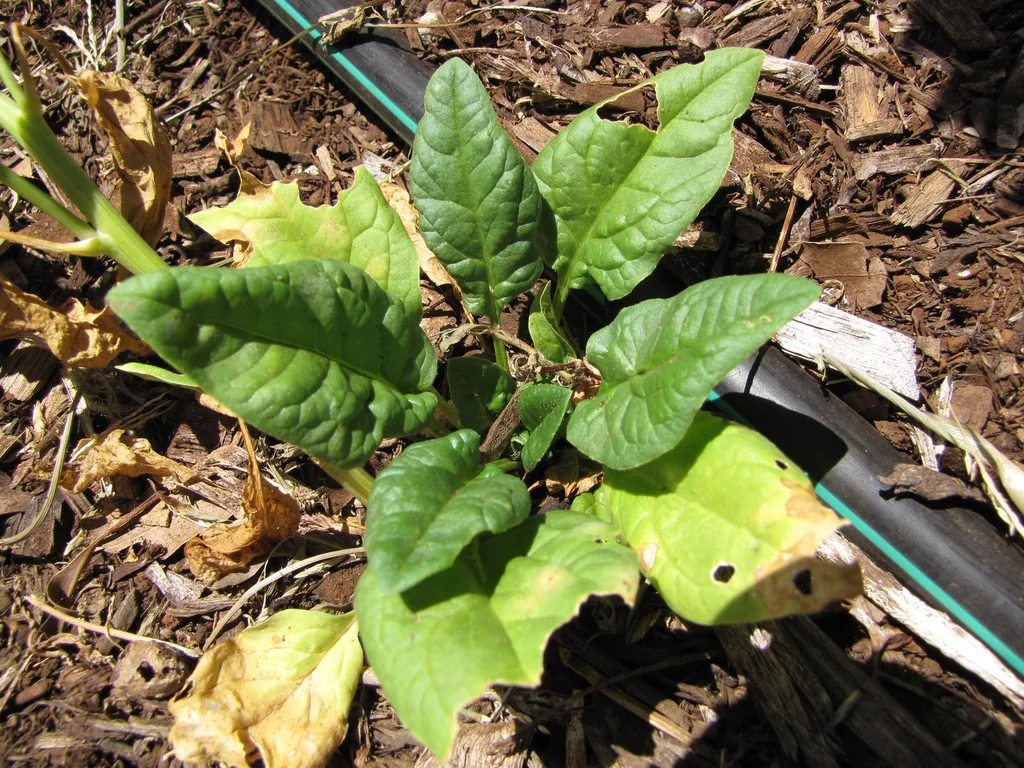
Spinach is a useful first choice when summer heat is fading and there is still time for growth. Direct-sow into its final position and keep the seedbed from drying out. Heat, drought and increasing day length can encourage flowering rather than leaf production; shortening autumn days offer a different growing window.
Minnesota Extension's spinach guide uses about two months before the average first frost as a fall-sowing reference. Treat that as a regional example. Pick young leaves rather than waiting for the largest possible plant. For a small container crop, follow our leaf spinach guide.
2. Kale: give plants time to establish
Kale suits gardeners who want successive small pickings. Sow early enough to build a plant before cold and low light restrict new growth; buying healthy transplants can shorten the wait. Frost tolerance does not mean a tiny seedling will produce a full winter crop.
Maryland Extension's leafy-greens guidance distinguishes wider spacing for mature plants from closer spacing for baby leaves. Choose one harvest style before planting. Watch for caterpillar damage even after temperatures cool. Our kale guide is a compact, one-plant container plan; a row of full-sized garden kale needs its own spacing.
3. Garlic: reserve the space until next year
Fall-planted bulb garlic is a long project. Plant healthy cloves from a reputable planting-stock supplier in a sunny, well-drained bed, using a variety suited to your winter. Keep the pointed tip upward and follow local depth and mulch guidance.
Maryland Extension describes autumn planting followed by harvest the next summer; its October and July dates apply to Maryland. Do not promise a same-fall bulb harvest or assume every warm climate supplies the necessary chilling. Mark the occupied space on your spring plan. Use our bulb garlic guide for the site's container approach.
4. Cilantro: aim for leaves, not a seed crop
Cilantro, also called coriander, is a good candidate for a cooler growing window. Sow into the bed or pot where it will grow, because it dislikes root disturbance. Choose a variety sold for leaf production and sow a small amount first.
The RHS coriander guide supports autumn sowing under a cloche or in a greenhouse to extend leafy harvests. That is protection for suitable conditions, not a guarantee through a severe winter. Do not let a sheltered pot become waterlogged. Our cilantro container guide focuses on a slow-bolting leaf crop.
5. Parsley: choose the right starting point
Parsley needs a more cautious recommendation. In a short, cold autumn, an established young plant or a pot you already own is more useful than a new packet of seed. The RHS parsley guide generally places outdoor sowing between spring and late summer and notes that germination can be slow. A bright protected position can extend an existing harvest.
In warmer regions the window changes: University of Florida guidance recommends the cooler fall and winter months. Use local advice before planting out. Our flat-leaf parsley guide covers container care, not a universal autumn sowing date.
Garden bed or container: follow the matching plan
In a garden bed, use the cultivar's spacing and local soil-test recommendations. A fertilizer amount designed for one pot should not be multiplied across a bed. Likewise, the size of one compact container plant is not a spacing rule for every variety.
Containers give you flexibility, but their roots have less insulation than roots in the ground. Use drainage holes, suitable potting mix and a place where surplus rain can escape. The RHS container guide explains the extra water, nutrient and winter-protection needs. Check moisture below the surface before watering; a wet-looking top or a brief shower does not settle the question.
A short checklist before you plant
- Write down your harvest goal and local first-frost reference.
- Choose seed, transplants or cloves to match the remaining time.
- Check actual sunlight in the chosen position.
- Label each crop and record its sowing or planting date.
- Prepare the protection described in our first-frost checklist.
If the window has closed, keep a smaller protected herb crop or plan next season. Planting fewer suitable crops is more useful than filling every empty space with seedlings that cannot establish.
Sources & editorial notes
- University of Maryland Extension: Fall Vegetable Gardening
- University of Minnesota Extension: Growing spinach and Swiss chard
- University of Maryland Extension: Growing Leafy Greens
- University of Maryland Extension: Growing Garlic
- RHS: How to grow coriander
- RHS: How to grow parsley
- University of Florida IFAS: Parsley
- RHS: Growing plants in containers
Compiled with AI assistance from the linked horticultural references. This is general guidance, not a Plant Care Steps growing trial. Use local frost forecasts and advice for your climate. How we prepare our guides.