NOVEMBER PLANT CARE
A wet, wilting peace lily needs a closer look.
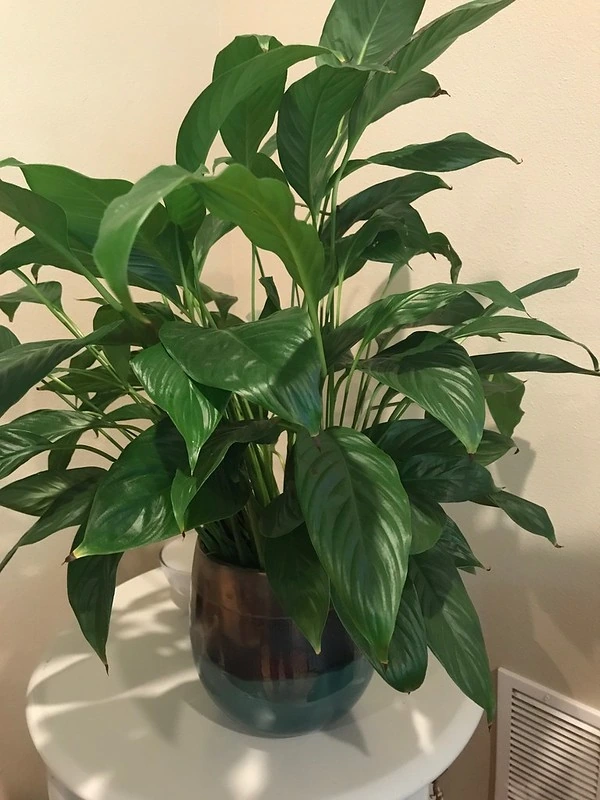
Drooping does not always mean thirst. When the rootball is wet, more water can worsen the problem.
For indoor Spathiphyllum. This reference photo does not show a diagnosed root problem.
Care at a glance
- First check
- Feel inside the rootball, not only its surface.
- Drainage
- Empty water from the saucer or outer pot.
- Position
- Use indirect light and a warm, draft-free spot.
Three simple steps
Confirm where it is wet
A wet surface can hide a dry center. Check deeper moisture and pot weight. If the rootball is genuinely wet, pause watering rather than topping up.
Inspect persistent collapse
If wilting continues in wet mix, slide out the rootball gently. Healthy roots feel firm; soft, decaying roots suggest root damage. Color alone is not a diagnosis.
Save healthy tissue
With clean tools, remove rotten roots and repot remaining healthy roots in fresh, well-drained mix. Use a pot that fits them. Keep the crown above the mix and avoid fertilizer during recovery.
Follow the plant, not a deadline
Recovery depends on how many healthy roots remain. If the crown is rotten or decline continues, seek local diagnostic advice.
Quick questions
Should I let it become completely dry?
No. Once drainage is corrected, keep the mix lightly moist without leaving it saturated.
Will extra fertilizer lift the leaves?
No. Fertilizer does not repair damaged roots and can add stress.
Sources & picture note
- NC State Extension: Spathiphyllum
- University of Maryland Extension: Diagnose Indoor Plant Problems
- Virginia Cooperative Extension: Properly Watering Container Houseplants
Compiled with AI assistance from the linked sources. This guide has not had an independent horticultural review.
Plant photograph for identification; it does not demonstrate the symptoms or treatment.
Published · Updated · Suggest a correction