GROWING TOOLS · RAISED BEDS
How much soil does your bed need?
For a rectangular bed at ground level, measure the space you want to fill. See the net volume, your optional extra allowance, and the number of bags.
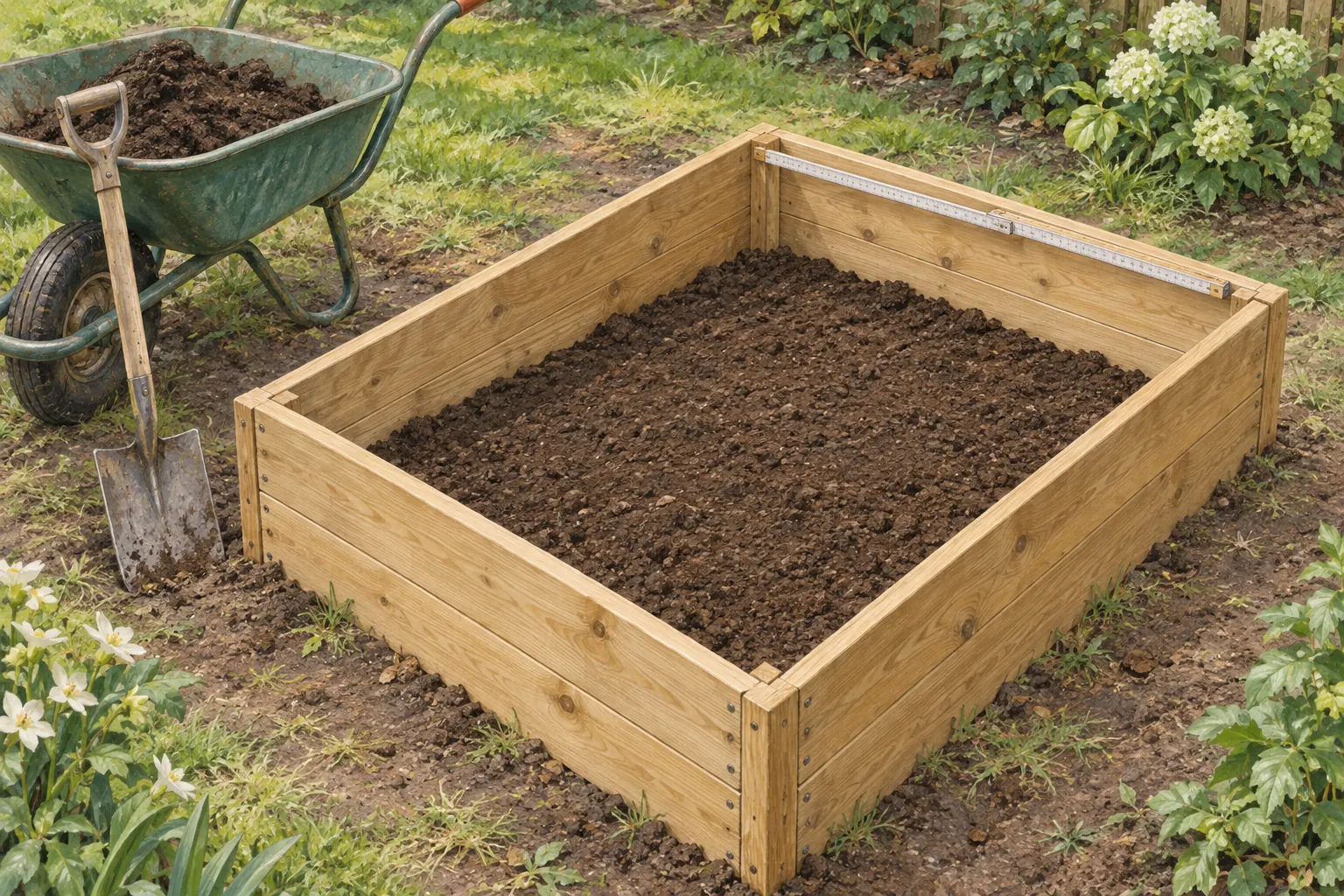
How much soil do you need to add?
Measure the inside of a rectangular, ground-level bed. Enter only the unfilled depth you want to add above the soil already in place.
Your volume and shopping estimate
- Net geometric volume
- Purchase volume, including your extra
- Whole bags to buy
Displayed volumes are rounded. Bags use the unrounded total across all beds, then round up once.
Formula and examples
Net volume = inside length × inside width × depth to add × number of identical beds. Use the same length unit throughout. Purchase volume = net volume × (1 + extra ÷ 100). Whole bags = purchase volume ÷ bag volume, rounded up once.
- 4 × 8 ft, with 12 in to add: 32 ft³ = about 1.185 yd³ = 906.139 L. With 2 cu ft bags and no extra: 16 bags. With 10% extra: 35.2 ft³ and 18 bags.
- 200 × 100 × 30 cm: 600 L = 0.6 m³. With 40 L bags and no extra: 15 bags.
Unit conversions: 1 ft = 0.3048 m; 1 in = 0.0254 m; 1 ft³ = 28.316846592 L; 1 yd³ = 27 ft³. These are volume calculations, not a soil blend or settling recommendation.
Measure the space you will fill.
- Use the bed’s inside length and width. This calculator assumes a rectangular shape.
- Measure the soil depth you plan to add. If the bed is partly filled, enter only the remaining depth to your chosen soil level.
- Enter the number of identical beds. Use separate calculations when their dimensions differ.
The net volume is length × width × fill depth × bed count. The optional extra allowance is shown separately. It is not an automatic settling prediction. For bags, use the volume printed on your chosen product; the tool rounds the purchase count up to whole bags.
The calculator measures space, not a recipe.
Choose suitable bed-filling materials for your site. This tool does not choose a compost percentage, predict soil weight, or test drainage. It also does not replace the potting-mix instructions for containers.
Next: check drip coverage, learn the home-compost basics, or choose a vegetable to grow.
Sources & editorial notes
- Oregon State University Extension: How to use compost in gardens and landscapes
- University of Maryland Extension: Soil to Fill Raised Beds
This is a geometric estimate for rectangular beds. Extra allowance is your choice, not a predicted settling rate or a soil-blend recommendation. Sources checked October 6, 2026. Compiled with AI assistance; not a Plant Care Steps growing trial. Editorial responsibility · Illustration credits.
Published · Updated
Something needs updating? Suggest a correction