GROWING BASICS · OUTDOOR VEGETABLES
A useful mix. Then watch the pile.
Start with suitable materials, enough air and a little moisture. The pile’s condition tells you more than a perfect-looking ingredient ratio.
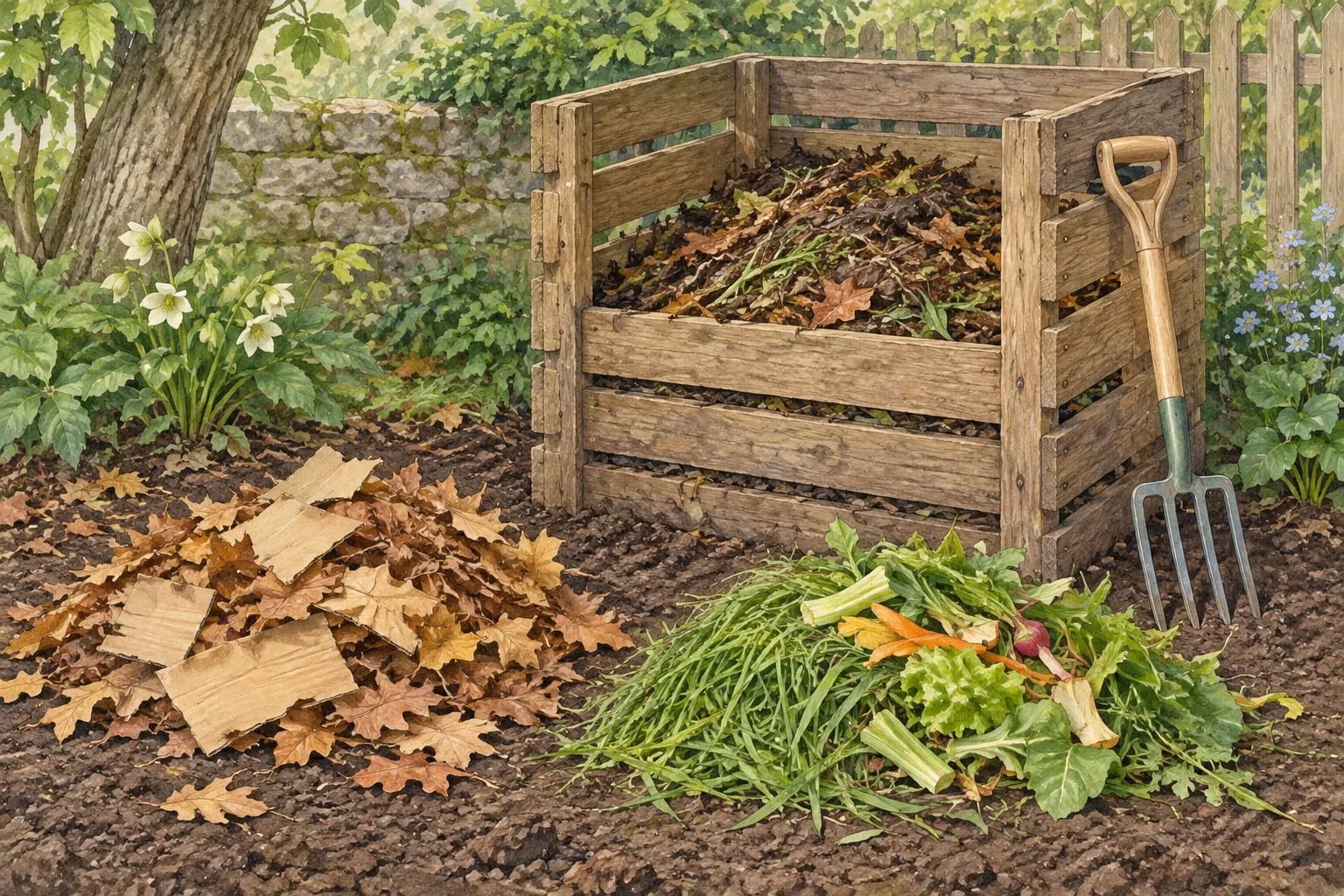
1. Choose your materials.
Browns
Dry leaves, small untreated wood chips and shredded plain, uncoated cardboard with tape and plastic removed supply carbon-rich material. Break bulky pieces down so they mix more easily.
Greens
Fruit and vegetable scraps, coffee grounds and untreated fresh grass clippings supply nitrogen-rich material. Mix them into the pile instead of leaving a thick, wet layer.
For a home pile, EPA suggests about two to three volumes of browns for one volume of greens as a starting point. That is a practical volume guide, not an exact carbon-to-nitrogen ratio.
Keep meat, fish, dairy, fats, pet waste, diseased plants and weeds with seeds out of this simple home system. Follow your local program’s rules if you use a collection service instead.
2. Adjust what you can observe.
- Too dry? Add a little water and mix. Aim for the feel of a wrung-out sponge.
- Wet or smelly? Add dry browns and turn the material to admit air.
- Food scraps exposed? Bury them under browns, keeping the pile covered with carbon-rich material.
Check again after the adjustment. Do not keep adding water or green material just to chase a fixed number.
3. Give it time to finish.
When food scraps have broken down and mixing no longer makes the pile heat up, set that portion aside to cure without adding fresh scraps. A cool pile alone is not evidence that it is ready. EPA advises at least four more weeks. Finished compost should be dark, loose and crumbly, with an earthy smell.
Compost is an amendment, not a universal standalone filling medium. Before filling a new bed, calculate its volume and choose materials appropriate to the site. A pot needs its own potting-mix plan.
Explore growing tools · Find your vegetable’s plan
Sources & editorial notes
- US Environmental Protection Agency: home-pile ratios, exclusions and curing
- University of Maryland Extension: home compost materials, moisture and airflow
These steps are for a small outdoor home compost pile. They are not a laboratory carbon-to-nitrogen calculation or proof that the pile has killed pathogens or weed seeds. Sources checked October 6, 2026. Compiled with AI assistance; not a Plant Care Steps growing trial. Editorial responsibility · Illustration credits.
Published · Updated
Something needs updating? Suggest a correction