GROWING BASICS · OUTDOOR VEGETABLES
Follow the water into the bed.
A running timer does not tell you whether the root zone is wet. Check the emitters, then look beneath the surface.
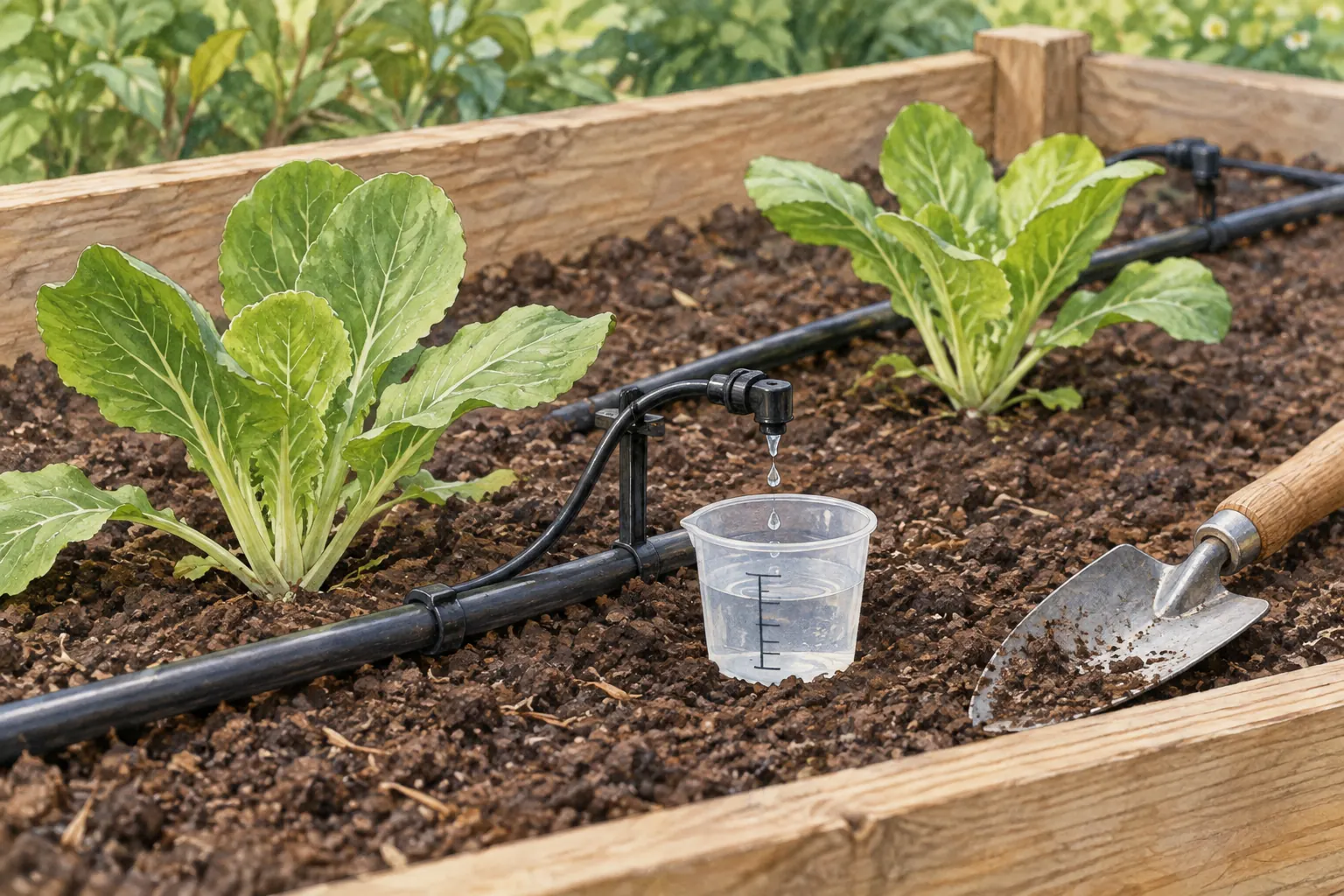
1. Check the equipment.
Look for leaks, kinked tubing and clogged or disconnected emitters. Use filtration and pressure regulation as the system manufacturer directs. Pressure-compensating emitters still need the recommended operating pressure.
Check more than the first outlet. Compare a few emitters near the beginning and the far end of the bed before assuming the printed flow rate is what every plant receives.
2. Collect and compare.
Where an emitter can safely drain into a cup without changing its setup, collect its output for a measured interval. Record the volume and time; repeat at the other test points for the same interval. An unusually low result calls for an equipment check.
A flow example, not a watering dose: 100 mL collected in 5 minutes equals 1.2 L per hour. Actual output, spacing and soil conditions all matter; a flow rate alone does not set the right run time.
3. Look where the water goes.
After a test run, carefully open a small inspection spot beside an emitter, avoiding plant roots. Check how far moisture has moved down and sideways. Soil texture changes the shape of that wet area; damp soil at one outlet does not prove the whole bed is covered.
Adjust emitter placement or the run time from what you observe, then check again. Avoid assuming that more time solves every dry patch: check uneven flow first, and allow for rainfall and changing plant demand.
Review tomato and pepper moisture problems · Estimate bed-filling volume.
Explore growing tools · Find your vegetable’s plan
Sources & editorial notes
- Washington State University Extension: Drip Irrigation for the Yard and Garden
- UC Davis: Drip Irrigation and Fertigation Management of Celery — timed-capture method only
- Utah State University Extension: The Do-It-Yourself Guide to Backyard Drip Irrigation
This is a practical system check, not a pipe-pressure model or a universal watering schedule. Sources checked October 6, 2026. Compiled with AI assistance; not a Plant Care Steps growing trial. Editorial responsibility · Illustration credits.
Published · Updated
Something needs updating? Suggest a correction