YOUR SIMPLE GROWING PLAN
One pot. Here’s the plan.
Before you start Choose one labeled nursery plant, a sunny window and a pot that drains. Let the mix dry before its next drink.
What you need · pot, mix & supplies
- 1 ponytail palm in a draining nursery pot
- A saucer or an outer pot you can empty
- A watering can
The soil
Retain a mix that drains and dries properly. When repotting is needed, use a free-draining cactus and succulent potting mix.
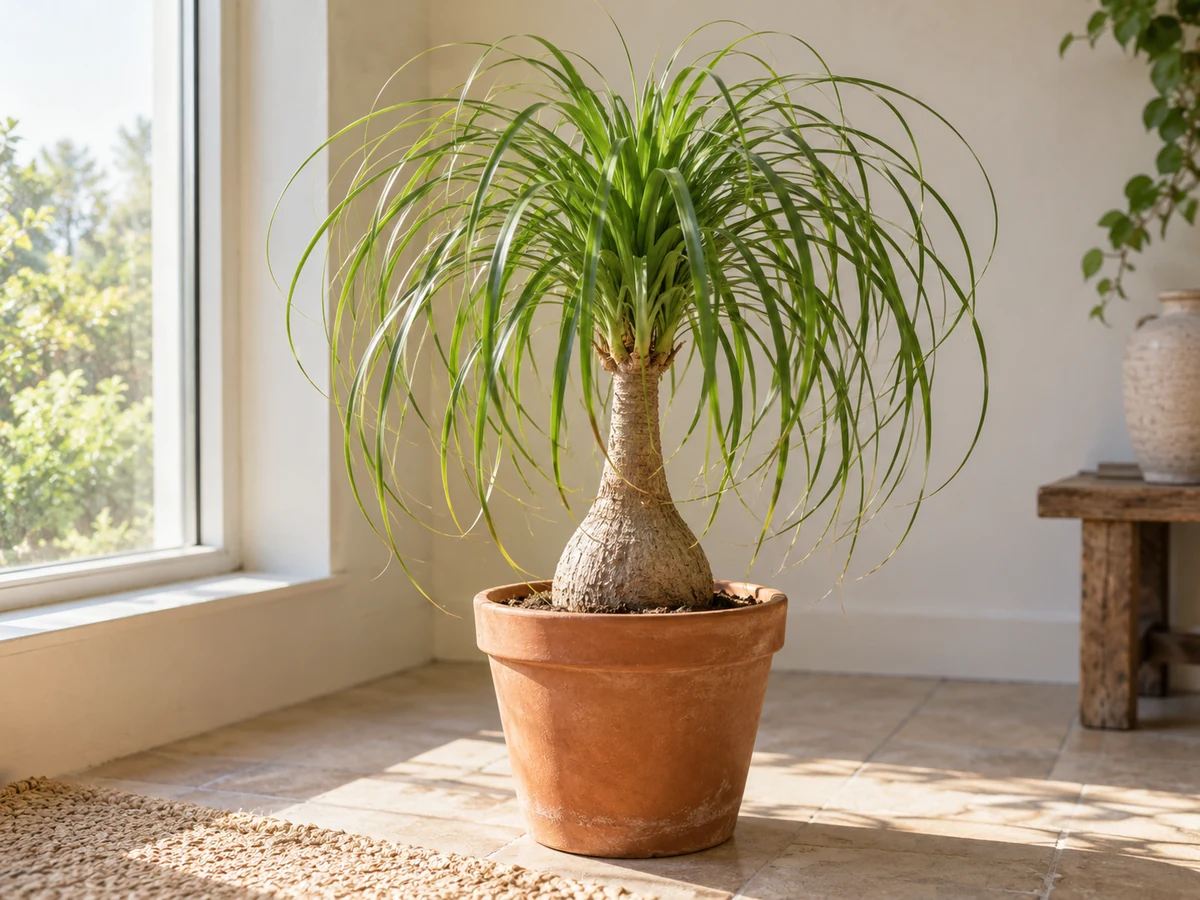
Is this your plant? Look for Beaucarnea recurvata or Nolina recurvata on the label. Despite its common name, this is a succulent rather than a true palm.
Indoors, beside a sunny window. Start with nursery plant.
Use a pot with open drainage holes. Keep the existing size while the roots fit and the plant is stable.
Choose a firm swollen base and long, arching leaves. Check the label for Beaucarnea recurvata or Nolina recurvata.
- 01
Check the base and drainage
Keep the firm swollen base at its existing level. Empty any water standing inside a decorative outer pot.
- 02
Give it a sunny window
Place it close to useful daylight. Move into stronger sun gradually over 1–2 weeks.
- 03
Wait for dry mix
Check weekly below the surface and lift the pot. If the deeper mix is damp, wait rather than topping it up.
- 04
Soak and drain
When the mix has dried, water slowly until excess drains. Empty the saucer and let the mix dry before watering again.
Other ways to start
Seed is a slower project+
For a separate propagation project, sow seed in spring at about 68–70°F. A nursery plant is the simpler start; do not assume a cut leaf or leafy trunk shoot will root.
YOUR EVERYDAY ROUTINE
Water & fertilizer at a glance.
- Water when
- Let the mix dry between thorough waterings; empty the saucer. Water less often in winter as growth slows.
- Fertilizer
- Fertilizer labeled for indoor plants
- Amount
- Use the labeled indoor dilution and application amount.
- What that amount covers
- A mixing batch is not a fixed amount for one pot.
- How often to feed
- Once or twice during active spring or summer growth.
- When to start or pause
- Wait until existing feed ends. Skip winter rest and struggling roots.
Keep feeding modest; a sunny window matters more than faster growth.
New leaves and a slowly growing base
Look for fresh narrow leaves at the top. The swollen stem stores water and thickens slowly. Flowers are uncommon on indoor plants and are not a beginner success test.
Repotting and a summer outside
Buy a nursery plant indoors year-round; repot only when needed, preferably in spring. If summering outdoors, wait until nights stay above 50°F, introduce the brighter exposure gradually, and return it indoors before cold nights.
For regional planting windows, find your local Cooperative Extension office ↗.
Something looking off?
Is it a low-light palm?+
It is a succulent, not a true palm. Give it a bright, sunny window rather than placing it in a dark corner.
Why are the leaf tips brown?+
Water stress, excess fertilizer or accumulated salts can cause brown tips. Check the mix and feeding history first; brown tips alone do not mean it needs more water.
Should I cut off shoots to make more plants?+
Not as a beginner shortcut. A leafy shoot on the trunk may be a branch, not an independently rooted plantlet. Keep it unless you have a suitable propagation method.
Repotting and tidying tips
Repot only when needed
Check for tight circling roots or an unstable pot. Move up one container size, using drainage holes and a free-draining mix. Do not bury the swollen stem more deeply.
Trim dead tips
Use clean scissors to neaten a completely brown tip. Leave the healthy green length and central growing point intact; it does not need routine pruning.
Sources & dates
Editorial plans, not results from a Plant Care Steps growing trial. Compiled with AI assistance; they have not yet had an independent horticultural review. Editorial approach.
- Wisconsin Extension: sunny-window care, infrequent feeding and propagation limits ↗
- NC State: dry-between-waterings care and indoor growth ↗
- RHS: spring repotting and seed propagation ↗
- Minnesota Extension: gradual light changes and summer outdoor temperatures ↗
- Maryland Extension: houseplant fertilizer labels and winter feeding ↗
- ASPCA: ponytail palm and pets ↗
Something needs updating? Suggest a correction
Published · Updated
Sources checked View sources ↗