HOUSEPLANTS
Poinsettia Care
Poinsettia care through the holidays is bright indirect light, days that stay at or under about 70°F, and water when the surface is dry. Lift the pot out of its sleeve, water until it drains, and empty the saucer. Do not fertilize while the bracts are colored. After they fade, keep it as a green plant, or compost it.
Clemson Extension’s poinsettia fact sheet asks for at least 6 hours of bright indirect light. Direct sun can fade the bracts, so filter a harsh window. Daytime heat should not exceed 70°F. Drafts, heaters, fireplaces, and vents fade the color, and chilling below 50°F can drop leaves. Water when the surface feels dry. Take the plant out of a decorative sleeve, saturate the mix, and never leave it standing in water. Do not fertilize while it is in bloom. Around March or April, when the bracts have faded, the fact sheet prunes a plant you are keeping to about 8 inches and leaves it in a sunny window. Forcing color again needs about 14 uninterrupted dark hours each night from early October. A lamp left on in the evening blocks those bracts. Composting a plant you will not keep is the other ending.
Published · Updated
Light, water, and temperature while the bracts are colored
Holiday care: at least 6 hours of bright indirect light, water when the surface is dry, and daytime heat at or under about 70°F. Lift the pot out of its sleeve, drain it, and empty the saucer. Do not fertilize while it is in bloom. Chilling below 50°F, or a heater vent, drops leaves.
| Moment | Light | Water | Temperature | Keep or compost |
|---|---|---|---|---|
| Bracts still colored | At least 6 hours of bright indirect light. Filter harsh sun. | Surface dry, then a full drink. Empty the sleeve and the saucer. | Days at or under about 70°F. Not below 50°F. Off vents and drafts. | Keep it on display. No fertilizer. |
| Bracts fading, and you want a green plant | A sunny window for the rest of the year. | Keep the surface check. Do not switch to a weekly soak. | The same limits. Cold glass against a leaf still burns it. | Keep it. Around March or April, prune a plant you are keeping to about 8 inches. |
| Bracts fading, and you will not give it a window | A dark corner will not hold it. | Stop. | Do not park it on a heater while you decide. | Compost it. Do not leave a wet sleeve to sour. |
| You want colored bracts again next year | Bright days, then about 14 hours of uninterrupted dark each night from early October. | Keep the surface check through that project. | A lamp in the evening blocks the color. | Keep it only if you will actually give it those nights. Otherwise enjoy it green, or compost it. |
The colored parts are bracts, modified leaves. The true flowers are the small yellow structures at the center. Clemson’s fact sheet is the care above. This page does not sell plants, pots, or fertilizer, and it does not rank colors.
Watering in a heated room, once the holidays are over, is winter watering for houseplants. The year-round habit is when to water plants. The watering calculator is the next check for an ordinary pot. It does not override the sleeve: if the foil holds water, empty it before you trust a date. Light, the pot, and the wider indoor habit stay on indoor plant care. This is one plant, not a second indoor hub.
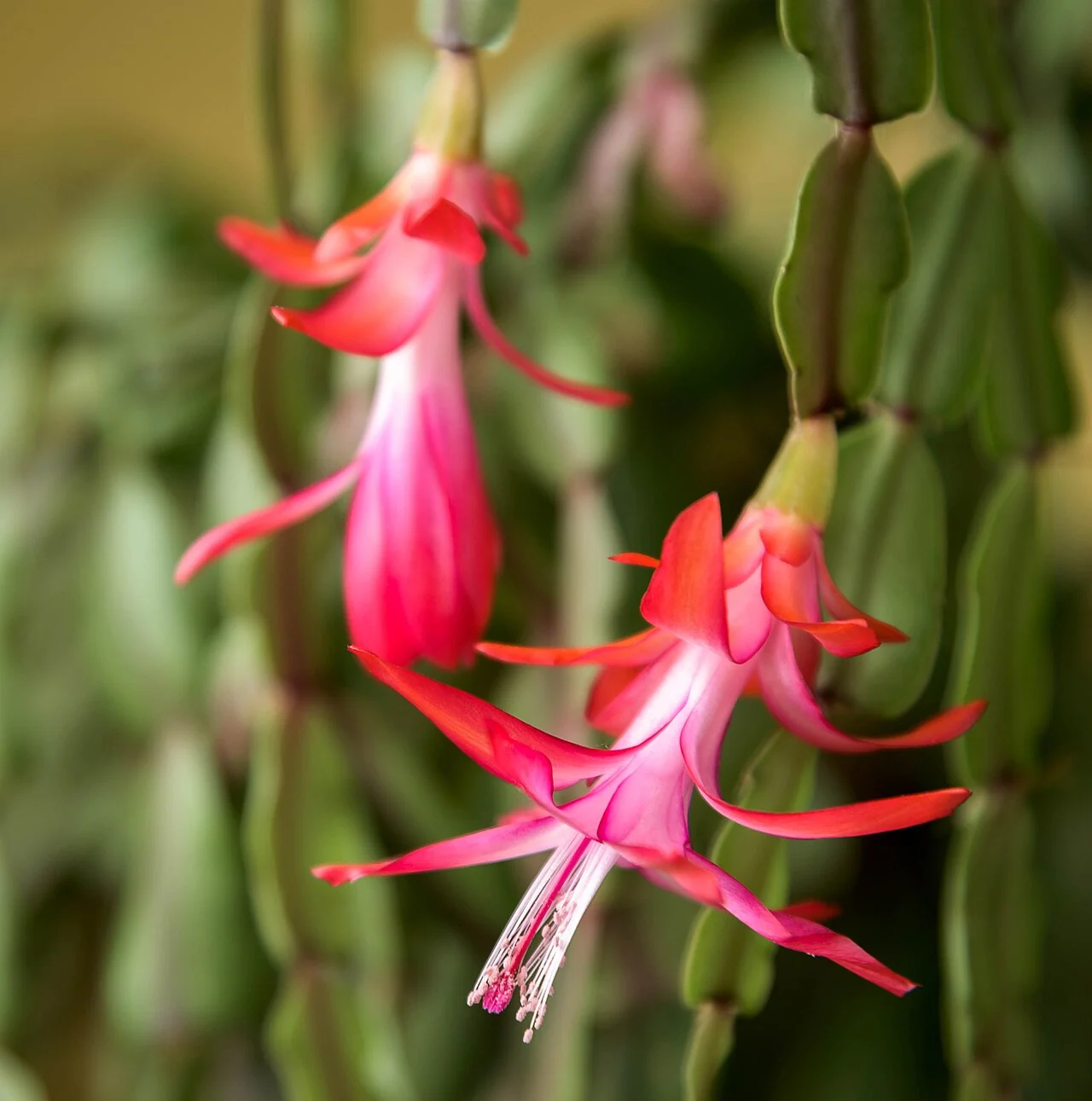
A Christmas cactus on the same windowsill is a different plant. It is a forest cactus, and its buds drop if you move it or leave it in a wet saucer. Do not water the two on one schedule. Outdoor winter work is the winter garden. A short-day plant and an evening lamp are grow lights for indoor plants: the lamp can block next year’s color. If roots are already soft and the mix is sour, use houseplant root rot and then decide whether the plant is worth keeping.
Keeping a poinsettia green is a houseplant project: a bright window, water when the surface dries, and fertilizer only after new growth, on the label of a balanced houseplant product. Clemson’s example, once you are past bloom, is a complete fertilizer every two to three weeks in spring, summer, and fall. That is not a holiday dose. Compost is the right end when you will not do that year of care.
Common questions
How much light does it need now?+
Clemson asks for at least 6 hours of bright indirect light. Direct sun can fade the bracts. A sheer curtain is enough when the window is harsh. Do not let leaves sit on cold glass.
How do I water it?+
Water when the surface feels dry. Lift the pot out of any sleeve, soak the mix, and empty the saucer. Never leave it standing in water. A full foil wrap is a common way to rot the roots.
What temperature is safe?+
Clemson’s fact sheet says daytime heat should not exceed 70°F, and chilling below 50°F can drop leaves. Keep it off heaters, fireplaces, vents, and drafts.
Should I keep it after the holidays?+
Keep it if you will give it a bright window and keep watering when the surface dries. Compost it if you will not. Color next year needs about 14 hours of uninterrupted darkness each night from early October. A green plant is a finished choice.
Sources and notes
- Clemson HGIC 1561: poinsettia
- Clemson Extension: poinsettia care
- Clemson Extension: caring for your poinsettia during the holidays
This is care for a plant you already have. It is not a catalog and not a color-forcing project. Sources checked November 10, 2026. Editorial responsibility.