YOUR SIMPLE GROWING PLAN
A garden bed. Here’s the plan.
A garden bed with morning sun. Start with nursery shrub.
Allow at least 2½ ft from its center to the bed edge. This plan is in the ground.
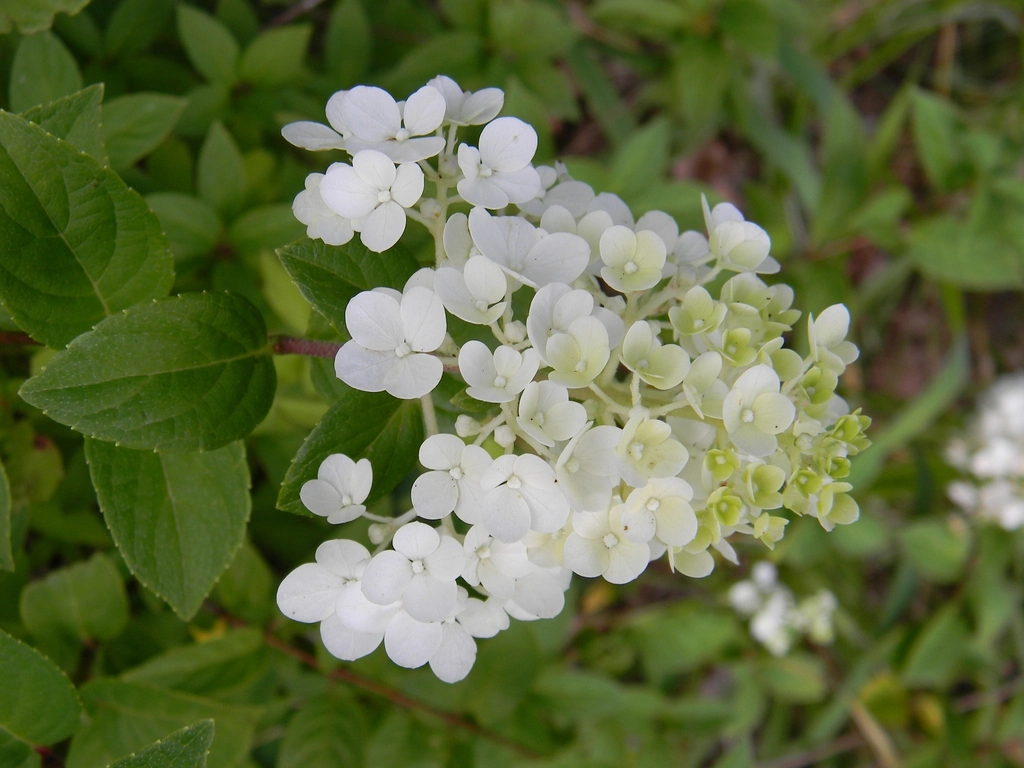
Choose Little Lime (‘Jane’), a panicle hydrangea that reaches about 3–5 ft tall and wide.
- 01
Give the shrub its space
Choose morning sun, drainage, and room for a 3–5-ft-wide shrub. Keep 5 ft between centers if planting a row.
- 02
Set the root ball at ground level
Dig about twice as wide as the root ball and no deeper. Keep the root collar at the surrounding ground level.
- 03
Backfill and soak
Return the soil you removed, firm gently, and water slowly to settle it around the roots.
- 04
Mulch and check the roots
Add 2–3 inches of mulch without touching the stems. Check the original root ball daily for the first two weeks, especially in heat.
Another way to start
Buy a smaller nursery plant+
A smaller labeled Little Lime plant is a practical lower-cost start. Give it the same eventual space and closer moisture checks while its root ball is small. Seeds do not reliably reproduce this named cultivar.
When to water.
Check daily for the first two weeks, then at least weekly while establishing. Feel moisture in the original root-ball area about 6 inches down. Water slowly and deeply when dry; wait if still moist. Hot or windy weather can mean more frequent checks. Do not pour on water simply because the flower heads droop in midday heat—check the roots first. Keep checking established shrubs during drought and water when their root zone dries.
Exactly what to feed it.
Do not add fertilizer to the planting hole. For this in-ground starter plan, begin without extra feed in reasonably fertile soil. If an established shrub grows poorly after watering and light are corrected, use a soil test.
THE SIMPLE FEEDING PLAN
Start without extra fertilizer.
No automatic fertilizer purchase. The breeder allows spring feeding, but the right product and amount for your bed depend on its existing fertility. Follow the soil-test recommendation instead of borrowing a container dilution.
A little patience pays off.
Little Lime produces greenish-white summer flower heads that can age pink. An established shrub is about 3–5 ft tall and wide. Weather affects color and timing; a newly planted shrub may put energy into roots first.
When should I start where I live?+
The breeder lists USDA zones 3–9. Plant when the ground is workable and conditions are moderate. Cooler sites can provide more sun; hot sites benefit from afternoon shade and reliable root-zone moisture.
For regional planting windows, find your local Cooperative Extension office ↗.
Something looking off?
Can acidic fertilizer turn it blue?+
No. Little Lime is a panicle hydrangea. The blue/pink soil-acidity rule associated with some bigleaf hydrangeas does not apply. Do not add aluminum sulfate to turn these flowers blue.
When do I prune it?+
Prune in late winter or early spring. Panicle hydrangeas flower on new growth. Repeatedly trimming shoot tips in summer can remove developing flowers.
Why does my other hydrangea need different care?+
Mophead, oakleaf, smooth, and panicle hydrangeas are different groups. Check the plant tag before using this cultivar-specific plan.
A little more growing know-how.
Keep pruning simple+
Remove dead, damaged, or crossing branches in late winter or early spring, then lightly shape if needed. The compact cultivar does not need constant summer trimming.
A bed recipe, not a tiny-pot promise+
This guide gives one shrub a permanent place in garden soil. A container requires its own size, watering, feeding, and winter plan; do not move this recipe unchanged into a small patio pot.
BEHIND THIS GUIDE
Where the advice comes from.
Plant care is based on the sources below. Planting layouts and beginner routines combine that guidance into one practical plan; they are editorial choices, not results from a Plant Care Steps growing trial.
- Proven Winners: Little Lime identity, size, light, and zones ↗
- Iowa State: hydrangea types and pruning ↗
- Maryland Extension: planting shrubs ↗
- Maryland Extension: watering new shrubs ↗
- Maryland Extension: fertilizer decisions ↗
Compiled with AI assistance. These first-edition guides have not yet had an independent horticultural review. Read our editorial approach.