YOUR SIMPLE GROWING PLAN
One pot. Here’s the plan.
Before you start Only start cauliflower if you still have a long cool season. One plant needs a large pot, and a button curd will not size up later.
What you need · pot, mix & supplies
- A draining pot of at least 5 gallons
- Cauliflower seed or 1 transplant of a compact variety
- Potting mix and a watering can
The soil
Rich, draining potting mix. Garden soil packed in a pot dries and crusts unevenly.
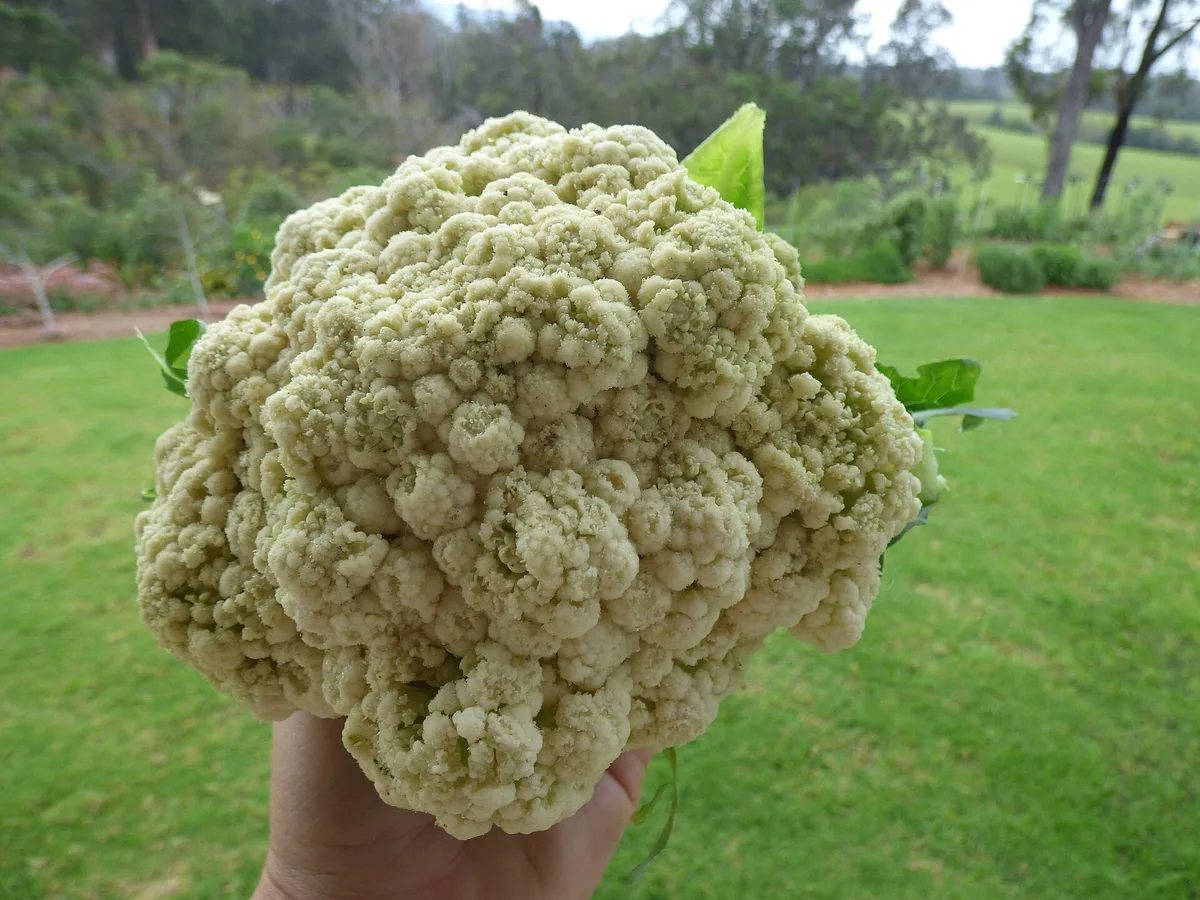
Is this your plant? This is Brassica oleracea Botrytis Group, grown for one curd. It is not broccoli. Choose a variety whose days to maturity fit a long cool season.
A sunny outdoor pot with a long cool season. Start with transplant preferred.
Use one plant in a draining pot of at least 5 gallons and 12 inches deep. Larger is easier. This is a poor choice for a small herb pot.
One transplant, or several seeds thinned to the strongest seedling. Choose a variety whose days to maturity fit your cool window.
- 01
Count the cool days first
Cauliflower needs a long, cool run. If your spring heats up quickly, a fall crop is often easier. Match the packet’s days to maturity to your local season.
- 02
Plant one start
Set a transplant at its nursery depth, or sow a few seeds ½ inch deep and thin to one plant. Do not crowd a second cauliflower into the same pot.
- 03
Water on a steady check
Feel the top inch every day in mild weather and twice in a warm spell. Water when it starts to dry, until the pot drains, and empty the saucer.
- 04
Feed while leaves are expanding
After the mix’s starter nutrients are used, follow a vegetable fertilizer label during leafy growth. Stop trying to force size once the curd appears.
- 05
Cut a tight curd
Harvest when the curd is firm and white or the color the variety promises, before it loosens into ricey buds. Some types need leaves tied over the curd to limit yellowing; follow the packet if it says so. Do not tie leaves on every variety by habit.
Other ways to start
Grow broccoli if the season is short+
Broccoli is more forgiving in a pot. Use the broccoli guide rather than expecting cauliflower timing to match.
Use a garden bed for large types+
Big standard varieties prefer garden spacing around 18 inches. A pot is a compromise for a compact type, not a smaller copy of a field crop.
YOUR EVERYDAY ROUTINE
Water & fertilizer at a glance.
- Water when
- Check every day. Water when the top inch starts to dry and empty the saucer. Do not let the pot swing bone-dry.
- Fertilizer
- Fertilizer labeled for edible container plants
- Amount
- Use the rate printed on that product for your pot.
- What that amount covers
- The label’s container or edible-plant rate applies to the pot you have, not a guessed spoon dose from another formula.
- How often to feed
- Only while the plant is actively growing, and only as often as that label allows.
- When to start or pause
- Skip extra feed at planting if the mix already contains a starter charge. Do not feed a wilted, waterlogged, or finished plant.
One plant, cool season only. A tiny early curd will not grow into a full head.
One curd, if the season stays cool
Many varieties need about 50–80 days from transplant, and the plant must stay cool the whole time. One pot produces one curd. A tiny early curd on a small plant is buttoning; it will not grow into a grocery-store head later.
Count cool days before you sow
Start from your local frost dates and the packet, aiming to mature in cool weather. Hot spells are the main reason patio cauliflower fails. If that is your forecast, choose another crop.
For regional planting windows, find your local Cooperative Extension office ↗.
Something looking off?
How do I grow cauliflower in a pot?+
Plant one compact variety in a draining pot of at least 5 gallons. Time it for cool weather, never let the mix swing dry, and cut the curd while it is tight.
Why is my cauliflower curd so small?+
Buttoning is common after heat, cold shock, drought, or a crowded, late plant. The small curd will not expand into a full head. Note the cause and time the next crop more carefully.
Should I tie the leaves over the head?+
Only if your variety’s instructions say to blanch it. Some colored and self-wrapping types should not be tied. Yellowing from sun is a color issue, not automatically a disease.
Is cauliflower easier than broccoli?+
No. Broccoli usually tolerates a pot and a warm spell better. Use cauliflower when you can give it a long cool season.
Can I eat the leaves?+
This plan is for the curd. Leaves are not the crop described here. Rinse the curd before eating and follow any pesticide harvest interval.
Buttoning, one curd, and maturity
One curd per plant
Unlike broccoli, most heading cauliflower does not give a long flush of side shoots. Harvest the main curd and replant the pot with something else.
Read days to maturity honestly
If you do not have enough cool weeks left, do not sow it “to see.” The pot will still use the season.
Help with your next step.
- Do not let the pot swing dry
A hard dry-down is a common reason cauliflower buttons.
- Choose a crop that fits the season you actually have
Cauliflower needs a long cool run. If you do not have one, pick another guide.
Sources & dates
Editorial plans, not results from a Plant Care Steps growing trial. Compiled with AI assistance; they have not yet had an independent horticultural review. Editorial approach.
- University of Minnesota Extension: growing cauliflower ↗
- Utah State University Extension: cauliflower ↗
- RHS: cauliflower ↗
Something needs updating? Suggest a correction
Published · Updated
Sources checked View sources ↗