NOVEMBER PLANT CARE
Find out why your snake plant is falling over.
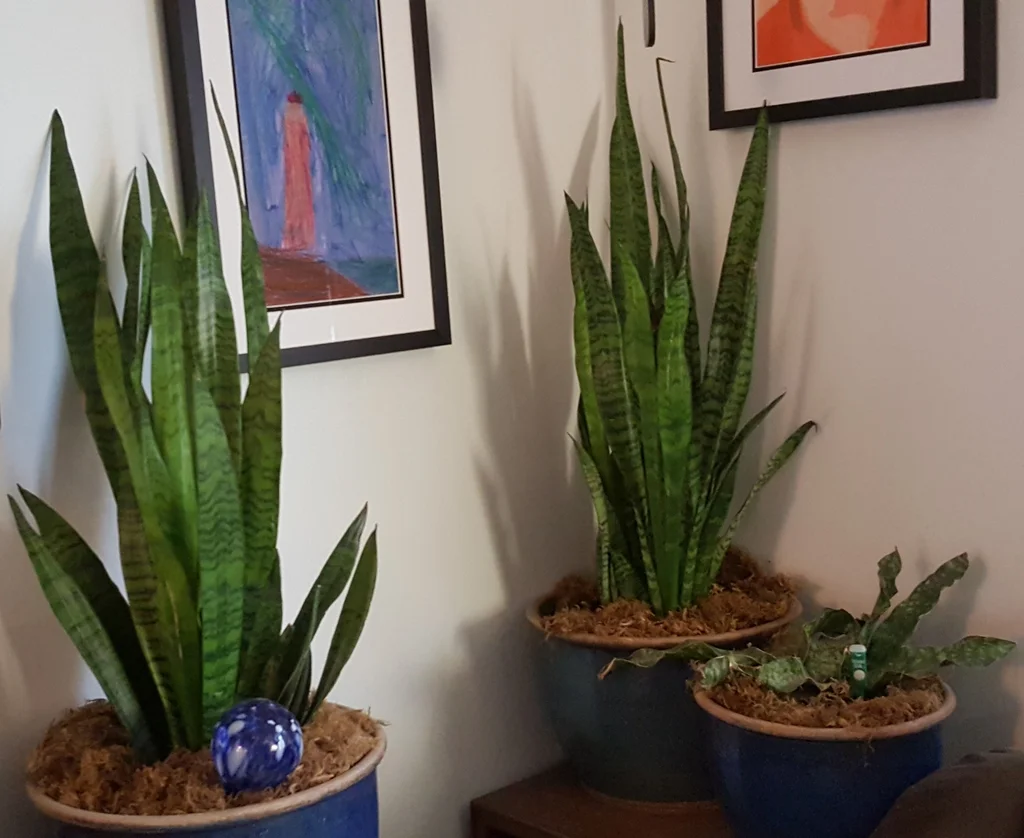
A firm leaning leaf and a soft collapsing clump need different responses. Check the leaf bases before reaching for water.
For indoor Dracaena trifasciata, also sold as Sansevieria. Natural leaf shapes vary by cultivar.
Care at a glance
- Feel
- Firm leaves differ from soft or mushy bases.
- Water
- Let the mix dry between waterings.
- Light
- A brighter position can help stretched growth.
Three simple steps
Inspect the base and pot
Check for trapped water, blocked drainage and soft tissue. If the whole clump wobbles or collapses in wet mix, gently inspect the roots.
Match the response
For rotten roots, remove clearly soft, decayed sections with clean tools and repot healthy material in fresh, free-draining mix. Wear gloves; do not move into an oversized pot.
Help firm leaves stay upright
For healthy but stretched growth, gradually improve light without sudden harsh sun. A loose support can hold a tall leaf; it cannot cure root rot.
Watch the remaining leaves
Keep firm, healthy foliage. Monitor whether additional leaves soften or the base loses its grip; continuing collapse needs further diagnosis.
Quick questions
Will a badly creased leaf straighten?
Usually not fully. Remove a severely damaged leaf at its base if needed; assess future growth instead.
Does leaning prove overwatering?
No. Low light and physical damage can also contribute. Check tissue and roots before deciding.
Sources & picture note
- RHS: How to grow sansevierias
- NC State Extension: Dracaena trifasciata
- University of Maryland Extension: Diagnose Indoor Plant Problems
Compiled with AI assistance from the linked sources. This guide has not had an independent horticultural review.
Plant photograph for identification; it does not demonstrate the symptoms or treatment.
Published · Updated · Suggest a correction