YOUR SIMPLE GROWING PLAN
A row in the garden. Here’s the plan.
Before you start Plant a small row of hardened young starts in garden soil during your local spring or fall planting window.
What you need · plants, soil & tools
- Healthy young Swiss chard plants
- A sunny strip of garden soil
- A trowel, a watering can or hose, and clean scissors
The soil
Use fertile, moisture-retentive garden soil that drains well. Remove weeds and add mature compost if needed; use a soil test to guide nutrient additions.
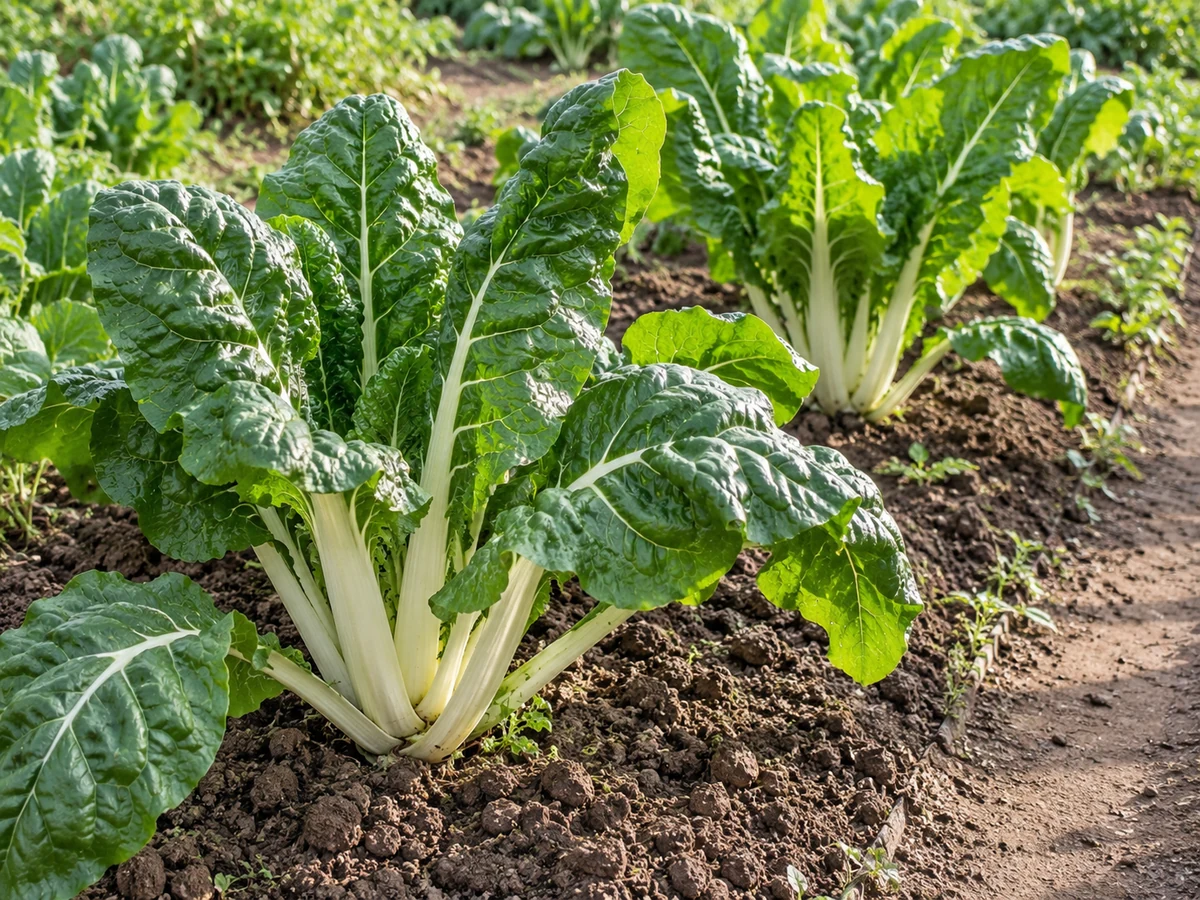
Is this your plant? Grow chard for leaves and stalks in garden soil. This spacing is for full-size plants with repeated outer-leaf harvests.
A sunny row in the vegetable garden. Start with young transplants.
Leave 12 inches between starts for full-size leaves. If adding another row, leave 18 inches between rows.
Choose young plants with several true leaves and healthy roots. Harden sheltered starts to outdoor conditions before transplanting.
- 01
Prepare a sunny row
Choose garden soil with 6–8 hours of sun and good drainage. Remove weeds. Work in mature compost if the soil needs organic matter.
- 02
Set starts 12 inches apart
Harden sheltered starts outdoors first. Keep each root ball intact and crown at its previous level. Water in; leave 18 inches between additional rows.
- 03
Water the root zone
Check soil as young plants settle. Water deeply when it begins drying, adjusting for rain and heat. Mulch between plants to hold moisture; keep crowns clear.
- 04
Pick outside leaves first
When plants have plenty of leaves, cut a few outer stalks near the base. Keep the crown and young center intact. Hard freezes can end the crop.
Other ways to start
Sow a row instead+
Sow directly into prepared garden soil in your local planting season. Follow the packet depth and thin seedlings to about 12 inches apart for full-size leaves.
YOUR EVERYDAY ROUTINE
Water & fertilizer at a glance.
- Water when
- Keep the root zone evenly moist. Water deeply during dry spells, accounting for rain and drainage.
- Fertilizer
- Fertilizer labeled for vegetable garden soil
- Amount
- Use the soil-test recommendation and the labeled garden rate.
- What that amount covers
- Measure the planted area; account for compost and fertilizer already added.
- How often to feed
- Feed only as the soil plan and product label require during active growth.
- When to start or pause
- Plan nutrients before planting; pause extra feeding when cold stops growth.
Give 6–8 hours of sun and 12 inches between plants. Pick outer leaves; protect the central growing point.
Small harvests along the row
A settled row can provide repeated small pickings of leaves and stalks. Harvest from several plants lightly; weather and soil conditions affect regrowth.
Season and frost limits
Start in your local spring or fall planting window. Light frost may be tolerated, but hard freezes can damage the crop. Growth slows or stops in winter; mild-climate survival is not a year-round harvest promise.
For regional planting windows, find your local Cooperative Extension office ↗.
Something looking off?
Should I cut the whole plant down?+
For this beginner plan, take a few outer leaves at a time. Keep the center and crown intact so the plant can continue growing.
Why are the leaves tough or bitter?+
Heat and dry soil can reduce leaf quality. Water the root zone during dry spells and take younger leaves. Extra fertilizer cannot correct moisture stress.
Will the row keep producing all winter?+
Growth slows in cold weather, and hard freezes can damage plants. A row may survive a mild winter without making many new leaves; use local guidance.
Weeding, crown care, and leaf checks
Weed around the row
Pull young weeds before they compete with the crop. Keep mulch back from the growing center and cultivate shallowly to avoid damaging roots.
Check damaged leaves
Check both sides of leaves for insects, holes, and blotches. Identify the cause before using a garden product; only use treatments labeled for this edible crop.
Sources & dates
Editorial plans, not results from a Plant Care Steps growing trial. Compiled with AI assistance; they have not yet had an independent horticultural review. Editorial approach.
- Utah State: transplant condition, moisture stress, and outer-leaf harvest ↗
- Maryland Extension: sunlight, full-size plant spacing, and frost limits ↗
- RHS: garden-soil preparation, 12-inch spacing, and crown care ↗
- Minnesota Extension: soil testing, rainfall, and row spacing ↗
- Maryland Extension: soil-test-based vegetable-garden fertilizer use ↗
Something needs updating? Suggest a correction
Published · Updated
Sources checked View sources ↗