YOUR SIMPLE GROWING PLAN
One pot. Here’s the plan.
A sunny patio after frost has passed. Start with nursery plant.
Example: a 20-inch-wide × 15½-inch-tall fabric planter. A comparable draining rigid pot also works.
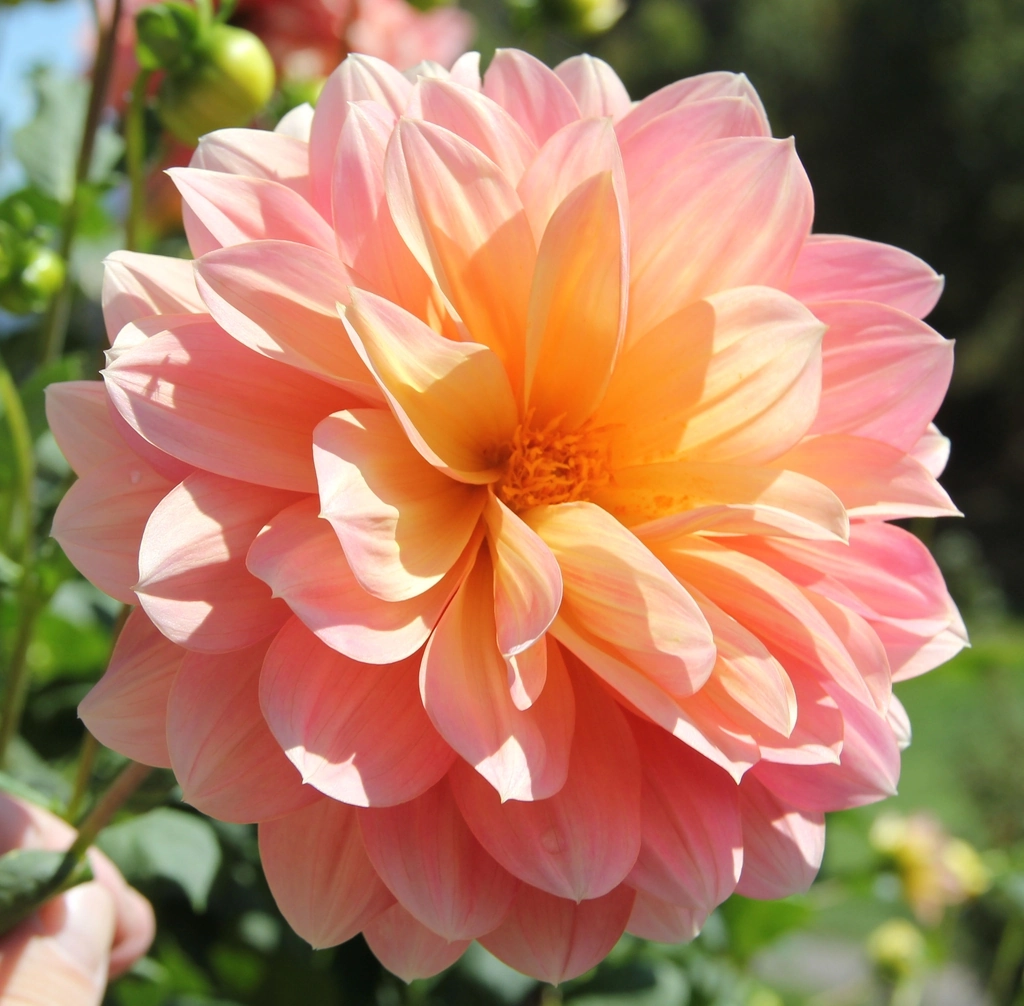
Choose compact ‘Gallery Pablo’, about 20 inches tall, rather than a tall border dahlia.
- 01
Wait for frost-free weather
Gradually acclimate a greenhouse-grown plant to outdoor conditions. Choose a sunny, sheltered position.
- 02
Fill one generous planter
Moisten fresh potting mix and leave about 1 inch below the rim. A large container gets heavy when wet; place it before filling.
- 03
Plant at the same depth
Set one nursery plant in the center with its root-ball surface at the mix surface. Place a support beside the roots now if needed.
- 04
Water and watch
Water thoroughly and let excess drain. Check each morning, and remove spent flower stalks back to a healthy leaf or branch as flowering continues.
Another way to start
Start with a tuber+
Buy a viable ‘Gallery Pablo’ tuber or clump with an intact neck and a visible crown bud. For an indoor container start, cover the tuber body with about 1 inch of mix while keeping the crown at the surface; keep moist, not wet. Move outdoors after frost. Seeds do not reproduce the named cultivar reliably.
When to water.
Check each morning. Water when the top inch of mix feels dry, slowly wetting the root zone until excess drains. Hot or windy days can mean another check later. If the mix is still wet, wait. A large pot stores more water but does not make a fixed weekly watering schedule reliable.
Exactly what to feed it.
Skip added fertilizer while the fresh mix’s starter nutrients are working—up to 2 months for the named mix. Once they run out and flower buds are visible, use the measured outdoor feed below.
A SPECIFIC US PRODUCT
Jack’s Classic Blossom Booster (US 10-30-20)
Mix 1 level tablespoon of Jack’s Classic Blossom Booster 10-30-20 into 1 US gallon of water. Feed at the roots every 10 days during active bud and bloom growth, after the mix’s existing feed ends. Use only enough solution to wet this pot, not the whole batch automatically. If still wet, delay until watering is needed. Do not stack with another full-rate fertilizer; follow your package if its directions differ.
Check the manufacturer’s product page ↗Use the named US formulation. A different product or concentration needs different directions. The amount mixed is a batch, not a dose to pour into one pot.
A little patience pays off.
‘Gallery Pablo’ has coral/apricot double flowers and a compact habit. A flowering nursery plant gives color quickly; a young plant or tuber needs more time. Bloom can continue through summer and fall until frost.
When should I start where I live?+
Set outdoors after your local frost danger has passed. Where the pot can freeze, plan to lift/store the tubers or replace the plant next season; outdoor survival is not guaranteed across the US.
For regional planting windows, find your local Cooperative Extension office ↗.
Something looking off?
Something is chewing the new leaves.+
Inspect for slugs, especially after dusk, and remove visible pests. Check before assuming the plant needs fertilizer.
There are little insects on the buds.+
Inspect for aphid clusters. Gently rinse or remove localized colonies, then check again as new shoots grow.
It is wilting but the mix stays wet.+
Check drainage and the stem base. Stop automatic watering; persistently wet roots can rot. Do not feed a waterlogged plant to revive it.
A little more growing know-how.
Save the tuber for next year+
Where winter freezing threatens, lift after frost kills the foliage, then clean and dry the tubers. Store in a ventilated box with vermiculite or wood shavings at 40–50°F, protected from freezing. Inspect occasionally for rot or severe shriveling.
Why such a roomy pot?+
This is one generous starter project using a commercially specified 20-gallon planter, not a claim that every compact dahlia needs exactly 20 gallons. Pot dimensions, drainage, and room for roots matter more than an ambiguous gallon label.
BEHIND THIS GUIDE
Where the advice comes from.
Plant care is based on the sources below. Planting layouts and beginner routines combine that guidance into one practical plan; they are editorial choices, not results from a Plant Care Steps growing trial.
- RHS: ‘Gallery Pablo’ size and flowering ↗
- RHS: container dahlias and care ↗
- Iowa State: tuber starting ↗
- Iowa State: overwintering dahlias ↗
- Johnny’s: example planter dimensions ↗
- Maryland Extension: container care ↗
- ASPCA: dahlia and pets ↗
- Manufacturer: US fertilizer formula and application directions ↗
- Manufacturer: starter feed in the named potting mix ↗
Compiled with AI assistance. These first-edition guides have not yet had an independent horticultural review. Read our editorial approach.