OUTDOOR ROSES · RESCUE CHECKS
Rose black spot and falling leaves.
For a living outdoor rose: compare the spots, reduce leaf wetness, and watch the next growth.
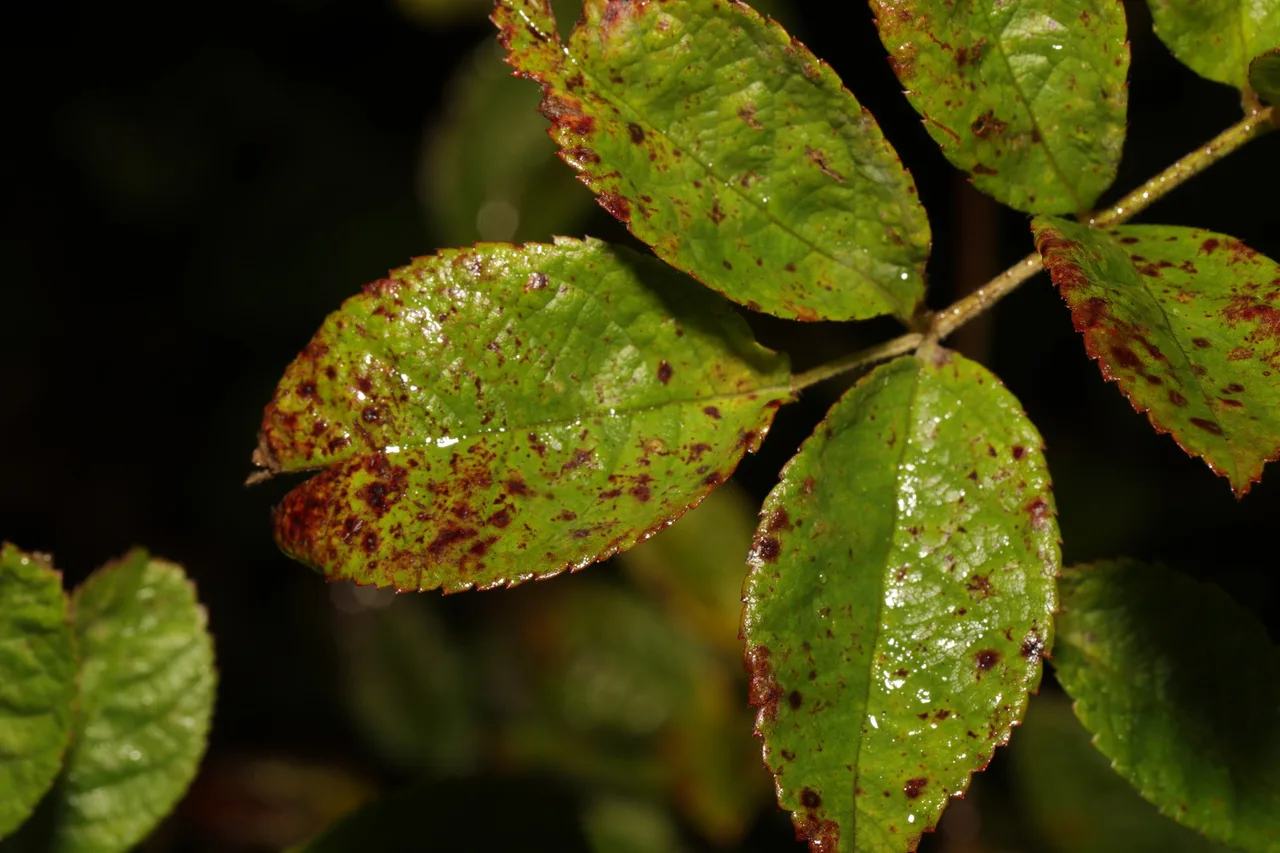

1. Check the spots before choosing a treatment.
Black spot is a fungal disease caused by Diplocarpon rosae. Typical marks are dark, roughly round, and feathered at the edges. Lower leaves often show damage first; yellowing and early leaf drop can follow. Yellow leaves alone do not identify it.
Dark, feathered spots
Compare the photo above with Extension symptom examples. Black spot is a possibility.
A different pattern
Angular purple patches between veins can indicate downy mildew. Small purple spots with tan centers may be Cercospora. Ask for identification if the pattern is unclear.
2. Clear fallen leaves and keep foliage drier.
- Collect diseased leaf litter. The black-spot fungus can survive in fallen leaves and infected canes. Keep clearing newly fallen leaves.
- Water the soil. Aim at the root area instead of spraying the canopy. Check soil moisture before watering.
- Allow air to move. Avoid crowding the rose with surrounding growth. Better airflow helps leaves dry.
These steps reduce favorable conditions; they do not make an already spotted leaf clear again or guarantee that spores will stay out of the garden.
3. Match the response to the damage.
A few spots do not automatically require spraying. Wisconsin Extension advises that roses with little leaf loss in dry weather may need no treatment. Repeated heavy defoliation during wet weather deserves closer attention.
For a US garden, ask local Extension whether a preventive, rose-labeled fungicide fits the confirmed problem. Follow the current label; do not copy a universal spray interval. The aim is to protect growth from further infection, not erase old lesions.
The RHS currently recommends avoiding fungicides and prioritizing cultural care. Its product information is UK-specific. We do not recommend homemade spray mixtures.
4. Watch the next leaves.
During active growth, photograph the same shoot periodically and note fresh spots and further leaf loss. Repeated defoliation can weaken a rose; request local help if damage keeps spreading or stems also die back.
For unexplained decline, use the rose rescue checks. If drooping began after planting or moving, start with transplant wilt.
Growing original Knock Out ‘Radrazz’? Its basic care page covers that cultivar; black-spot resistance is not immunity.
Sources & editorial notes
- Wisconsin Extension: black spot
- Maryland Extension: rose problems
- Oregon State: black spot management
- RHS: black spot and UK guidance
Sources checked October 12, 2026. Compiled with AI assistance from horticultural references; not a Plant Care Steps treatment trial. US readers should use local diagnostic advice and US product labels; RHS chemical guidance is for the UK. Editorial responsibility.