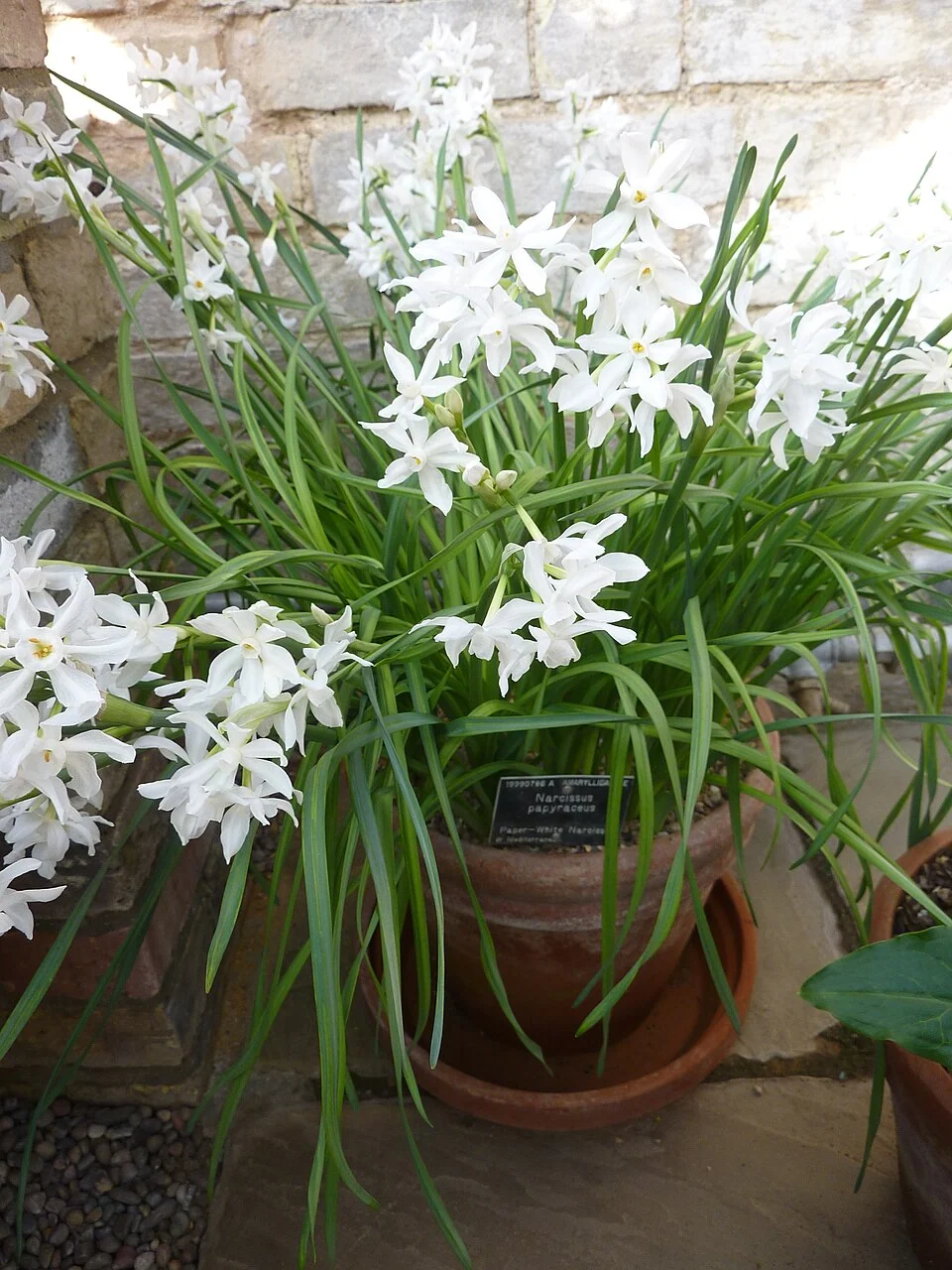

GROWING GUIDE
How to Force Paperwhites Indoors for Christmas
Grow paperwhite narcissus indoors in pebbles or potting mix. For a water bowl, keep the bulb above the water with just its base touching; the roots grow down into it. Start several weeks before Christmas, keep the developing plants bright and cool, and use a second planting for a longer display.
Published · Updated
Start a bowl in four steps
Choose firm, healthy bulbs sold as paperwhite narcissus (Narcissus papyraceus or paperwhite types of N. tazetta). A clear bowl makes the water line easy to check.
- Support the bulbs. Put washed pebbles in a shallow bowl without drainage holes. Set bulbs flat end down, close together without touching. Add pebbles around them for support; leave the pointed tips exposed.
- Set the water line. Add water just to the bulb bases, keeping the fleshy bulbs above it. Top up to that same line as roots develop. Do not fill higher to hide the pebbles: submerged bulbs can rot.
- Let roots establish. Iowa State uses a cool, dark 45–50°F (7–10°C) spot for 2–3 weeks. When shoots are about 3 inches tall, move the bowl to a sunny 60–70°F (16–21°C) window.
- Keep the display cool. Check the water line regularly. Once buds open, a cooler position out of direct sun helps the flowers last. Support leaning stems with a stake or ring.
Prefer potting mix? Use a pot with drainage, leave the bulb tips above the mix, water thoroughly and let excess drain away. Keep the mix moist. This is a separate option; a bowl without drainage is for pebbles and a visible water line.
When to start for Christmas
Use 4–6 weeks before your target date as a planning window, not a guaranteed flowering date. Illinois Extension gives that typical range; Wisconsin gives 3–5 weeks. Cultivar, bulb condition and room temperature change the result. Start another bowl about 10 days later if you want to spread the display.
If the stems lean
Give the plants bright light and a cool room, then add support. Low light and warm rooms encourage a tall, weak display. A stable bowl and a simple stake are the easiest first fixes.
After flowering: check your climate
In cold-winter regions, paperwhites are usually treated as a one-season display. Bulbs forced in pebbles may not recover well enough to bloom again. Do not promise a second indoor forcing.
That is not a universal instruction to throw every bulb away. The RHS says paperwhites can survive outdoors in mild areas. If your climate suits them and you want to try keeping the bulbs, remove spent flowers, allow foliage to die back naturally and seek local planting guidance. A reblooming amaryllis needs a different plan.
Keep away from pets. The ASPCA lists paperwhites as toxic to dogs, cats and horses, with the bulbs the most poisonous part. Keep the bowl and discarded bulbs out of reach. Contact a veterinarian promptly if a pet may have eaten any part.
Common questions
Do paperwhites need a refrigerator first?+
No long chilling treatment is required. The short cool rooting stage below helps establish roots; it is different from the months of cold needed by many hardy spring bulbs.
Can I use ordinary yellow garden daffodils?+
Do not assume the same forcing schedule. Buy bulbs labeled paperwhite narcissus; hardy garden daffodils usually need a cold treatment. Paperwhite cultivars can also have yellow flowers, so flower color alone is not an identification.
Can I keep a strongly scented bowl in a small room?+
Some cultivars, including common white Ziva, have a strong musky scent. Choose a less strongly scented cultivar if that bothers you, and display it away from where you sit or sleep.
Sources & editorial notes
- Iowa State University Extension: planting and cool rooting conditions
- Illinois Extension: flowering time, support and the optional alcohol method
- University of Wisconsin Extension: forcing bulbs and after-bloom limits
- Cornell Flower Bulb Research Program: measured alcohol method (PDF)
- RHS: paper-white narcissus and outdoor growing in mild areas
- ASPCA: paper white toxicity to pets
A source-based indoor forcing plan, not a documented growing trial. These linked sources were checked November 18, 2026. The optional alcohol method follows the linked Cornell research note. Editorial responsibility.
Source checks concern the linked references, not results from a growing trial. This guide has not had an independent horticultural review. How we use sources.